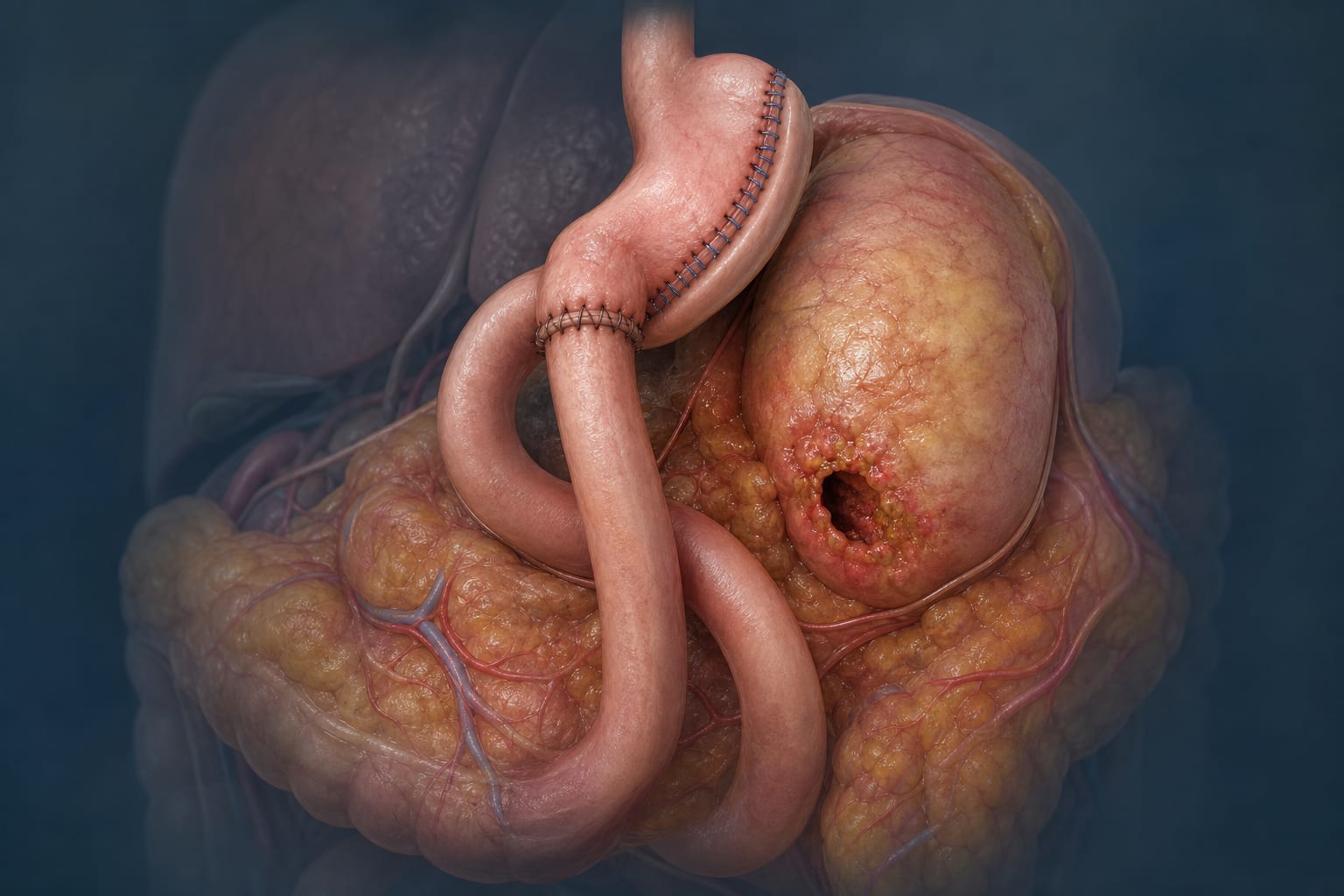
Impact of Roux-en-Y Gastric Bypass on Antidepressant Plasma Levels
Overview
Roux-en-Y gastric bypass (RYGB) surgery significantly alters the pharmacokinetics of antidepressants, leading to decreased plasma drug concentrations in the months following surgery. This reduction may contribute to the observed increase in depressive symptoms and challenges in long-term depression management post-bariatric surgery.
Background
Obesity and depression are interrelated conditions, with higher rates of depressive disorders among patients with obesity, often necessitating antidepressant therapy. Bariatric surgery, particularly RYGB, is effective for weight loss but induces anatomical and physiological changes that can impair drug absorption. Altered gastric volume, pH, and intestinal architecture may reduce oral drug bioavailability, especially for lipophilic drugs. Despite widespread antidepressant use, data on their pharmacokinetics post-RYGB remain limited but suggest decreased plasma concentrations after surgery.
Data Highlights
Antidepressant
Reported Plasma Concentration Decrease Post-RYGB
Sertraline
51%
Mirtazapine
41%
Duloxetine
35%
Citalopram
19%
Key Findings
RYGB surgery causes significant reductions in plasma concentrations of several antidepressants, including sertraline, mirtazapine, duloxetine, and citalopram.
Pharmacokinetic changes are likely due to altered gastric motility, reduced gastric volume, increased gastric pH, and changes in intestinal absorption.
Initial decreases in antidepressant plasma levels are observed within the first month post-surgery, with some normalization or increase by 6 to 12 months for selective serotonin reuptake inhibitors.
Weight loss-induced physiological changes may also affect drug distribution and metabolism, complicating antidepressant exposure.
Antidepressant discontinuation rates post-bariatric surgery are lower compared to other medications, indicating ongoing need despite altered drug levels.
Monitoring plasma drug concentrations can guide dose adjustments to maintain therapeutic efficacy after RYGB.
Clinical Implications
Clinicians should be aware that RYGB can significantly reduce antidepressant plasma levels, potentially diminishing treatment efficacy. Regular therapeutic drug monitoring and dose adjustments are advisable in the months following surgery to optimize depression management. Multidisciplinary follow-up including psychiatric evaluation is essential to address evolving pharmacokinetic and clinical changes.
Conclusion
RYGB surgery markedly impacts antidepressant pharmacokinetics, leading to decreased plasma concentrations that may contribute to worsening depressive symptoms postoperatively. Careful monitoring and individualized treatment adaptation are critical to ensure effective long-term depression control in this population.
References
1 -- Obesity and depression reciprocal association
2 -- Systematic review on depressive symptoms post-bariatric surgery
3 -- Increased suicide rate after bariatric surgery
4 -- Longitudinal database study on medication discontinuation
5 -- Pharmacokinetic changes after RYGB
6 -- Lipophilic drug absorption post-RYGB
7-10 -- Reports on psychotropic drug pharmacokinetics post-RYGB
11,12 -- Cross-sectional studies on sertraline and duloxetine pharmacokinetics
13 -- Prospective study on venlafaxine pharmacokinetics
14 -- Case series on escitalopram plasma concentrations
15 -- Case report on vortioxetine concentrations post-RYGB
16 -- Antidepressant concentrations during 1-year follow-up post-RYGB
17 -- Naturalistic prospective study on antidepressant plasma concentrations post-bariatric surgery
18,19 -- International recommendations for bariatric surgery multidisciplinary care
20 -- Swiss Society guidelines on psychotropic drug monitoring post-bariatric surgery