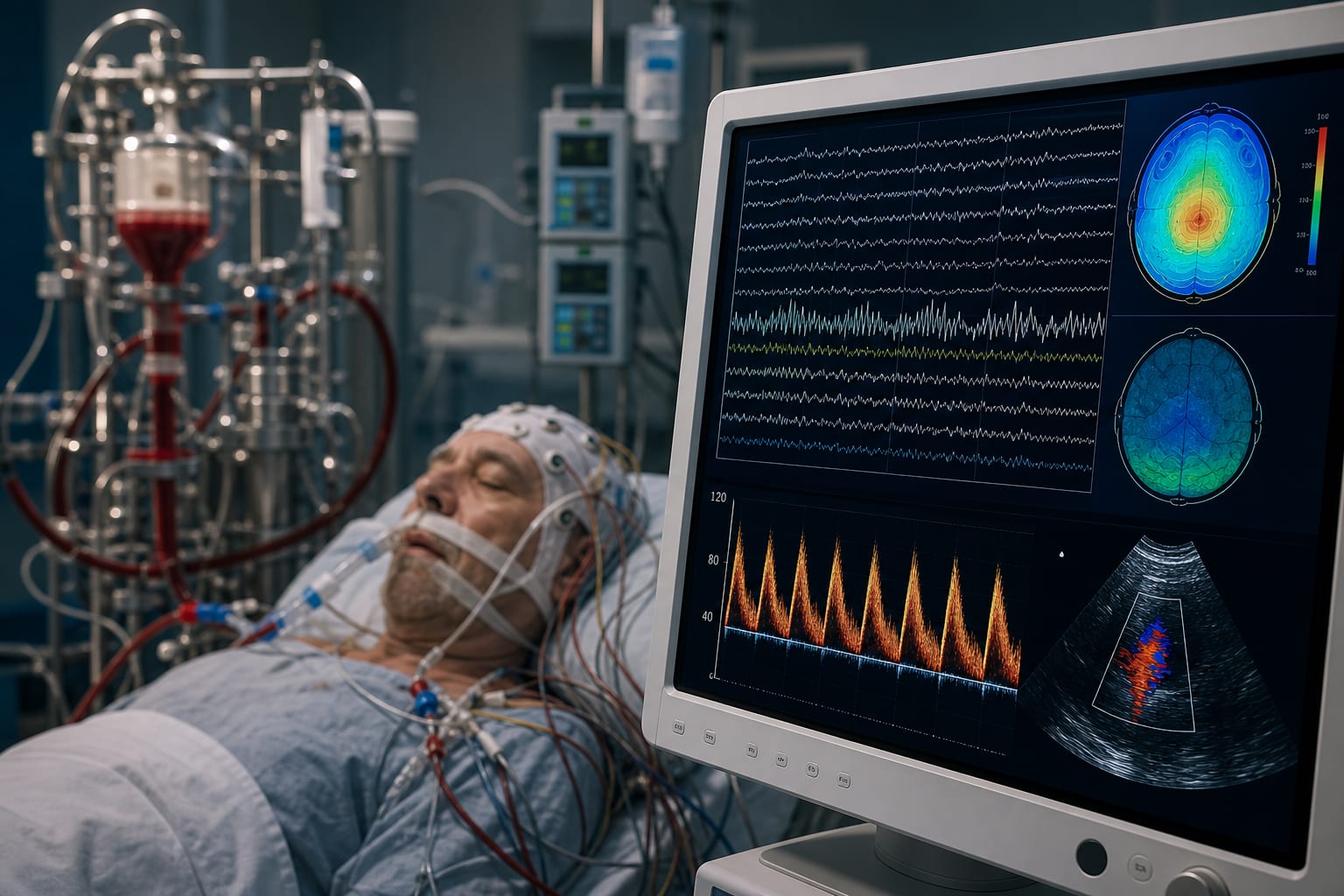
Predictive value of multimodal neurological monitoring in the postoperative neurological dysfunction after cardiovascular surgery with cardiopulmonary bypass - Report - MDSpire
Advertisement
Predictive value of multimodal neurological monitoring in the postoperative neurological dysfunction after cardiovascular surgery with cardiopulmonary bypass
Clinical Report: Evaluating the Predictive Capacity of Multimodal Neurological Monitoring
Overview
This study investigates the effectiveness of multimodal neurological monitoring (MNM) in predicting postoperative neurological dysfunction in patients undergoing cardiovascular surgery with cardiopulmonary bypass. The findings suggest that specific monitoring indicators can identify high-risk patients, warranting intensified monitoring and neuroprotective strategies.
Background
Postoperative neurological dysfunction is a significant concern following cardiovascular surgery, often leading to increased morbidity and mortality. Understanding the predictive capacity of MNM can enhance patient outcomes by enabling timely interventions. This study addresses the gap in research regarding postoperative monitoring and its implications for patient care.
Data Highlights
Parameter
Neurologic Dysfunction Group (n=71)
Non-neurologic Group (n=85)
Duration of Extracorporeal Circulation
Longer
Shorter
Extubation Time
Longer
Shorter
aEEG Abnormality
Higher
Lower
RAV Grade
III-IV
Lower
PI
Higher
Lower
α% and EDVs
Lower
Higher
Key Findings
The neurologic dysfunction group had significantly longer durations of extracorporeal circulation and extubation compared to the non-neurologic group (p < 0.05).
Abnormal aEEG, higher RAV grades, and higher PI were observed in the neurologic dysfunction group (p < 0.05).
The combination of RAV, α%, EDV, and PI yielded an AUC of 0.735 for predicting neurologic dysfunction.
Specificity was 0.843 and sensitivity was 0.507 for the predictive model.
Age, gender, and intubation days differed significantly across surgical procedure subgroups (p < 0.05).
Clinical Implications
MNM can be a valuable tool for monitoring brain function in the critical postoperative period following cardiovascular surgery. The identified predictive indicators can help clinicians recognize high-risk patients who may benefit from enhanced monitoring and neuroprotective interventions.
Conclusion
MNM demonstrates potential in predicting postoperative neurological impairment, emphasizing the need for targeted monitoring strategies in high-risk patients. Further research is warranted to refine these predictive models and improve clinical outcomes.
A VHA study across 11 vendors finds AI-generated primary care notes score lower than clinician-written notes, with the largest deficits in thoroughness, organization, and usefulness