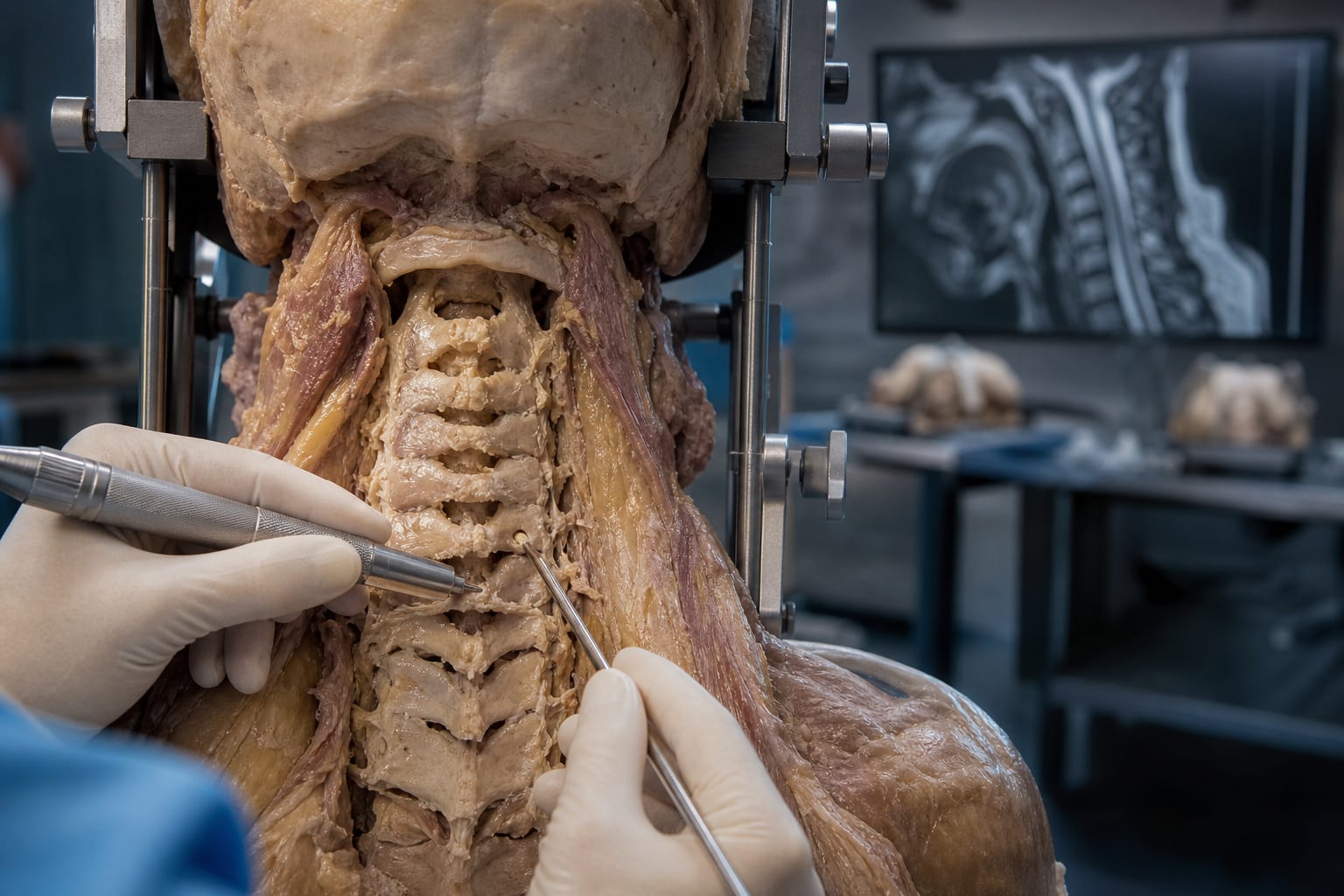
Cadaver-based hands-on course in cervical spine surgery: a prospective evaluation of surgical confidence and self-perceived autonomy - Report - MDSpire
Clinical Report: Evaluation of a Cadaver-Based Training Course in Cervical Spine Surgery
Overview
This study evaluates a three-day cadaver-based training course in cervical spine surgery, focusing on participants' perceived skill development and confidence. Results indicate significant improvements in surgical confidence and self-reported autonomy among participants.
Background
Cadaver-based training remains a vital component of surgical education, particularly in complex fields like cervical spine surgery, where the risk of surgical error can lead to severe consequences. This training method provides unmatched tactile authenticity and exposure to anatomical variations, essential for developing surgical skills. Despite its importance, there is limited research specifically addressing the impact of cadaver training in cervical spine surgery.
Data Highlights
The study utilized standardized questionnaires administered before, immediately after, and six months post-course to assess perceived skill development and confidence.
Key Findings
Participants reported increased confidence in performing cervical spine surgeries after the course.
Self-reported autonomy in surgical procedures improved significantly post-training.
The course was designed based on cognitive psychology and educational theory to enhance learning outcomes.
Cadaver-based training effectively addressed the anatomical complexity of cervical spine surgery.
Feedback and formative assessment were emphasized as crucial for skill acquisition.
Clinical Implications
The findings support the integration of cadaver-based training in surgical education programs to enhance surgical confidence and autonomy. This approach may lead to improved patient outcomes by better preparing surgeons for complex procedures.
Conclusion
Cadaver-based training courses can significantly enhance surgical confidence and self-reported autonomy in cervical spine surgery, highlighting their importance in surgical education.
Investigators compared intra-articular microbial profiles and predicted metabolic pathways in patients with hip osteoarthritis and nonarthritic controls.
Researchers urge caution in interpreting joint replacement predictors, noting that surgery reflects access and decision-making as well as disease biology.