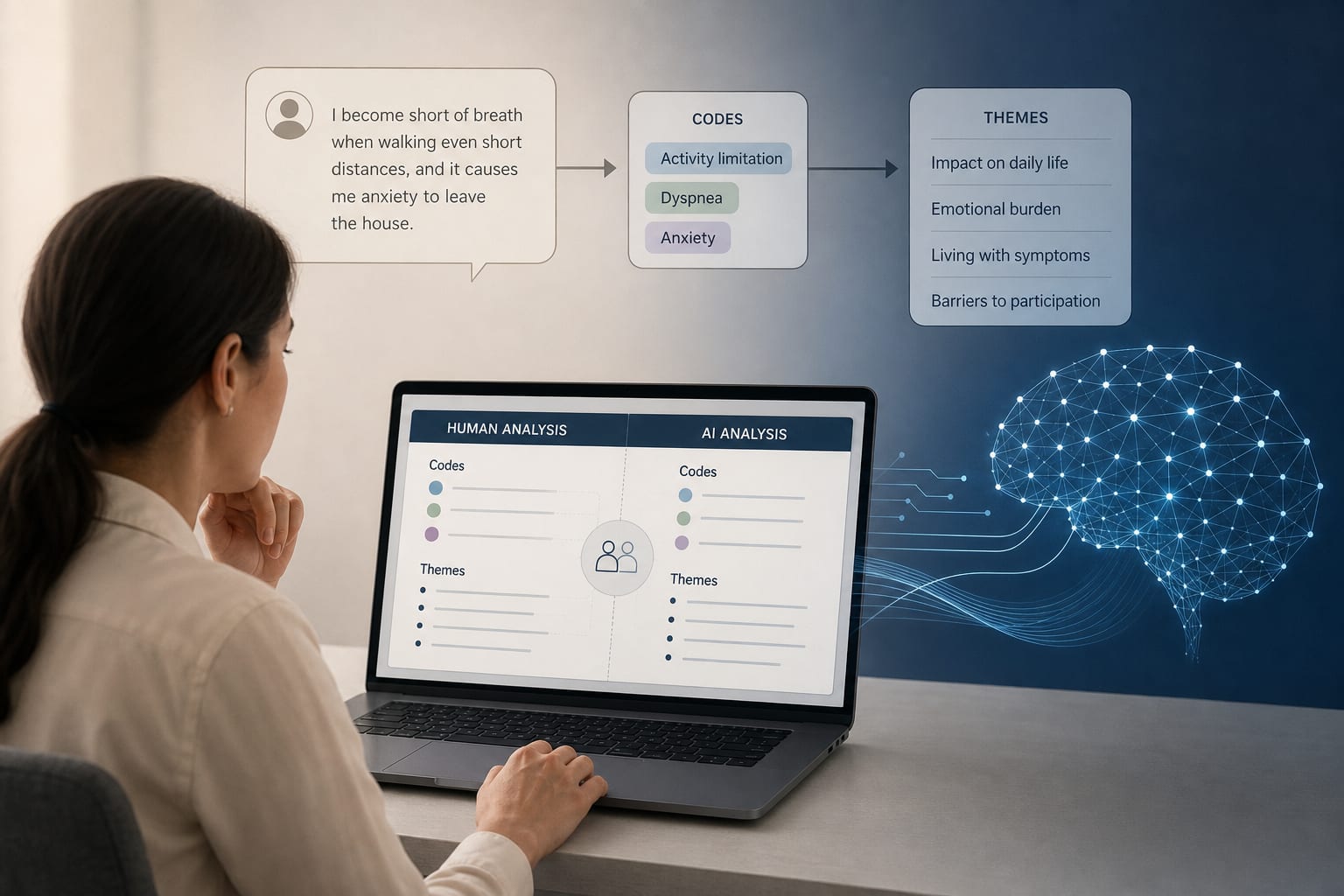
Multimodule Human–Artificial Intelligence Collaboration Pipeline for Large Language Model–Assisted Thematic Analysis Across Digital Health Interview Studies: Comparative Evaluation Study - Report - MDSpire
Advertisement
Multimodule Human–Artificial Intelligence Collaboration Pipeline for Large Language Model–Assisted Thematic Analysis Across Digital Health Interview Studies: Comparative Evaluation Study
Collaborative Framework Integrating Human and Artificial Intelligence for Thematic Analysis in Digital Health Interviews
Overview
This study evaluates the integration of human and artificial intelligence in thematic analysis of digital health interviews.
Background
Qualitative methods, particularly thematic analysis, are essential in health research for understanding patient experiences and improving interventions. The integration of AI, especially LLMs, into qualitative analysis presents new opportunities and challenges.
Data Highlights
No numerical or trial data provided in the source material.
Key Findings
Thematic analysis is a flexible method for identifying patterns in qualitative data.
LLMs can assist in coding and theme generation but require human oversight for validation.
Studies show mixed results regarding the effectiveness of LLMs in qualitative analysis.
Transparency and methodological rigor are essential when integrating AI in qualitative workflows.
Human judgment remains critical in interpreting AI-generated themes.
Clinical Implications
Healthcare professionals should be aware of the strengths and limitations of AI tools in qualitative research.
Conclusion
The integration of AI in thematic analysis necessitates careful implementation to uphold research quality.
A living clinical guideline outlines a treatment hierarchy for selected pharmacologic therapies in patients with obesity and selected patients with overweight.