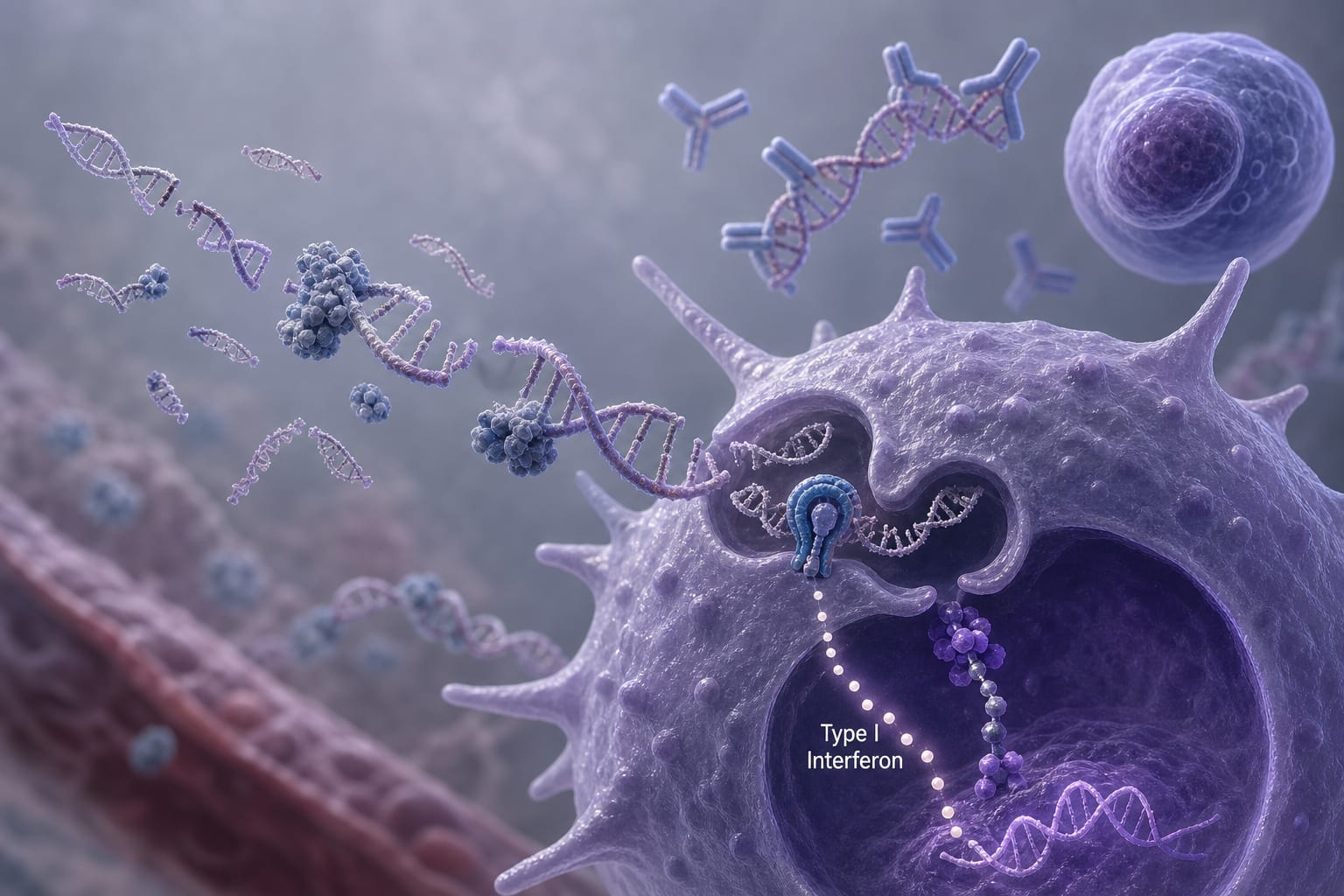
Clinical Report: In Vivo CAR T: A New Route to Treating Autoimmune Disease
Overview
In vivo CAR T-cell therapy enables targeted delivery of CAR T cells directly within the body. This method addresses challenges associated with ex vivo CAR T-cell therapies, including high costs and complex manufacturing processes.
Background
Chimeric antigen receptor (CAR) T-cell therapy has been primarily used for hematologic malignancies, but its application in autoimmune diseases is limited due to operational challenges. CAR T-cell therapy has the potential to target autoreactive B cells in autoimmune conditions.
Data Highlights
No numerical data available in the source material.
Key Findings
In vivo CAR T-cell therapy could improve safety and efficacy for autoimmune diseases.
Current ex vivo CAR T-cell therapies face high costs and complex manufacturing processes.
Technological advancements, such as modified lipid nanoparticles, facilitate targeted in vivo delivery of CAR T cells.
CAR T-cell therapy has shown potential in treating autoimmune diseases like lupus and multiple sclerosis.
Recent trials indicate outcomes for in vivo CAR T-cell therapies in multiple myeloma and other conditions.
Clinical Implications
The development of in vivo CAR T-cell therapies may provide a new treatment avenue for patients with autoimmune diseases. Ongoing research and data evaluation are necessary.
Conclusion
In vivo CAR T-cell therapy addresses barriers associated with traditional methods. Continued research and clinical trials are necessary.