Liquid biopsy, multi-cancer early detection, and artificial intelligence: new frontiers in cancer screening from a technological and immunological perspective - Report - MDSpire
Advertisement
Liquid biopsy, multi-cancer early detection, and artificial intelligence: new frontiers in cancer screening from a technological and immunological perspective
Clinical Report: Advancements in Cancer Screening: Liquid Biopsy and AI
Overview
This review evaluates advancements in cancer screening technologies, specifically liquid biopsy, multi-cancer early detection (MCED), and artificial intelligence (AI). It emphasizes the clinical implications of these technologies, their current limitations, and the need for careful interpretation of their readiness for clinical use.
Background
Cancer remains a leading cause of death globally, with early detection being crucial for improving survival rates. Traditional screening methods have significant limitations, including invasiveness and insufficient specificity. Advances in liquid biopsy and AI offer promising alternatives for early cancer detection, potentially transforming screening practices.
Data Highlights
No specific numerical data provided in the article.
Key Findings
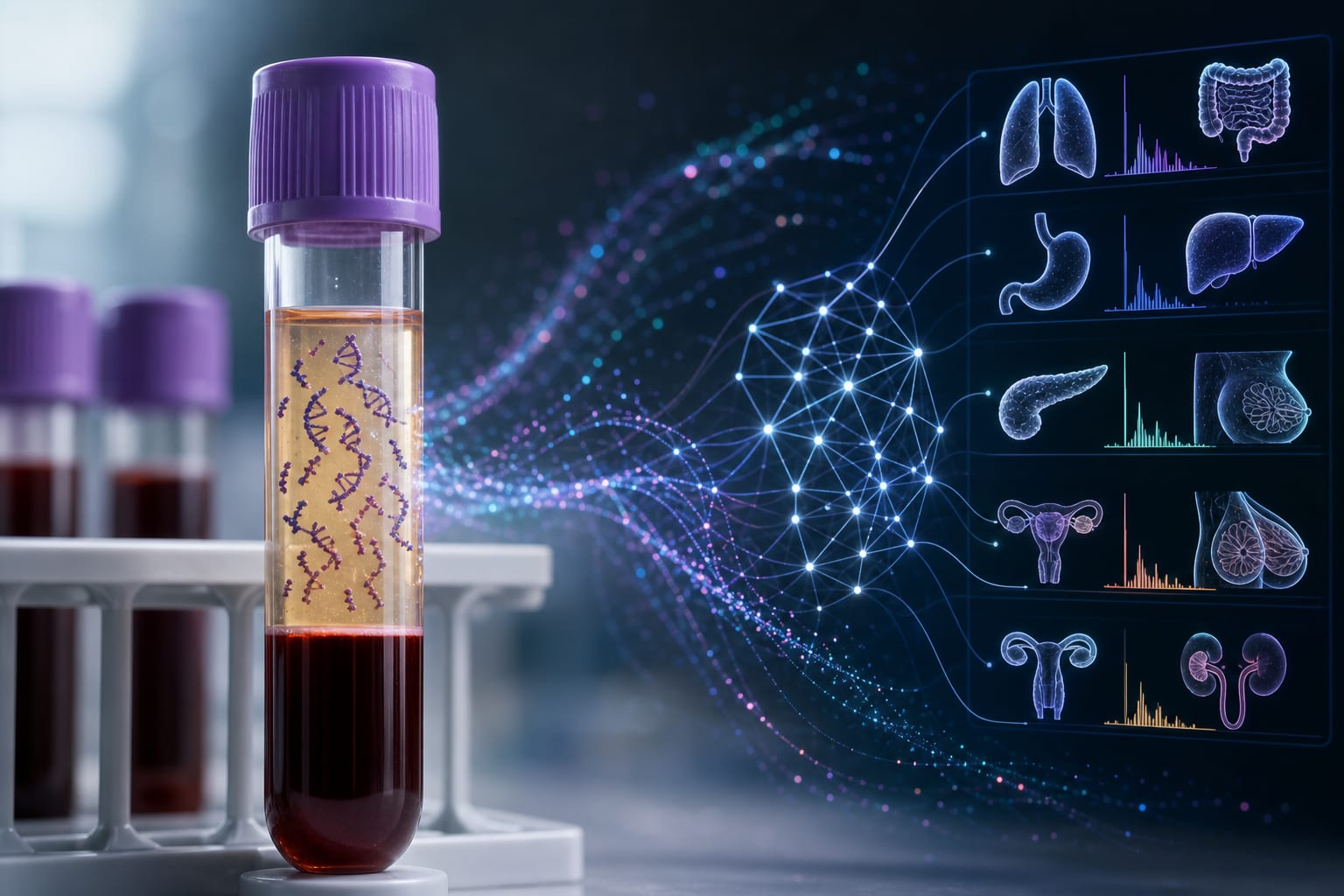
Liquid biopsy can analyze various biomarkers in blood, providing a minimally invasive alternative to tissue biopsy.
MCED tests aim to detect multiple cancer types through a single blood test, though their sensitivity varies by cancer stage and type.
AI technologies are being developed to enhance image interpretation and biomarker discovery in cancer screening.
Technical detectability of biomarkers does not equate to clinical readiness; many emerging technologies remain investigational.
Standardized workflows and prospective validation are essential for the clinical implementation of these technologies.
Clinical Implications
Healthcare professionals should remain cautious regarding the integration of liquid biopsy and MCED into routine practice, as many tests are still investigational. Continuous evaluation of their clinical utility, predictive values, and cost-effectiveness is necessary to ensure safe and effective implementation.
Conclusion
The advancements in cancer screening through liquid biopsy and AI present significant opportunities but require rigorous validation and careful consideration before widespread clinical adoption.