Microbiota metabolite butyrate alleviates intestinal inflammation associated with enhanced autophagy-related signaling in DSS-induced colitis - Report - MDSpire

Microbiota metabolite butyrate alleviates intestinal inflammation associated with enhanced autophagy-related signaling in DSS-induced colitis

  • By

  • Qingyi Mao

  • Beibei Lin

  • Wenluo Zhang

  • Yu Zhang

  • Yue Lei

  • Zhou Zhang

  • Mengque Xu

  • June 17, 2026

  • 0 min

Share

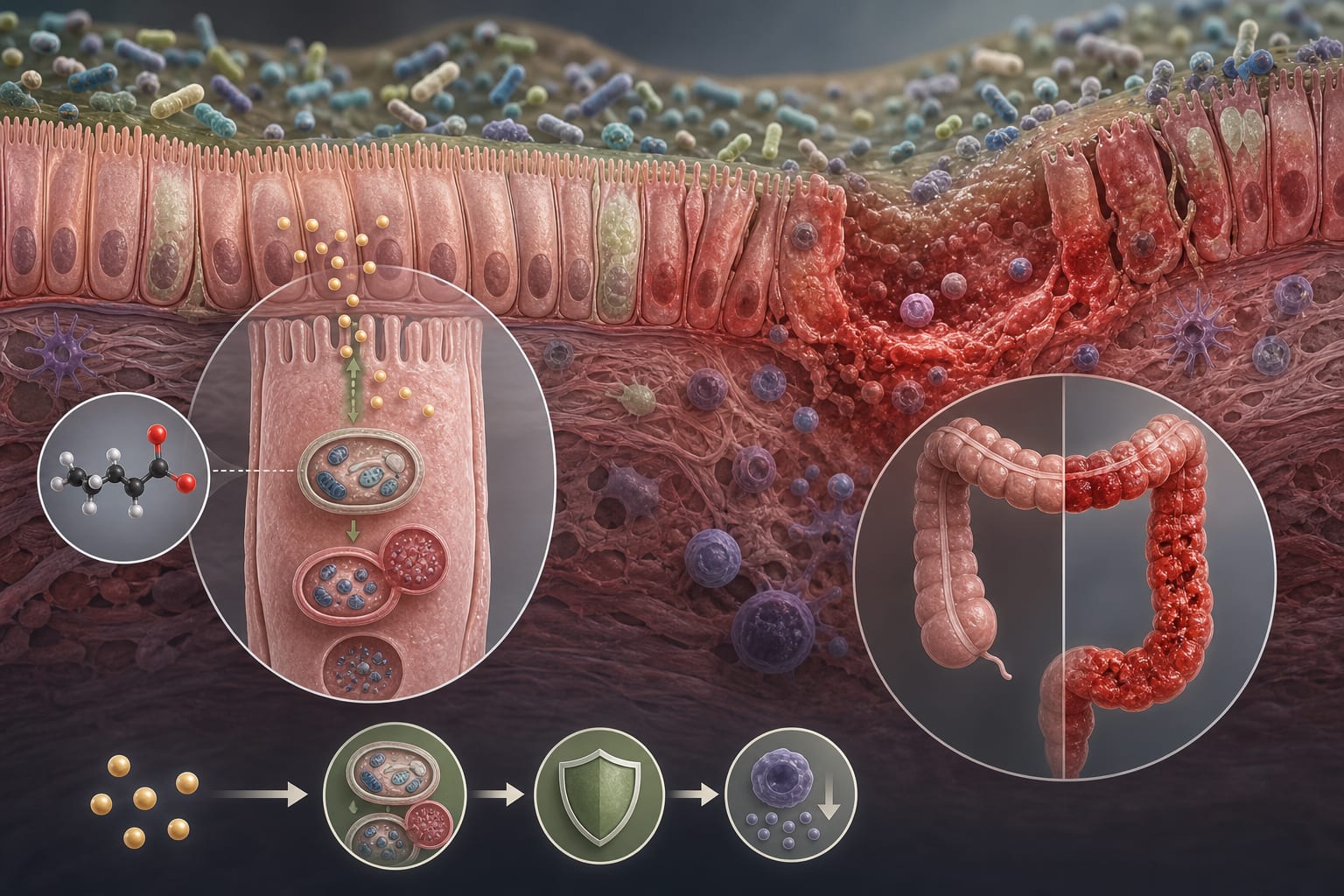
Butyrate from Gut Microbiota Reduces Intestinal Inflammation by Enhancing Autophagy Signaling

Overview

This study demonstrates that sodium butyrate (SB) from gut microbiota significantly reduces intestinal inflammation in DSS-induced colitis by enhancing autophagy signaling. The findings highlight the potential of SB in modulating gut microbiota and restoring intestinal barrier function.

Background

The rising incidence of inflammatory bowel disease (IBD) underscores the need for effective therapeutic strategies. Butyrate, a short-chain fatty acid produced by gut microbiota, has been shown to alleviate inflammation, yet its mechanisms of action remain poorly understood. Understanding how butyrate influences gut health and immune responses is crucial for developing new treatments for IBD.

Data Highlights

ParameterIBD PatientsHealthy Controlsp-value
Butyric Acid Level (µM)134.5605.90.002

Key Findings

  • Butyric acid levels were significantly lower in IBD patients compared to healthy controls (134.5 vs. 605.9, p = 0.002).
  • Oral administration of sodium butyrate altered intestinal microbiota composition, increasing Barnesiella abundance.
  • SB treatment restored intestinal barrier function, evidenced by enhanced OCCLUDIN expression.
  • Autophagy levels were significantly increased in the SB group, with elevated ATG16L1 and LC3-II protein levels.
  • Inhibition of autophagy using 3-methyladenine (3MA) reduced the protective effects of butyrate against colonic injury.

Clinical Implications

The findings suggest that sodium butyrate may serve as a therapeutic adjunct in managing IBD by enhancing autophagy and restoring gut microbiota balance. Clinicians should consider the potential benefits of butyrate in dietary interventions for patients with IBD.

Conclusion

Sodium butyrate plays a critical role in reducing intestinal inflammation through autophagy enhancement and microbiota modulation, presenting a promising avenue for IBD management.
Related Resources & Content

  1. The Journal of Infectious Diseases, 2023 -- MicroRNA miR-27a-5p Reduces Intestinal Inflammation Induced by Clostridioides difficile Flagella by Regulating the Nuclear Factor–κB Signaling Pathway
  2. Gut, 2023 -- Novel myo-inositol to butyrate fermentation pathway in the prevalent human gut species Dysosmobacter welbionis, a bacterium associated with improved metabolic and liver health
  3. Journal of Gastroenterology, 2023 -- Modifying Gut Microbiota to Improve Immune Regulation in the Treatment of Inflammatory Bowel Diseases
  4. Frontiers in Medicine, 2026 -- Synergistic effects of probiotics and low-FODMAP diet on clinical and inflammatory outcomes in ulcerative colitis: a retrospective cohort study
  5. Living guideline for pharmacological management of moderate-to-severe ulcerative colitis - American Gastroenterological Association, 2026
  6. Efficacy of different modalities of faecal microbiota transplantation in ulcerative colitis: systematic review and network meta-analysis, 2025
  7. Microbiota in inflammatory bowel disease: mechanisms of disease and therapeutic opportunities | Nature Reviews Microbiology, 2025
  8. Living guideline for pharmacological management of moderate-to-severe ulcerative colitis - American Gastroenterological Association
  9. Efficacy of different modalities of faecal microbiota transplantation in ulcerative colitis: systematic review and network meta-analysis - Julia Chapon, Julien Scanzi, Harry Sokol, Bruno Pereira, Anthony Buisson, 2025
  10. Microbiota in inflammatory bowel disease: mechanisms of disease and therapeutic opportunities | Nature Reviews Microbiology

Original Source(s)

Related Content