Telehealth for complex wheelchair assessment: A scoping review protocol of implementation in low-resource settings - Report - MDSpire

Telehealth for complex wheelchair assessment: A scoping review protocol of implementation in low-resource settings

  • By

  • Karina Berner

  • Gabriela Prins

  • Eugene Nizeyimana

  • Thandi Conradie

  • Quinette Louw

  • June 17, 2026

  • 0 min

Share

Clinical Report: Implementing Telehealth for Comprehensive Wheelchair Evaluations

Overview

This scoping review explores the potential of telehealth in providing wheelchair evaluations, particularly in low-resource environments. It highlights the barriers to access for wheelchair assessments.

Background

Access to assistive technologies, especially wheelchairs, is crucial for individuals with mobility impairments. Despite the high demand for wheelchairs, access remains inequitable, particularly in low- and middle-income countries where rehabilitation services are limited. Telehealth presents an opportunity to enhance access to specialized wheelchair assessments.

Data Highlights

No numerical data or trial data provided in the article.

Key Findings

  • Over 2.5 billion people globally require assistive products, with 80 million needing wheelchairs.
  • Access to specialized wheelchair assessments is limited in low-resource settings, leading to inappropriate prescriptions.
  • Telehealth can provide comparable outcomes to in-person assessments under certain conditions.
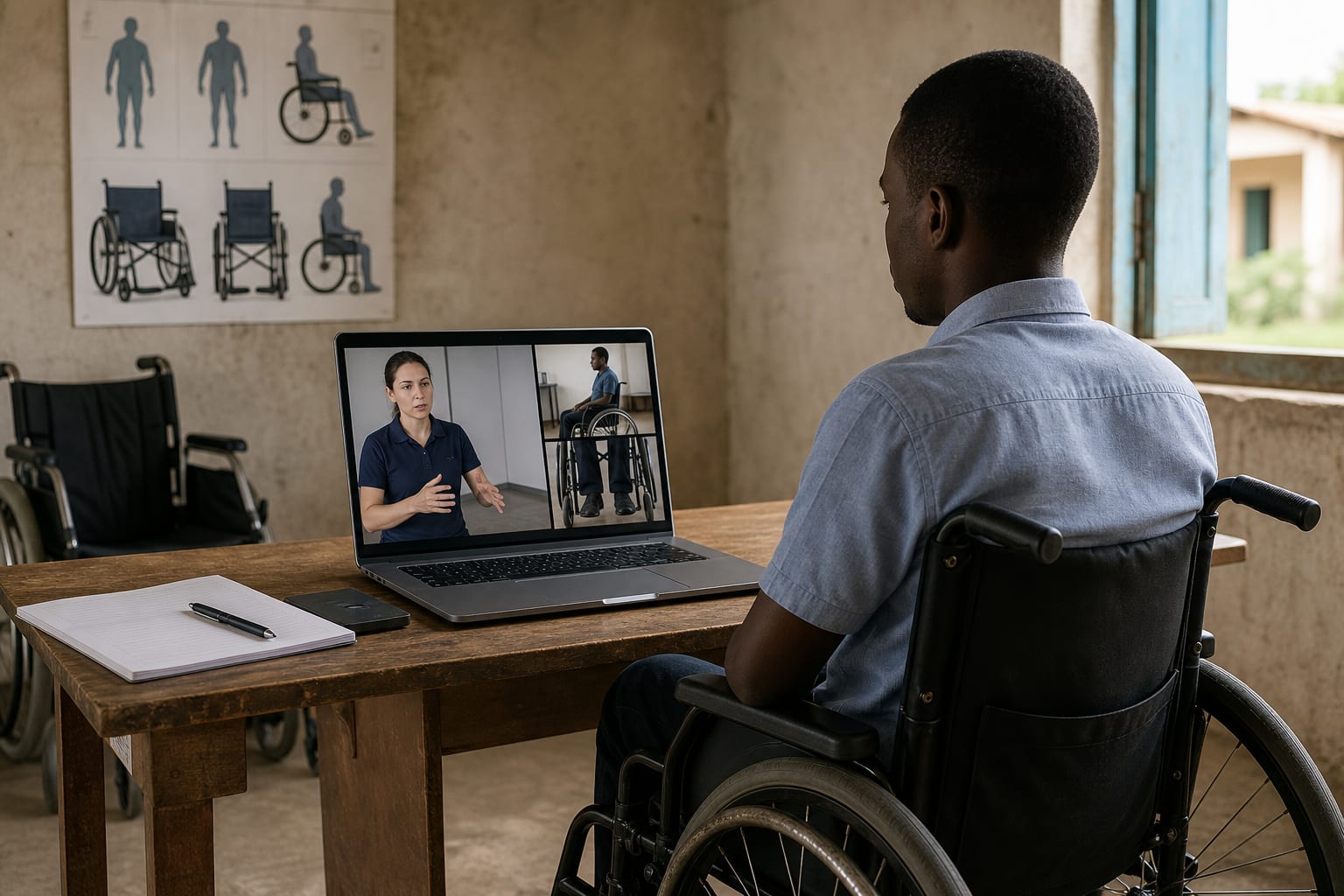
  • Successful tele-wheelchair assessments require clear protocols, clinician training, and adequate technological infrastructure.
  • The COVID-19 pandemic accelerated the adoption of telehealth.

Clinical Implications

Healthcare professionals should consider the integration of telehealth solutions for wheelchair assessments in underserved areas.

Conclusion

Telehealth offers a potential approach to enhance wheelchair evaluation services in low-resource environments.

Related Resources & Content

  1. World Health Organization, WHO, 2023 -- Wheelchair provision guidelines
  2. American Telemedicine Association, ATA, 2026 -- Principles for Delivering Telerehabilitation Services
  3. Journal of Medical Internet Research (JMIR) — Reporting of Telehealth Implementation in Cystic Fibrosis: Scoping Review Using a Novel Theory-Based Evaluation Lens
  4. Frontiers in Digital Health — Implementing home-based digital health in rural Canada: a scoping review
  5. Journal of Medical Internet Research (JMIR) — Telerehabilitation in Community Stroke Services: Mixed Methods Evaluation of Current Practice and Lessons for Sustained Use
  6. Journal of Medical Internet Research (JMIR) — Online Community Support for Stroke Survivors and Caregivers: Scoping Review
  7. Health products policy and standards
  8. The ATA’s Principles for Delivering Telerehabilitation Services - REVISED - ATA
  9. Telerehabilitation for New Wheelchair Evaluations: A Retrospective Study of Patient Characteristics - PubMed

Original Source(s)

Related Content