Mobile cognitive testing captures divergent longitudinal trajectories of verbal learning in adults with and without HIV - Report - MDSpire

Mobile cognitive testing captures divergent longitudinal trajectories of verbal learning in adults with and without HIV

  • By

  • Alena Stasenko

  • Laura M. Campbell

  • Anne Heaton

  • Emily W. Paolillo

  • David J. Moore

  • Robert K. Heaton

  • Colin A. Depp

  • Amy Pinkham

  • Robert A. Ackerman

  • Philip D. Harvey

  • Raeanne C. Moore

  • June 16, 2026

  • 0 min

Share

Clinical Report: Mobile Cognitive Assessments Reveal Distinct Patterns in HIV

Overview

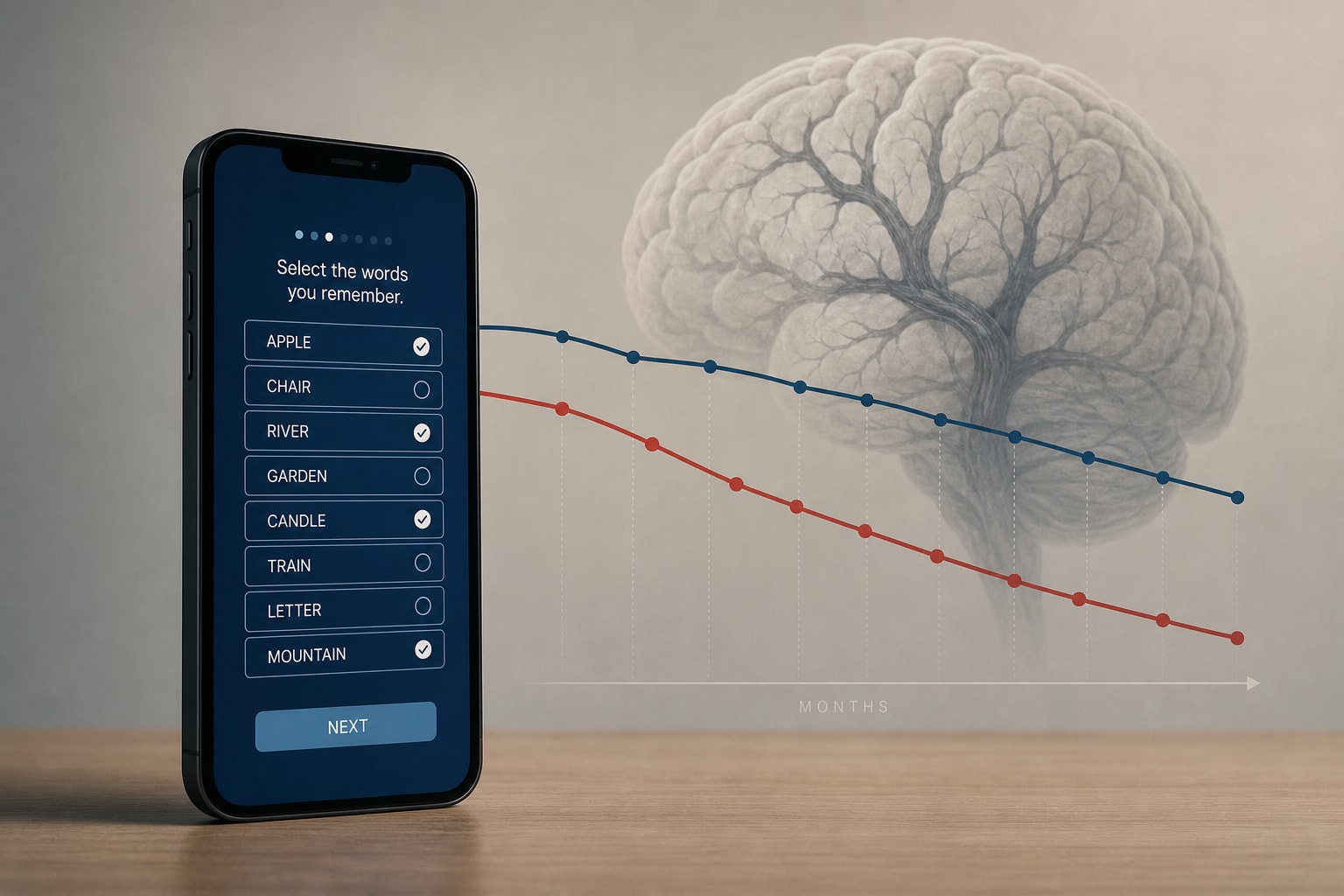
This study investigates the longitudinal performance of a mobile Verbal Learning Test (mVLT) in adults with and without HIV. Findings indicate that while HIV-negative controls showed improvement over time, individuals living with HIV did not.

Background

As the population of older adults living with HIV increases, understanding cognitive aging in this group is critical. Despite effective antiretroviral therapy, older individuals with HIV remain at risk for neurocognitive decline. Sensitive tools for monitoring cognitive changes are essential.

Data Highlights

GroupmVLT Performance Change
HIV-negative controlsImproved over time
People living with HIVNo significant improvement

Key Findings

  • Aggregate mean mVLT performance improved over time among HIV-negative controls.
  • No significant improvement was observed in mVLT performance among people living with HIV.
  • Age moderated mVLT trajectories, with older age linked to worse outcomes in people living with HIV.
  • Worse mVLT trajectories in people living with HIV were associated with higher cerebrovascular risk and lower social functioning.
  • Standard in-person neuropsychological testing did not show significant group differences in longitudinal trajectories.

Clinical Implications

The findings suggest that mobile cognitive assessments like the mVLT may provide a more sensitive measure of cognitive decline in people living with HIV compared to traditional testing methods. Clinicians may consider incorporating mobile assessments into routine cognitive monitoring for this population.

Conclusion

Mobile cognitive assessments may enhance the detection of cognitive changes in older adults living with HIV, supporting the need for further research and potential integration into clinical practice.

Related Resources & Content

  1. The Journal of Infectious Diseases, 2026 -- Longitudinal Changes in Cognition and Brain Imaging in Persons With Human Immunodeficiency Virus
  2. Frontiers in Neurology, 2026 -- Development of cognitive remediation interventions for people living with HIV in South Africa: participant experiences of adapted CogSMART and BrainHQ© programs
  3. Open Forum Infectious Diseases, 2026 -- Cognitive Dysfunction in Survivors of Cryptococcal Meningitis in Uganda: Findings from a Prospective Cohort Analysis
  4. Frontiers in Neurology, 2026 -- Neurological manifestations in people with HIV in HAART era: a cross-sectional multicenter study
  5. BHIVA Guidelines on Antiretroviral Treatment for Adults Living with HIV 2025 Interim Update
  6. Standards of Psychological Support for Adults Living with HIV 2025
  7. Mobile Cognitive Testing Captures Divergent Longitudinal Trajectories of Verbal Learning in Adults with and without HIV
  8. Inflammation in frailty, cognitive impairment, clinical events, and mortality among older adults with HIV in the ACTG HAILO cohort - PubMed
  9. Plasma Biomarkers and Cognitive Decline in HIV: Findings from Two U.S. Cohorts - PMC
  10. Association between cerebrospinal fluid CXCL10 and neurocognitive disorders in people living with HIV: a meta-analysis | AIDS Research and Therapy | Springer Nature Link
  11. Associations Between Depressive Symptoms and Memory Functions in Persons with HIV: A Systematic Review and Meta-Analysis - PubMed
  12. Oscillatory Dynamics Serving Verbal Working Memory Differ in People with HIV and Are Linked To Disease Duration | Journal of Neuroimmune Pharmacology | Springer Nature Link
  13. Association between cognitive function, socio-clinical factors and biomarkers among Panamanian adults living with and without HIV: A cross-sectional study | Scientific Reports

Original Source(s)

Related Content