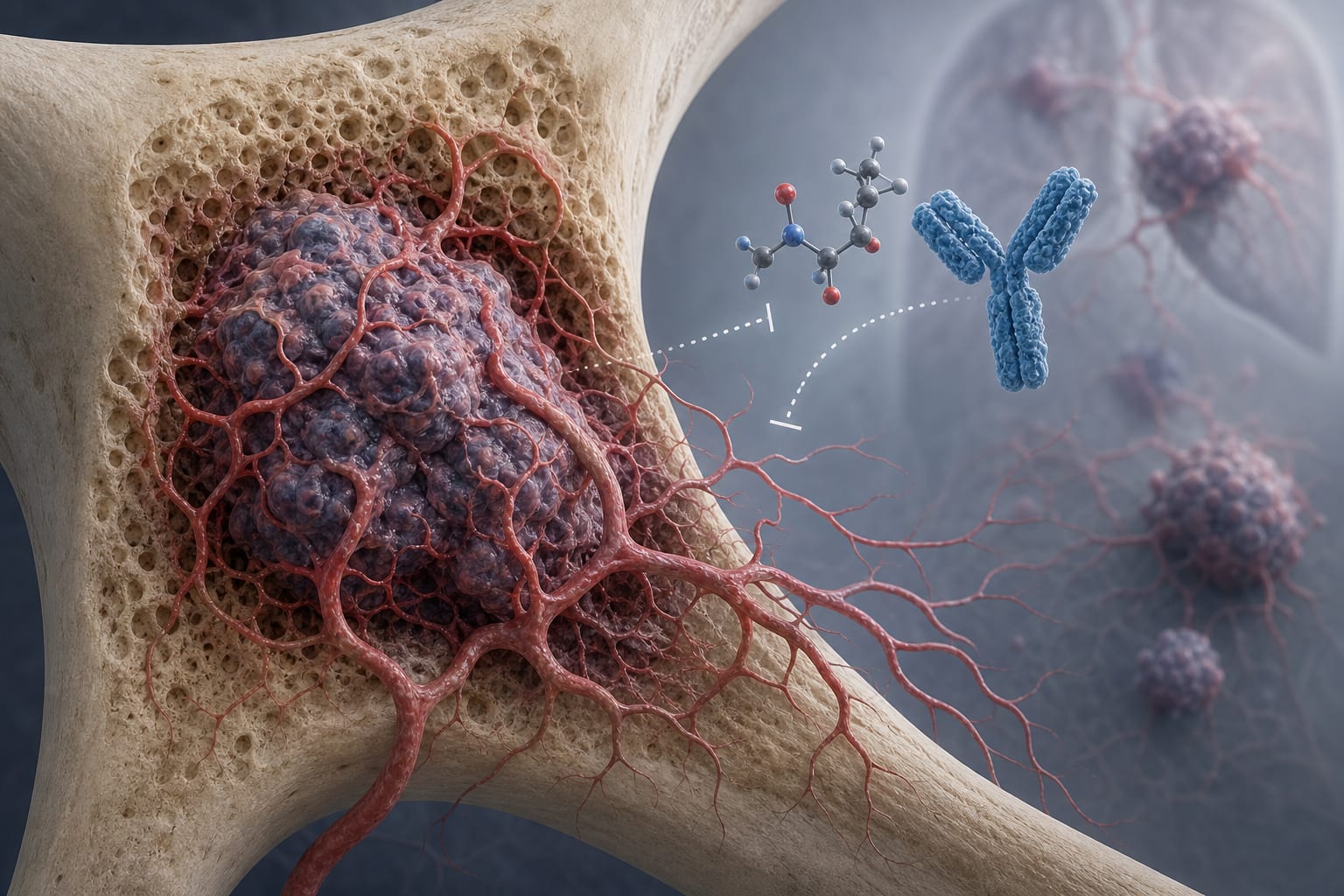
Combined treatment using repurposed synthetic peptide desmopressin and bevacizumab as a potential antiangiogenic strategy in osteosarcoma - Report - MDSpire
Clinical Report: Efficacy of Desmopressin and Bevacizumab in Osteosarcoma
Overview
This study investigates the combined use of desmopressin and bevacizumab as a potential antiangiogenic treatment for osteosarcoma.
Background
Osteosarcoma is the most common primary malignant bone tumor, particularly affecting children and young adults, and is associated with high mortality rates. Current treatment strategies, including surgery and chemotherapy, often yield suboptimal outcomes, necessitating the exploration of novel therapeutic approaches. The overexpression of VEGF-A in osteosarcoma has been linked to poor prognosis, highlighting the need for effective antiangiogenic therapies.
Data Highlights
No numerical data available in the source material.
Key Findings
AVPR2 expression is inversely associated with proangiogenic and prometastatic gene signatures.
Elevated AVPR2 expression correlates with improved survival in osteosarcoma patients.
dDAVP significantly reduces pulmonary metastasis and vascularization in osteosarcoma models.
Combined treatment of dDAVP and BEVA inhibits osteosarcoma xenograft progression without overt toxicity.
dDAVP enhances the antivascular activity of BEVA under tumor-conditioned conditions.
Clinical Implications
Further clinical evaluation is warranted to assess the efficacy of the combination of desmopressin and bevacizumab in osteosarcoma.
Conclusion
The findings support the need for further translational studies on desmopressin as an adjuvant therapy in osteosarcoma.
by Luisina María Solernó, Candela Llavona, Zahira Yasmine Saud, Mariana Carolina Onassis, María Florencia Gottardo, Martín Manuel Ledesma, Daniel Fernando Alonso, Juan Garona
An updated clinical practice guideline from the American Society for Radiation Oncology substantially expands and modernizes recommendations for the use of radiation therapy in pancreatic cancer.