Telehealth Usability, Engagement Patterns, and Technical Infrastructure in Managing Noncommunicable Diseases Among Health Care Professionals in Brazil, Ghana, Honduras, and the United Kingdom: Multinational Cross-Sectional Study - Report - MDSpire
Advertisement
Telehealth Usability, Engagement Patterns, and Technical Infrastructure in Managing Noncommunicable Diseases Among Health Care Professionals in Brazil, Ghana, Honduras, and the United Kingdom: Multinational Cross-Sectional Study
Usability of Telehealth in Managing Noncommunicable Diseases: A Cross-Sectional Analysis
Overview
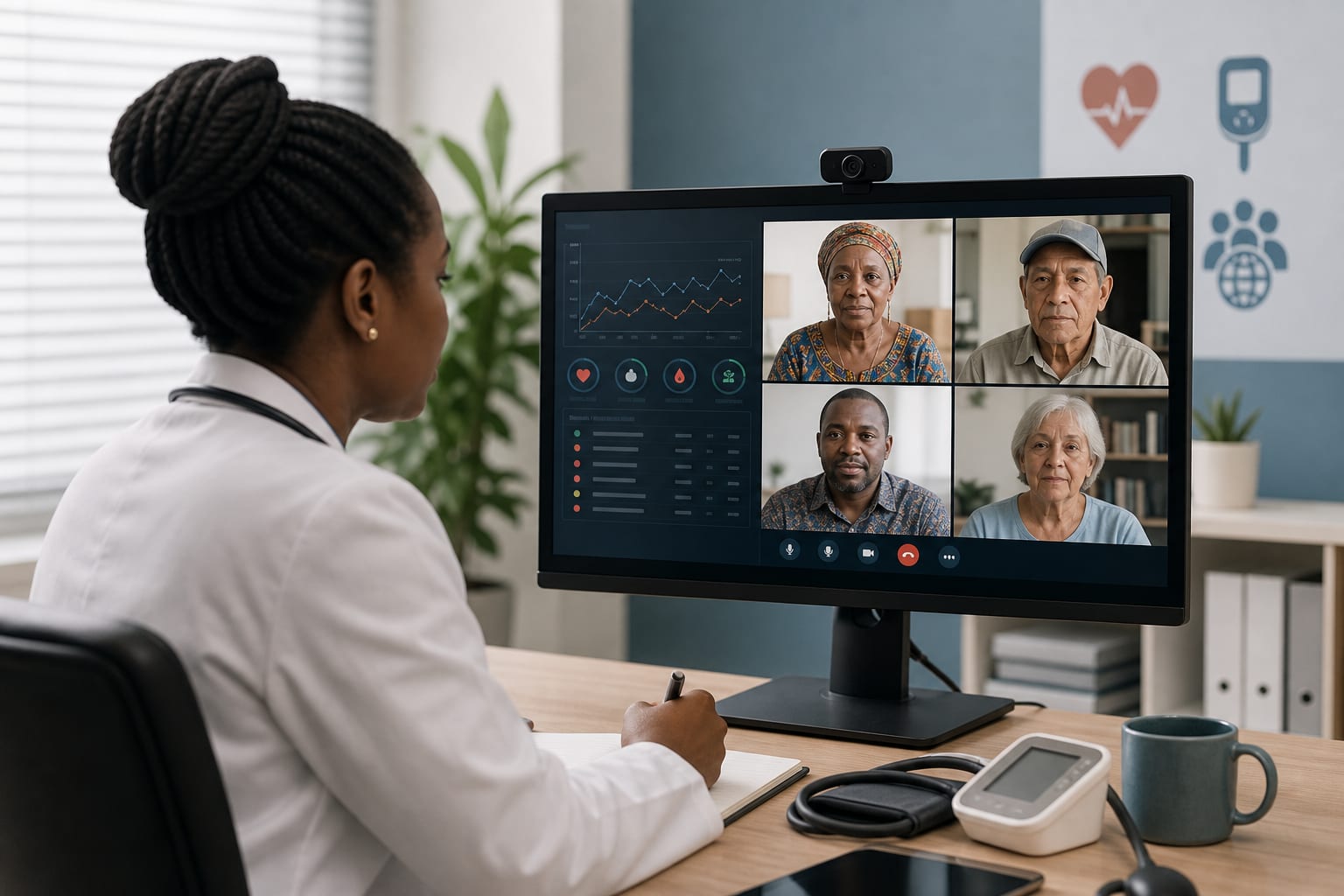
This report examines the usability of telehealth among healthcare professionals managing noncommunicable diseases (NCDs) in Brazil, Ghana, Honduras, and the UK. It highlights the importance of user acceptance and technical infrastructure in the effective implementation of telehealth services.
Background
Noncommunicable diseases (NCDs) account for over 70% of global deaths, with significant mortality rates in low- to middle-income countries (LMICs). The COVID-19 pandemic accelerated the adoption of telehealth, which has become essential for maintaining patient care amidst challenges in traditional healthcare delivery. Understanding the usability of telehealth is crucial for enhancing its effectiveness and acceptance among healthcare professionals.
Data Highlights
No numerical data or trial data available in the source material.
Key Findings
Telehealth has transitioned from a supplementary service to an essential platform for managing NCDs during the COVID-19 pandemic.
User acceptance is critical for the sustained use of telehealth, particularly among healthcare professionals with varying levels of experience.
Technical infrastructure, including system failures and connectivity issues, can significantly impact the usability of telehealth services.
Usability is linked to the acceptability of telehealth technologies by both patients and healthcare providers.
LMICs face unique challenges in adopting telehealth due to infrastructure limitations and access to medical services.
Clinical Implications
Healthcare professionals should prioritize usability and technical support when implementing telehealth solutions for NCD management. Training and resources should be tailored to enhance user acceptance and address specific challenges faced by professionals in LMICs.
Conclusion
The usability of telehealth is a pivotal factor in its successful integration into healthcare systems for managing NCDs. Continued focus on user experience and infrastructure development is essential for optimizing telehealth services.
by Ken Brackstone, Roberta Lins Gonçalves, Adriana Silvina Pagano, Zilma Silveira Nogueira Reis, Seth Kwaku Afagbedzi, Lysien Ivania Zambrano, Tainá Costa Pereira Lopes, Sarah Almeida Cordeiro, Julia Macedo Nunes, Wagner Meira Jr, James Batchelor, Antonio Luiz Pinho Ribeiro