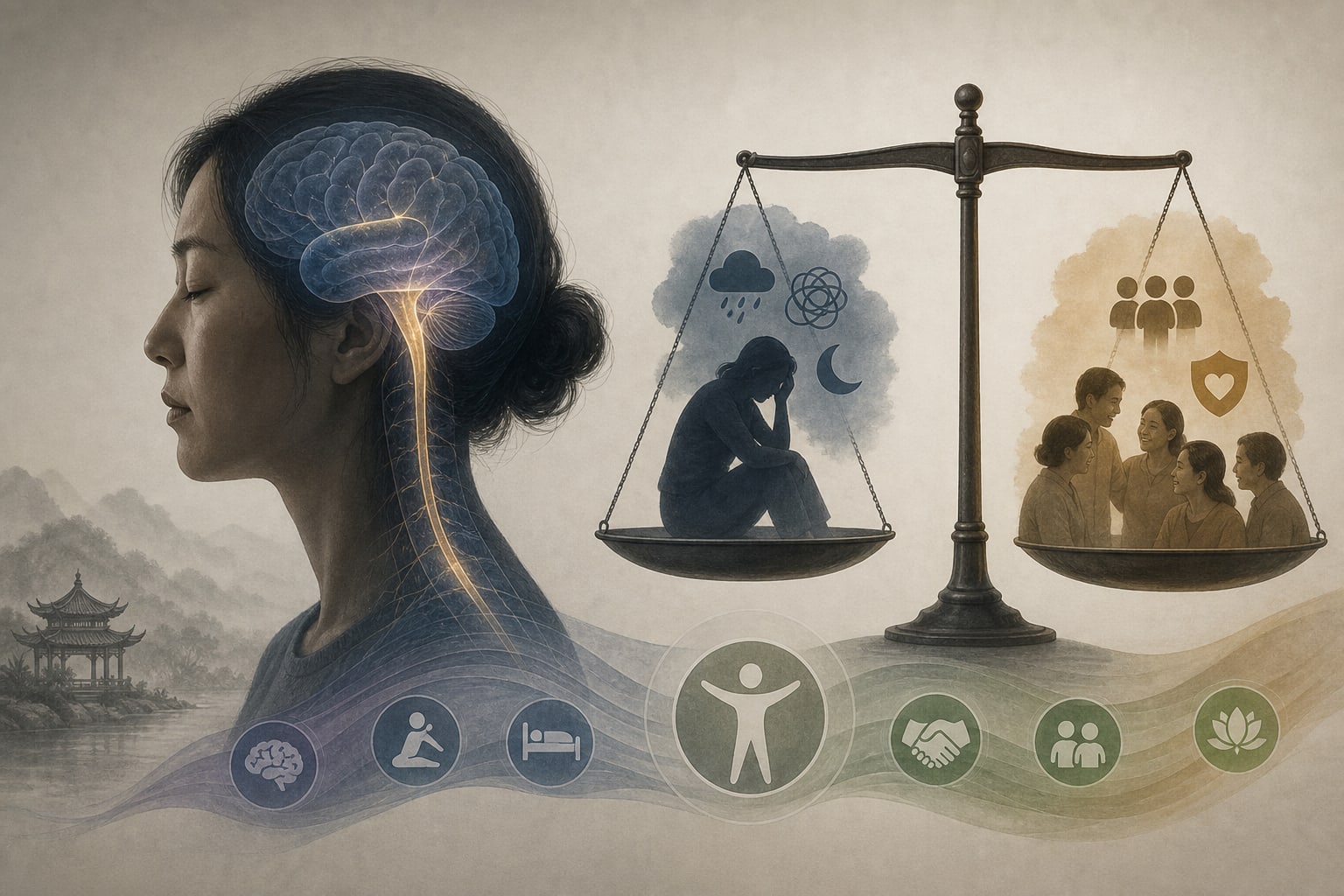
Factors Affecting Quality of Life in Individuals with Neuromyelitis Optica Spectrum Disorder
Overview
This study investigates the health-related quality of life (HRQoL) in Chinese patients with neuromyelitis optica spectrum disorder (NMOSD) and identifies key biopsychosocial factors influencing it. Findings indicate significant impairments in both physical and mental components of HRQoL.
Background
Neuromyelitis optica spectrum disorder (NMOSD) significantly impacts patients' quality of life. Previous studies have shown that both physical and psychological factors contribute to the overall well-being of patients with NMOSD.
Data Highlights
Measure
Median Score
Physical Component Summary (PCS)
55.5
Mental Component Summary (MCS)
51.0
Role-Physical
25.0
Role-Emotional
33.3
Key Findings
Median PCS was 55.5 and MCS was 51.0.
Role-physical and role-emotional scores were 25.0 and 33.3, respectively.
Older age, depressive symptoms, social avoidance, and poor sleep quality were associated with worse PCS.
For MCS, depressive symptoms, social avoidance, poor sleep quality, and lower resilience were significant factors.
All identified associations were statistically significant (p < 0.05).
Clinical Implications
Clinicians should consider psychosocial factors such as depression, social support, and sleep quality in managing NMOSD.
Conclusion
Psychosocial factors influence HRQoL in NMOSD patients.