Gender-based analysis of visual and refractive characteristics in exotropia - Report - MDSpire

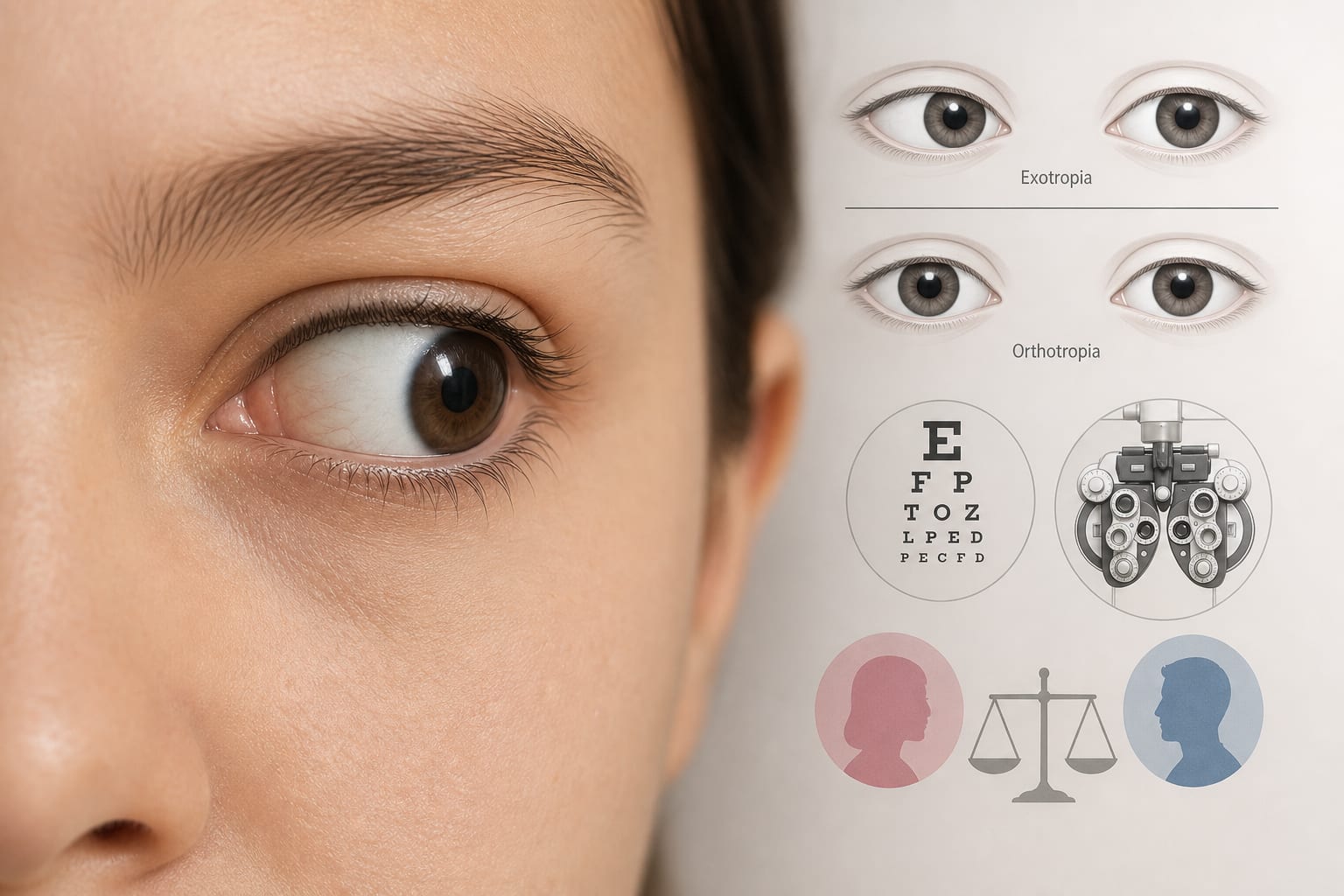
Gender-based analysis of visual and refractive characteristics in exotropia

  • By

  • Masoud Khorrami-Nejad

  • Mohammad Reza Akbari

  • Babak Masoomian

  • Arash Mirmohammadsadeghi

  • Haider Resan Hussein

  • Foroozan Narooie-Noori

  • May 27, 2026

  • 0 min

Share

Clinical Report: Analysis of Visual and Refractive Features in Exotropia by Gender

Overview

This study investigates gender-based differences in visual and refractive characteristics among patients with exotropia.

Background

Exotropia is a common form of strabismus that can lead to amblyopia and other visual impairments. This analysis aims to fill the gap in literature regarding gender-specific characteristics in exotropia.

Data Highlights

No numerical data or trial data provided in the source material.

Key Findings

  • Exotropia prevalence varies by geographical region and ethnic group.
  • Intermittent exotropia is the most common subtype, with varying management strategies.
  • Gender disparities in the prevalence of exotropia have been noted, with some studies suggesting a female preponderance.
  • Comprehensive evaluation of refractive errors is crucial in patients with exotropia to prevent amblyopia.
  • Significant or asymmetric astigmatism can contribute to amblyopia in patients with exotropia.

Clinical Implications

Clinicians should consider gender differences when assessing and managing patients with exotropia. A thorough evaluation of visual acuity and refractive errors is essential to optimize treatment outcomes.

Conclusion

This study highlights the need for gender-based analysis in understanding the clinical features of exotropia.

Related Resources & Content

  1. BMC Ophthalmology, 2026 -- Gender-based analysis of visual and refractive characteristics in exotropia
  2. Contact Lens Spectrum — Controlling Strabismus with Contact Lenses
  3. Frontiers in Medicine — Interocular asymmetry and ocular biometric patterns in pediatric high myopia: implications for early risk stratification
  4. conexiant — Prisms, Vision Therapy Reduce AACE
  5. Frontiers in Medicine — Choroidal structural and perfusion characteristics across refractive groups in children
  6. Controlling Strabismus with Contact Lenses
  7. Interocular asymmetry and ocular biometric patterns in pediatric high myopia: implications for early risk stratification
  8. Prisms, Vision Therapy Reduce AACE
  9. Esotropia and Exotropia Preferred Practice Pattern® - Johns Hopkins University
  10. Checking your browser - reCAPTCHA
  11. Gender-based analysis of visual and refractive characteristics in exotropia | BMC Ophthalmology | Springer Nature Link

Original Source(s)

Related Content