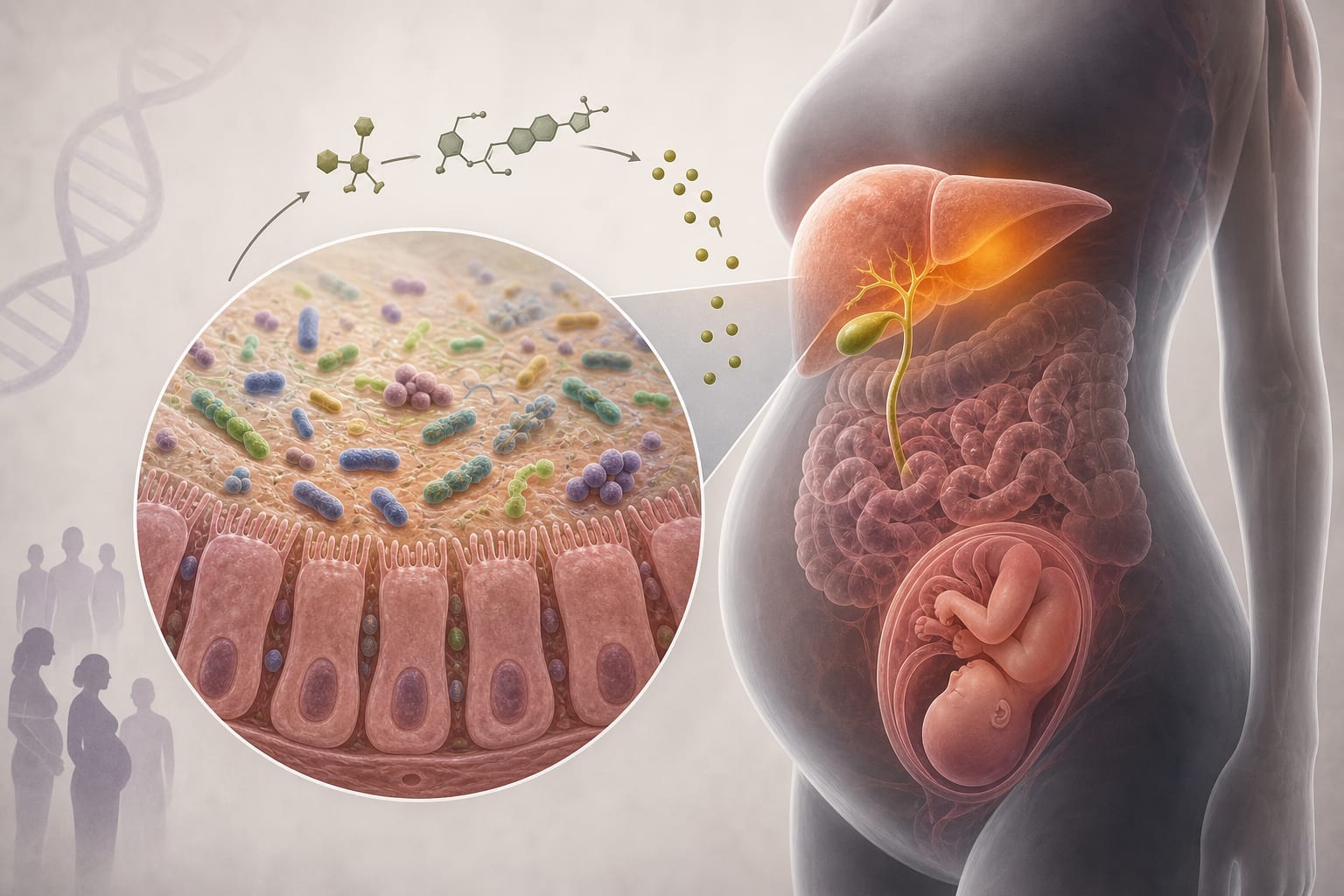
Clinical Report: The Role of Gut Microbiota in Intrahepatic Cholestasis During Pregnancy
Overview
This systematic review highlights the potential role of gut microbiota dysbiosis in the pathogenesis of intrahepatic cholestasis of pregnancy (ICP). It underscores the need for further research to explore microbial changes and their implications for therapeutic strategies in managing ICP.
Background
Intrahepatic cholestasis of pregnancy (ICP) is a significant liver disorder that occurs during pregnancy, primarily in the second or third trimester. It is associated with increased maternal and fetal risks, including adverse perinatal outcomes. Understanding the role of gut microbiota in ICP could lead to novel therapeutic approaches and improved management strategies.
Data Highlights
No numerical data or trial data provided in the source material.
Key Findings
['Dysbiosis of gut microbiota has been implicated in the pathophysiology of ICP.', 'Alterations in microbial taxa and depletion of specific bacteria involved in metabolic pathways have been observed in ICP patients.', 'ICP incidence varies significantly across different ethnic groups and geographical locations, ranging from 0.3% to 27.6%.', 'Risk factors for ICP include maternal age, body weight, and genetic predispositions.', 'Bile acids play a central role in the development of ICP, influenced by gut microbiome composition.']
Clinical Implications
Healthcare professionals should consider the potential impact of gut microbiota on ICP when assessing risk factors and treatment options. Future research may lead to microbiome-targeted therapies that could enhance management and outcomes for affected patients.
Conclusion
The interplay between gut microbiota and ICP presents a promising area for future research, which may yield new insights into prevention and treatment strategies for this pregnancy-specific liver disorder.