Pathological stratification and therapeutic implications for post-stroke depression based on a multidimensional biomarker panel: a narrative review - Report - MDSpire
Advertisement
Pathological stratification and therapeutic implications for post-stroke depression based on a multidimensional biomarker panel: a narrative review
Clinical Report: Multidimensional Biomarker Panel for Post-Stroke Depression
Overview
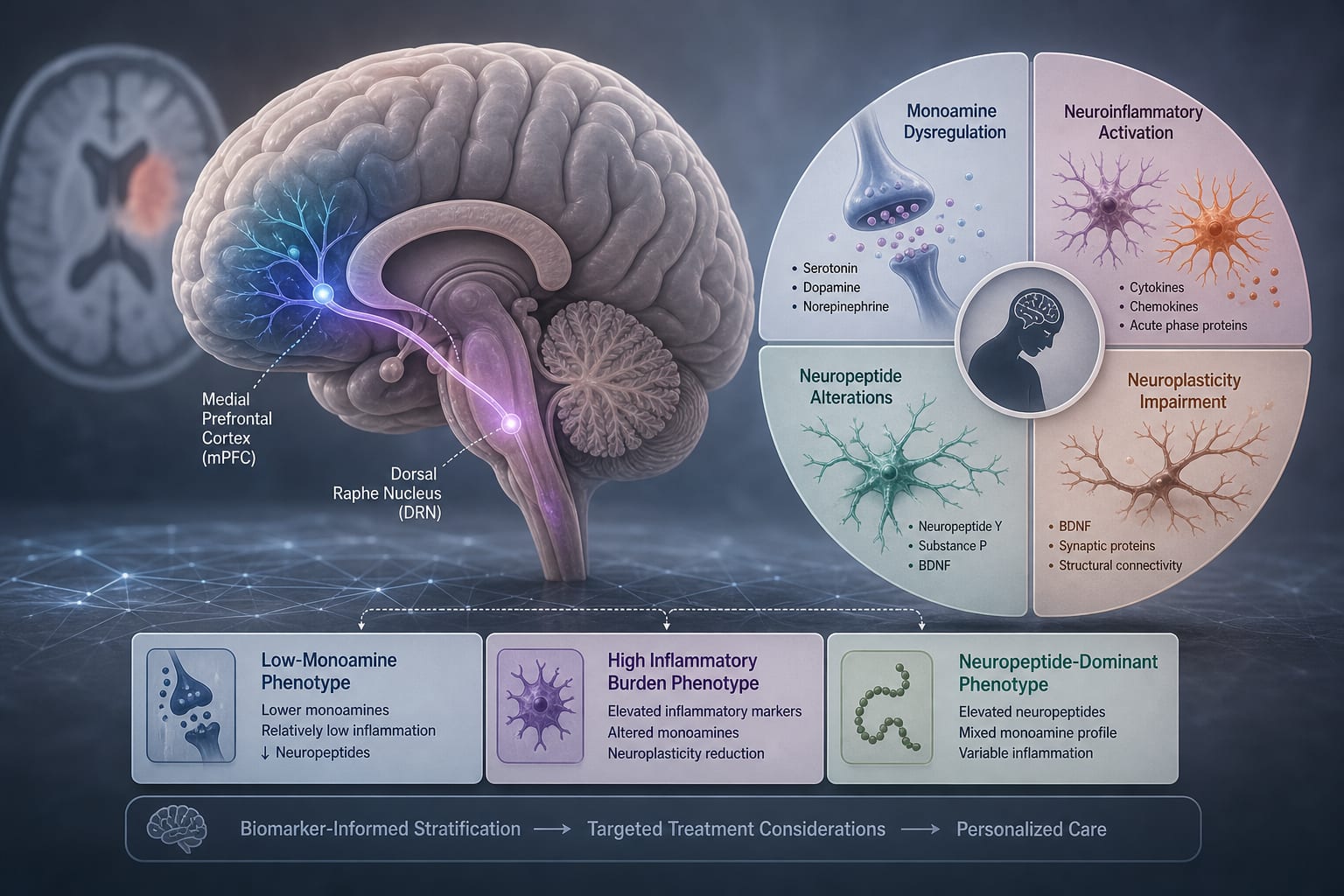
This narrative review discusses the biological complexity of post-stroke depression (PSD), emphasizing the need for a multidimensional biomarker approach.
Background
Post-stroke depression is a prevalent neuropsychiatric complication that significantly affects recovery and quality of life in stroke survivors. Current treatment strategies primarily focus on serotonin-based therapies, which may not be effective for all patients due to the heterogeneous nature of PSD.
Data Highlights
No numerical data or trial data presented in the article.
Key Findings
PSD arises from dysregulation across multiple biological dimensions, not just serotonin deficiency.
Provisional phenotypes for PSD include low-monoamine, high inflammatory burden, and neuropeptide-dominant phenotypes.
Current biomarkers should be viewed as tools for risk stratification rather than standalone diagnostic substitutes.
Diagnosis of PSD still relies primarily on clinical evaluation, with biomarkers providing complementary information.
Clinical Implications
Clinicians should consider the biological heterogeneity of PSD when evaluating treatment options.
Conclusion
This review provides a conceptual framework for understanding the biological complexity of PSD.