Orthobiologics are not all the same: a mechanism-based scoping review of PRP, cytokine-rich serum, and extracellular vesicle–based strategies in musculoskeletal conditions - Report - MDSpire
Conexiant’s news site is now MDSpire News. Learn more
Advertisement
Diverse Orthobiologics: A Mechanism-Focused Scoping Review of PRP, Cytokine-Enriched Serum, and Extracellular Vesicle Approaches in Musculoskeletal Disorders
Clinical Report: Diverse Orthobiologics in Musculoskeletal Disorders
Overview
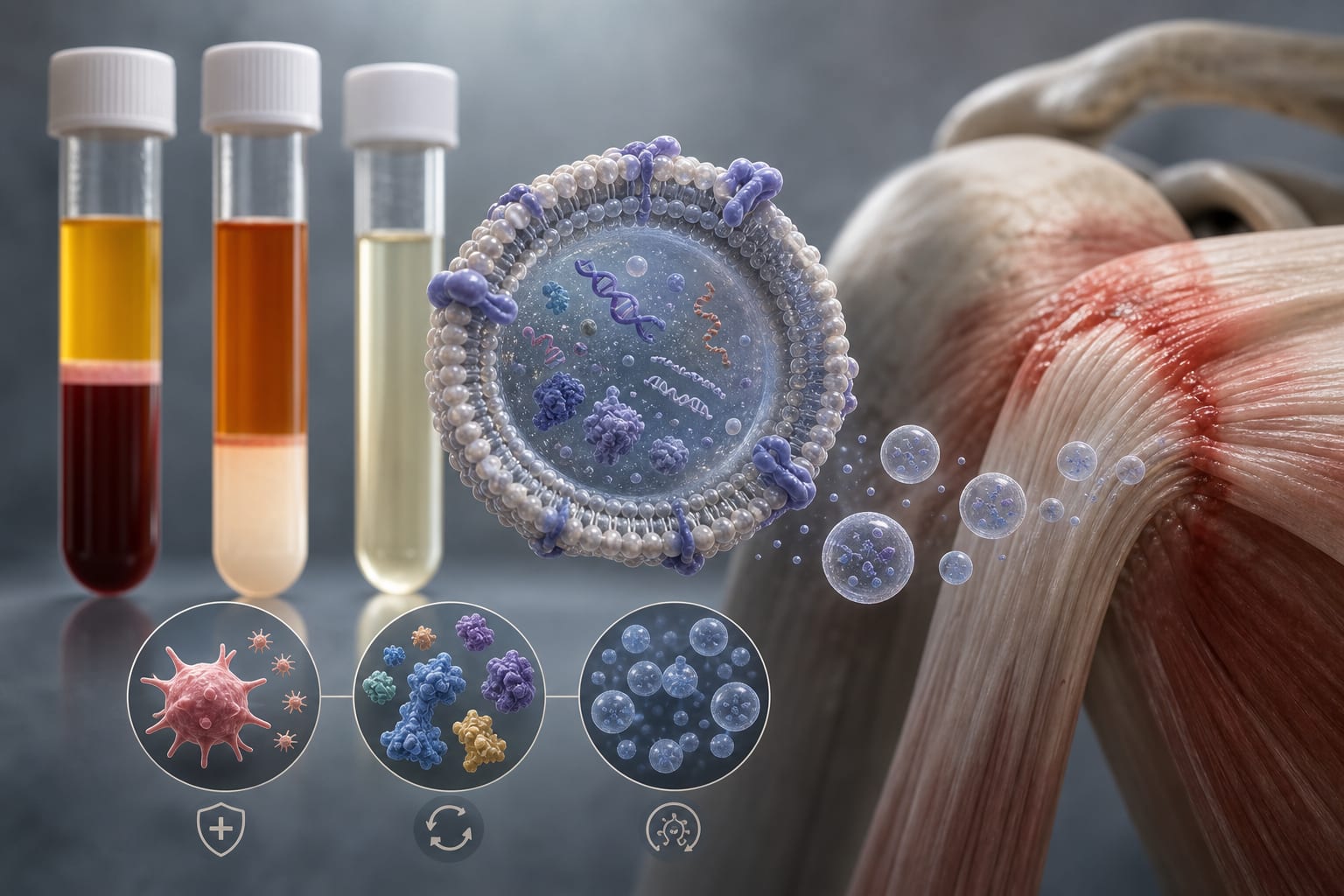
This scoping review examines the biological heterogeneity of orthobiologics, including PRP, cytokine-enriched serum, and extracellular vesicles.
Background
Orthobiologics, particularly autologous blood-derived products like platelet-rich plasma (PRP), are widely used in musculoskeletal medicine. However, the variability in their composition and mechanisms can lead to confusion and inconsistent clinical applications. Understanding these differences is crucial.
Data Highlights
No specific numerical data or trial results were provided in the source material.
Key Findings
PRP primarily functions through the release of growth factors for tissue repair.
Formulations with leukocytes and monocytes focus on immune modulation and inflammatory pathways.
Acellular cytokine-rich serum provides immunomodulatory effects via soluble mediators like IL-1Ra.
Extracellular vesicles (EVs) are experimental with unclear clinical efficacy as paracrine modulators.
The only triple-blind trial of exosomes in knee osteoarthritis confirmed safety but showed no superiority over placebo.
Clinical Implications
Clinicians should be aware of the distinct biological mechanisms of various orthobiologics.
Conclusion
The review emphasizes the importance of understanding the biological diversity among orthobiologics.