Clinical Report: Revealing Biomarkers in Small Cell Lung Cancer
Overview
Small cell lung cancer (SCLC) is characterized by significant genetic and transcriptional heterogeneity, complicating treatment options. This report highlights the role of biomarkers in early detection.
Background
SCLC is one of the most aggressive forms of lung cancer, accounting for 15% of lung cancer cases. The complexity of its genetic landscape, including mutations in key oncogenes and tumor suppressor genes, necessitates further research. Understanding the biomarkers involved in SCLC can enhance early diagnosis.
Data Highlights
No numerical data available in the source material.
Key Findings
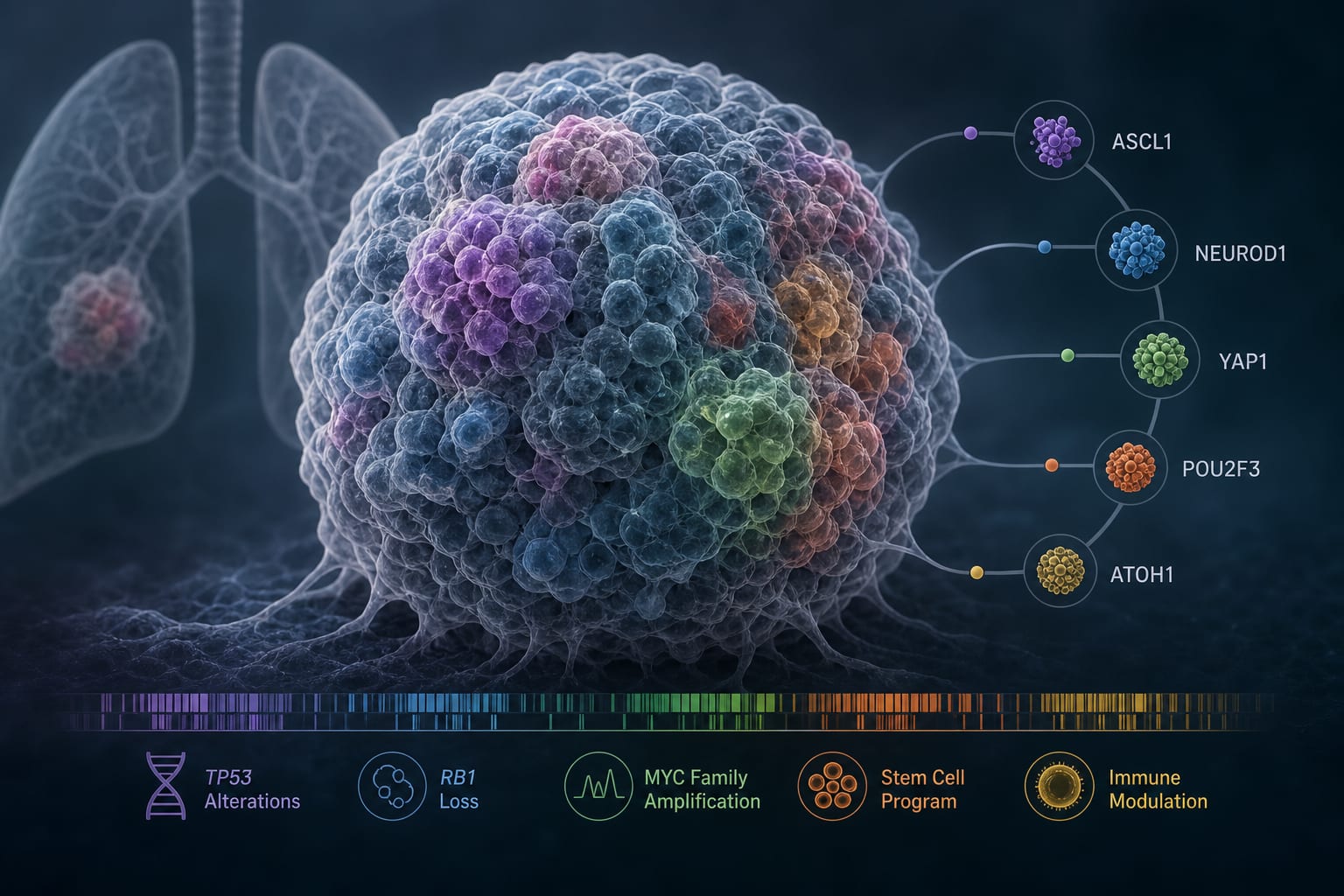
SCLC has a high rate of genetic and molecular heterogeneity, including mutations in RB1, TP53, and MYC.
Key regulators such as ASCL1, NEUROD1, YAP1, POU2F3, and ATOH1 have been identified.
Biomarkers, including genetic, circulating, and biochemical markers, are crucial for early detection.
Cancer stem cells (CSCs) contribute to treatment resistance, highlighting the need for targeted therapies against markers like CD133, SOX2, and CD44.
Combining molecular diagnosis with advanced therapies may improve outcomes in SCLC patients.
Clinical Implications
The identification of specific biomarkers in SCLC can guide therapeutic strategies. Understanding the role of genetic heterogeneity and CSCs is essential.
Conclusion
The exploration of biomarkers in SCLC provides insights into early detection and treatment strategies.