Clinical Report: Advancements and Obstacles in Explainable AI for Ultrasound Imaging of Breast Cancer
Overview
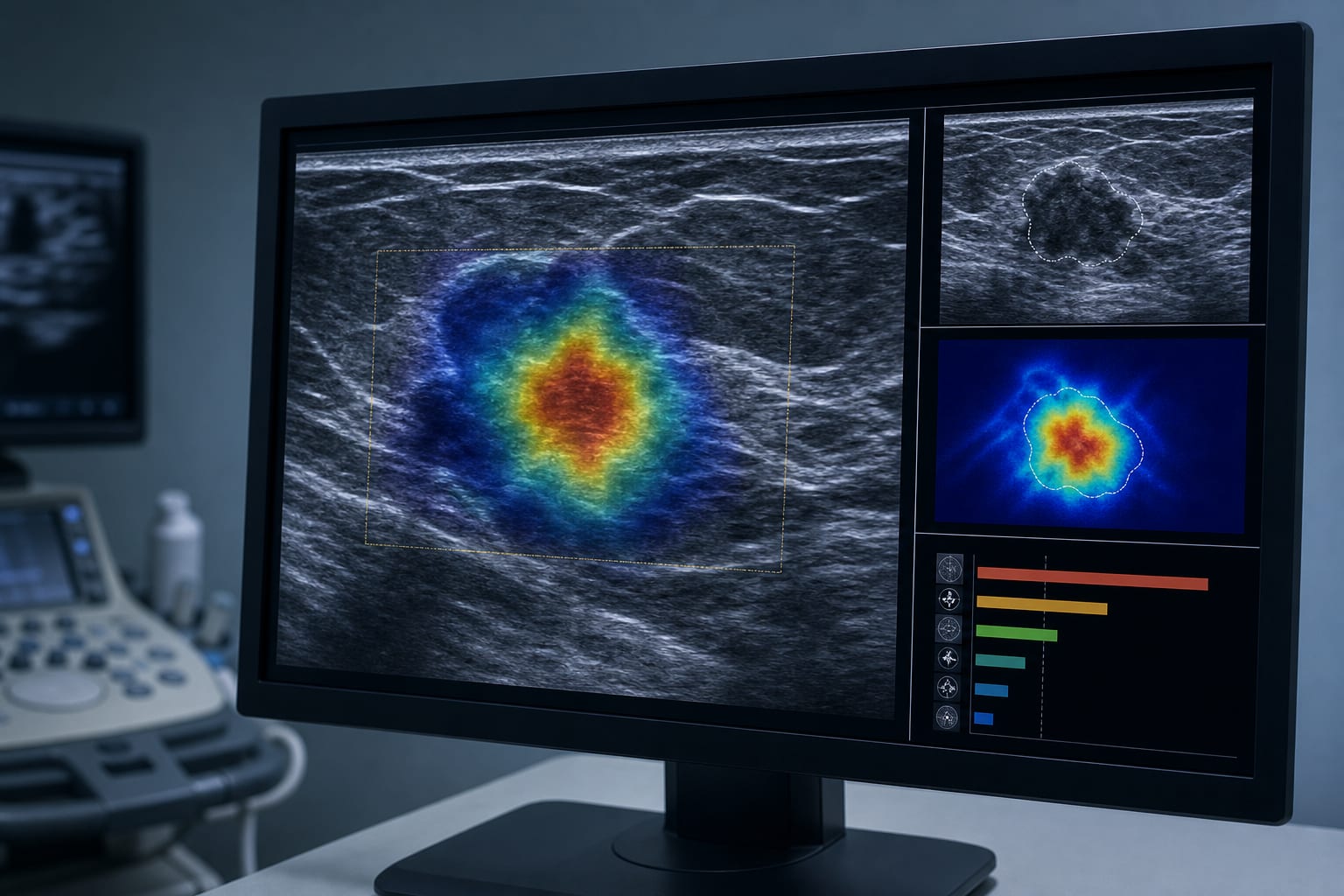
This mini review discusses advancements in Explainable Artificial Intelligence (XAI) applied to ultrasound imaging for breast cancer detection, highlighting methodologies and challenges faced in clinical implementation.
Background
Breast cancer is a leading cause of cancer mortality globally. Ultrasound imaging is a critical diagnostic tool due to its safety and cost-effectiveness. However, the interpretability of AI models used in ultrasound imaging is a barrier to clinical adoption.
Data Highlights
No numerical data or trial data provided in the source material.
Key Findings
['Deep learning methods have shown success in automating breast cancer detection from ultrasound images.', 'The black-box nature of AI models poses challenges for clinical acceptance.', 'Explainable AI (XAI) methods like Grad-CAM, LIME, and SHAP are being developed to improve model interpretability.', 'Current challenges include a lack of standardized evaluation metrics and difficulties in interpreting results under noisy imaging conditions.', 'Future research directions aim to bridge the gap between successful AI systems and their practical applications.']
Clinical Implications
Addressing the challenges of interpretability and validation is crucial for the implementation of AI tools in clinical practice.
Conclusion
Advancements in XAI present challenges that must be addressed for effective clinical integration.