Association between Cabrol shunt and new-onset atrial fibrillation after acute type A aortic dissection surgery: a retrospective study - Report - MDSpire
Advertisement
Association between Cabrol shunt and new-onset atrial fibrillation after acute type A aortic dissection surgery: a retrospective study
Link Between Cabrol Shunt Use and Development of New-Onset Atrial Fibrillation Following Surgery for Acute Type A Aortic Dissection: A Retrospective Analysis
Overview
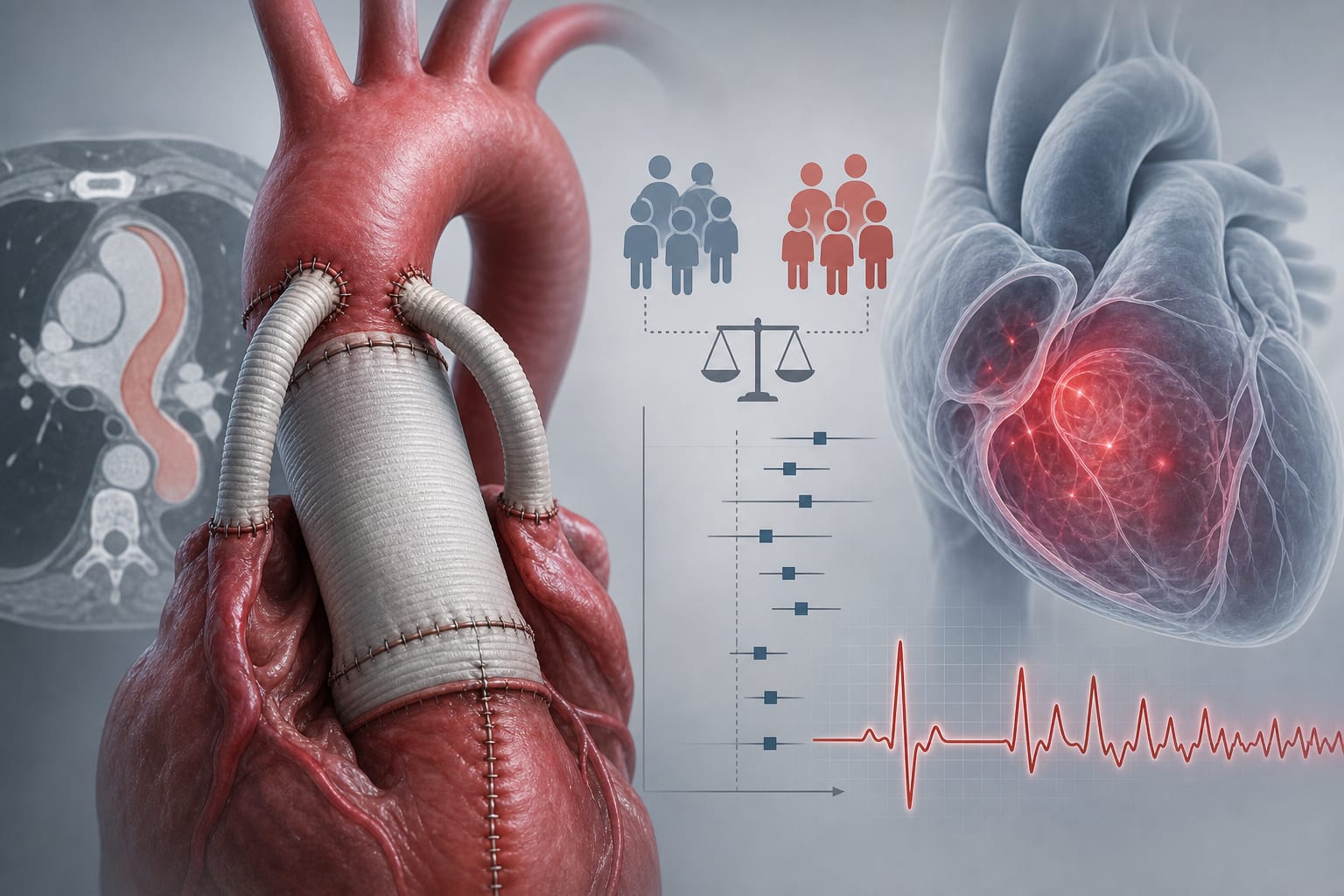
This study investigates the association between Cabrol shunt use and the incidence of new-onset postoperative atrial fibrillation (POAF) in patients undergoing surgery for acute type A aortic dissection (AAAD). Results indicate that the use of a Cabrol shunt is linked to a lower incidence of POAF compared to patients who did not receive the shunt.
Background
Acute type A aortic dissection (AAAD) is a critical cardiovascular emergency with high morbidity and mortality rates. Postoperative atrial fibrillation (POAF) is a common complication following cardiac surgery, significantly impacting patient outcomes. Understanding the factors influencing POAF, including surgical techniques like the Cabrol shunt, is essential for improving postoperative care and reducing complications.
Data Highlights
Group
Incidence of New-Onset POAF
Cabrol Shunt Group
Lower incidence
Non-Cabrol Shunt Group
Higher incidence (P = 0.013)
Key Findings
Cabrol shunt use was associated with a lower incidence of new-onset POAF.
Patients without a Cabrol shunt had a higher observed incidence of POAF (P = 0.013).
Age and aortic cross-clamp time were independent factors influencing new-onset POAF.
The study included a total of 240 patients, with 185 in the Cabrol shunt group and 55 in the non-Cabrol group.
Results were consistent across multiple sensitivity analyses.
Clinical Implications
The findings suggest that the use of a Cabrol shunt may be beneficial in reducing the risk of new-onset POAF in patients undergoing AAAD surgery. Clinicians should consider the implications of surgical techniques on postoperative outcomes, particularly in high-risk patients.
Conclusion
The study highlights the potential protective effect of Cabrol shunt use against new-onset POAF in AAAD surgeries. Further research is warranted to explore the mechanisms behind this association.