Clinical Report: An Advanced Deep Learning Model for Assessing Breast Cancer Risk
Overview
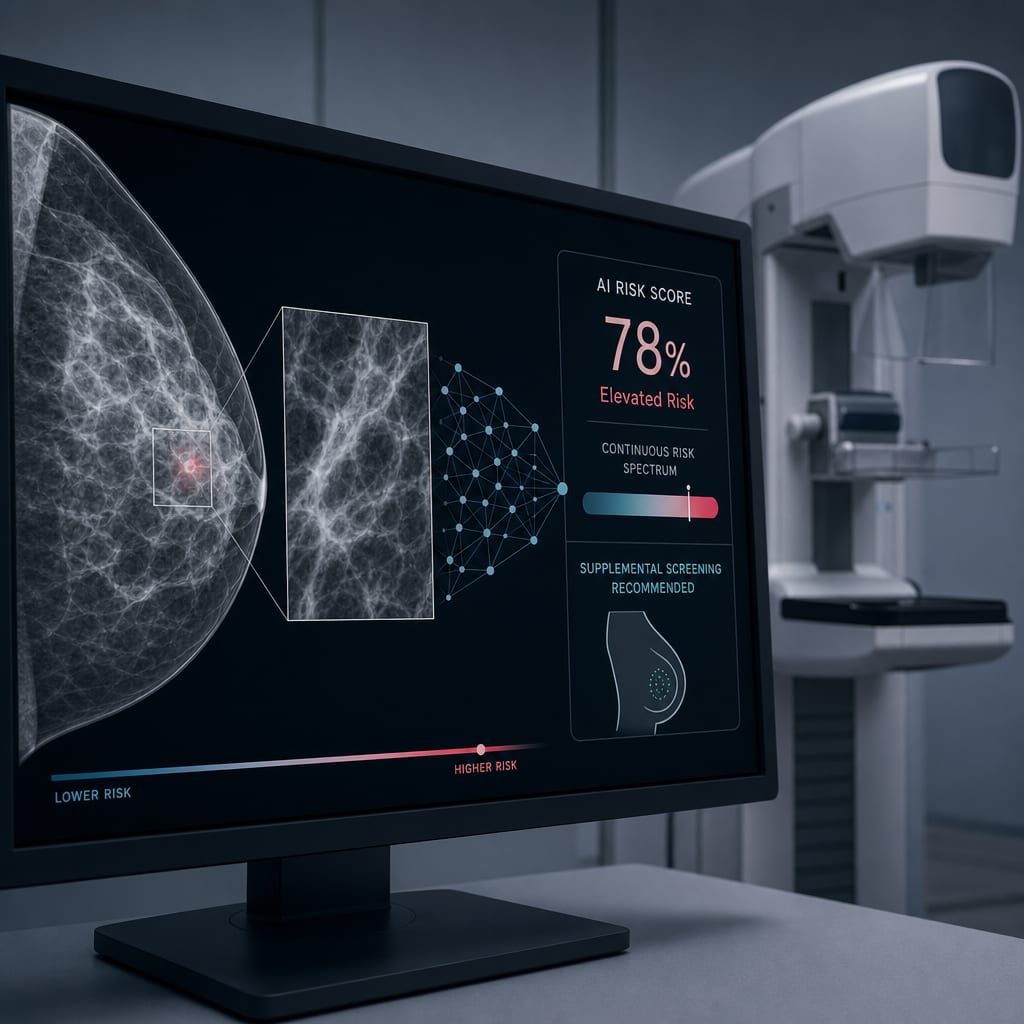
This study evaluates a deep learning (DL) model, Mirai, for predicting breast cancer risk compared to traditional breast density assessments. The findings suggest that the DL model provides superior risk stratification, potentially enhancing supplemental screening accuracy.
Background
Breast density is a significant factor in breast cancer risk and can obscure cancer detection on mammograms. Current policies based on binary density classification may lead to overuse of resources and increased false positives. Advanced risk prediction tools like the DL model could offer more personalized screening strategies, addressing these limitations.
Data Highlights
Study Cohort
Mammograms Analyzed
Patients
Final Study Cohort
123,091
67,019
Key Findings
The DL model outperformed traditional breast density assessments in predicting future breast cancer risk.
It effectively stratified risk across a diverse population, reducing interreader variability.
The study included a large cohort of 123,091 mammograms from 67,019 patients.
Deep learning models capture a broader range of risk-relevant imaging features compared to density alone.
Results indicate potential for improved access to supplemental imaging based on individualized risk rather than binary density classification.
Clinical Implications
The implementation of the DL model could lead to more accurate breast cancer risk assessments, allowing for tailored screening strategies. This may reduce unnecessary imaging and associated costs, particularly for underserved populations.
Conclusion
The advanced DL model presents a promising alternative to traditional breast density assessments, enhancing the precision of breast cancer risk stratification and potentially improving screening outcomes.