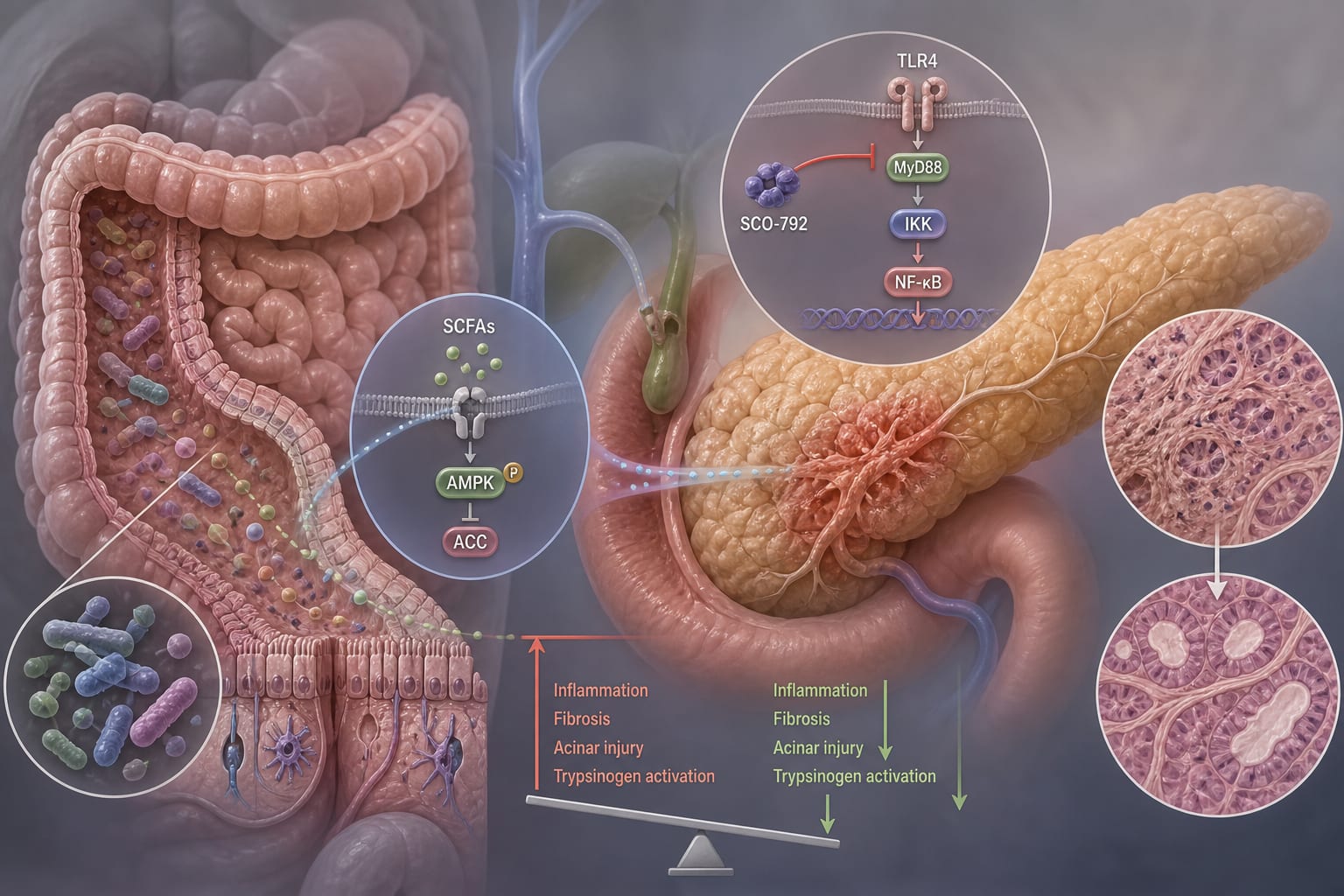
SCO‑792 alleviates HFD‑aggravated chronic pancreatitis by modulating the gut–pancreas axis via the AMPK/ACC and TLR4/NF‑κB signaling pathways - Report - MDSpire
SCO-792, an enteropeptidase inhibitor, mitigates high-fat diet-induced chronic pancreatitis in mice by modulating the gut-pancreas axis. The study reports its effects on pancreatic injury, fibrosis, and gut microbiota composition.
Background
Chronic pancreatitis (CP) is a progressive inflammatory disease leading to pancreatic dysfunction and increased mortality risk. The rising incidence of CP is linked to high-fat diets and metabolic disorders, necessitating effective therapeutic strategies. Targeting enteropeptidase, a key enzyme in trypsinogen activation, presents a novel approach to managing CP.
Data Highlights
Parameter
Effect of SCO-792
Histological scores
Lowered
Collagen accumulation
Diminished
Collagen I and α-SMA expression
Reduced
Gut microbiota composition
Increased Akkermansia
SCFA production
Promoted
Key Findings
SCO-792 reduced pancreatic injury and fibrosis in a mouse model of CP.
It maintained lipid metabolic homeostasis via the AMPK/ACC pathway.
SCO-792 altered gut microbiota, increasing beneficial taxa like Akkermansia.
It preserved intestinal barrier integrity, limiting serum LPS translocation.
The treatment inhibited TLR4/NF-κB-dependent pancreatic inflammation.
Akkermansia or propionate supplementation provided similar protective effects.
Clinical Implications
Further exploration of gut microbiota modulation could enhance treatment strategies.
Conclusion
SCO-792 demonstrates effects on the gut-pancreas axis in a mouse model of chronic pancreatitis.
The goal of this clinical trial is to find out if giving extra adaptive radiation therapy after standard chemoradiation treatment is safe and helpful for people with rectal cancer.