Clinical Report: Utilizing AI for Metabolic Dysfunction-Related Liver Disease
Overview
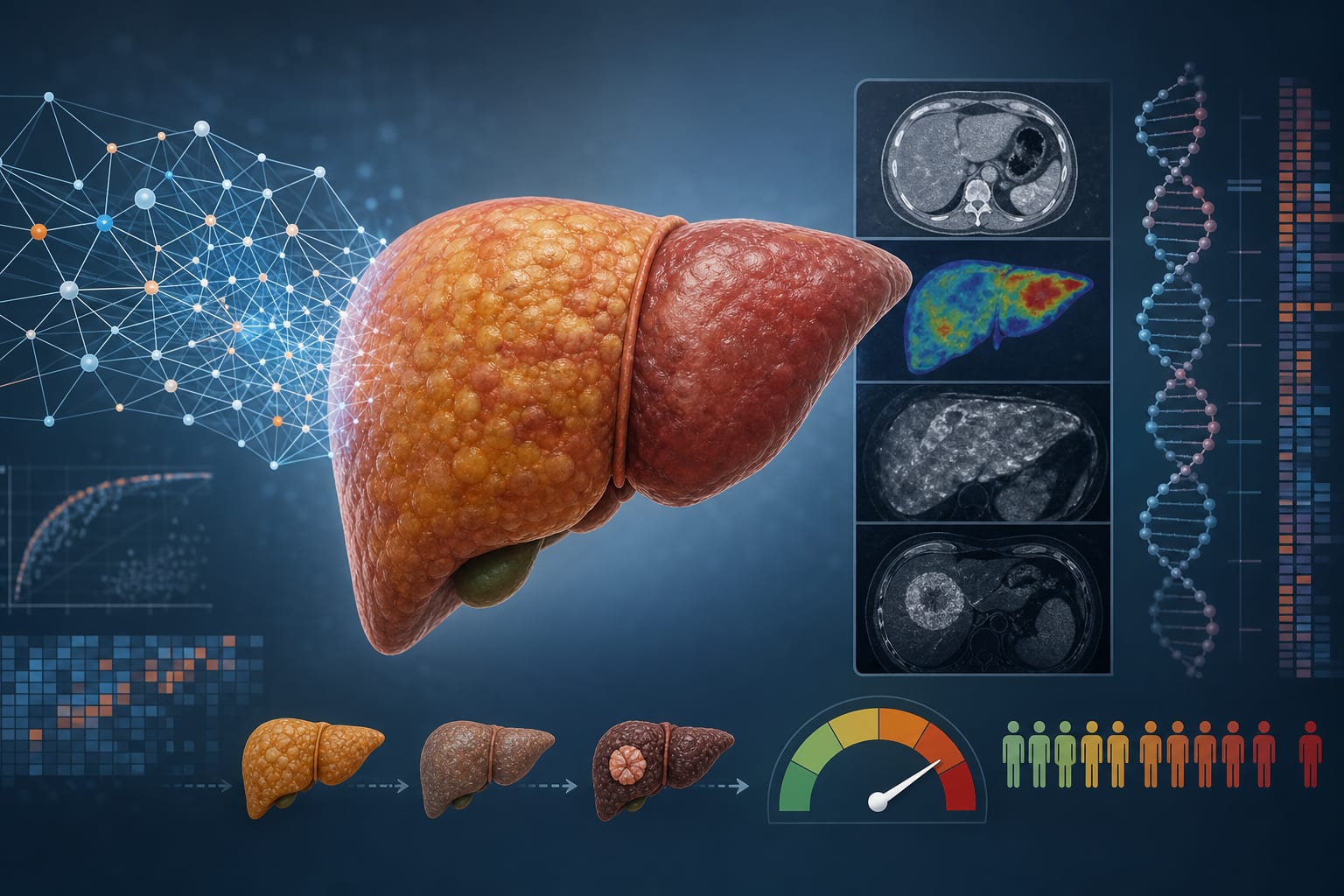
This review discusses the application of artificial intelligence (AI) and polygenic risk scores (PRS) in identifying metabolic dysfunction-associated steatotic liver disease (MASLD) and assessing the risk of hepatocellular carcinoma (HCC). It highlights the need for integrated models and further validation.
Background
Non-alcoholic fatty liver disease (NAFLD), now termed metabolic dysfunction-associated steatotic liver disease (MASLD), is a leading chronic liver disorder globally, affecting approximately 25% of adults. The disease is closely linked to metabolic syndrome and can progress to severe conditions such as HCC. Current diagnostic tools are limited in their predictive accuracy for disease progression and HCC risk.
Data Highlights
No numerical data provided in the source material.
Key Findings
AI and ML models show promise in improving non-invasive diagnosis and risk stratification for MASLD and HCC.
Multimodal models integrating clinical, imaging, and genetic data outperform traditional diagnostic methods.
There is a critical need for large-scale validation studies to support the clinical application of AI-driven approaches.
Genetic variants significantly influence disease severity and HCC risk, but genetic risk alone is insufficient due to disease heterogeneity.
Challenges in translating AI methodologies into clinical practice include poor genetic integration and limited explainability.
Clinical Implications
The integration of AI and PRS in clinical settings requires addressing current limitations in validation and standardization.
Conclusion
Advancements in AI and PRS for predicting HCC risk in MASLD highlight the need for further validation and integration into clinical practice.