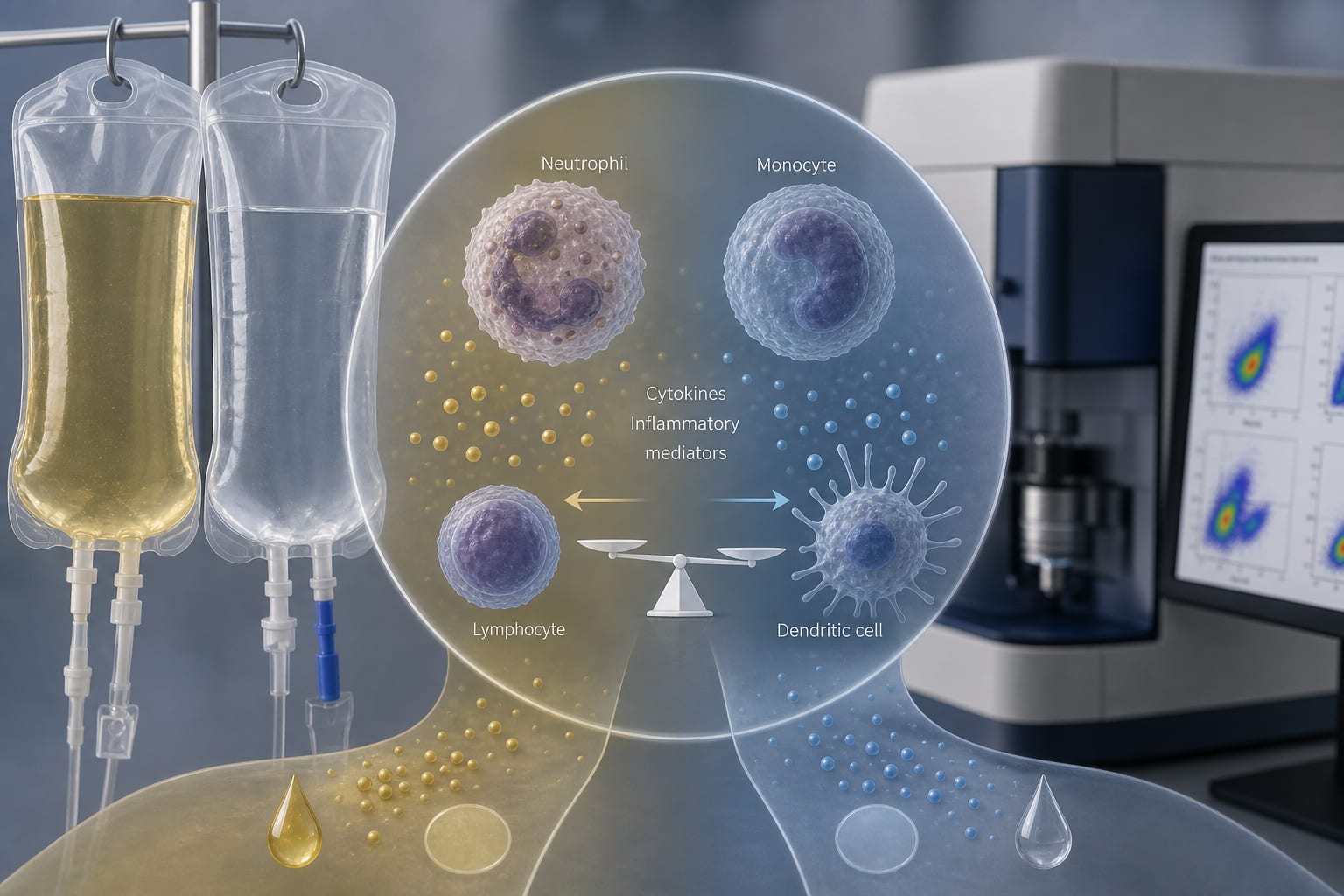
Clinical Report: Comparative Analysis of Immune Reactions to Albumin Versus Crystalloids in Sepsis Resuscitation
Overview
This study explores the immune responses associated with 5% Human Albumin Solution (5% HAS) compared to balanced crystalloid in sepsis resuscitation. Notable variations in immune cell subsets and cytokine levels were observed.
Background
Sepsis remains a critical condition requiring effective fluid resuscitation, with crystalloid fluids being the standard recommendation. The role of 5% HAS in modulating immune responses is investigated.
Data Highlights
No significant differences in clinical outcomes were observed between 5% HAS and crystalloid groups.
Key Findings
Monocyte levels were higher in the crystalloid group compared to the 5% HAS group at both 12 and 24 hours.
CD4 + T-cell counts were also elevated in the crystalloid group at both time points.
At 24 hours, the crystalloid group exhibited significantly lower IFN-gamma levels compared to the 5% HAS group.
Within the 5% HAS group, significant decreases in CCL20 and CCL4 levels were noted over time.
Gene expression analysis revealed less expression of plasma cell-related genes in the crystalloid group compared to the 5% HAS group.
Heat shock protein coding genes showed consistent differential expression in the crystalloid group over time.
Clinical Implications
The findings indicate variations in immune cell dynamics and cytokine profiles between the two resuscitation fluids.
Conclusion
This study provides insights into the immunological differences between 5% HAS and crystalloid fluids in sepsis resuscitation, highlighting the need for further research to understand the clinical significance of these findings.
by John Cafferkey, Jennifer Rynne, Andrew Ferguson, Julia Grahamslaw, Peter Smith, Ewan A. M. Pow, Katherine Oatey, Daniel Horner, Alasdair R. Corfield, Alasdair Gray, Manu Shankar-Hari
Phase 3 ENHANCE-1 results showed higher composite clinical cure and microbiologic response rates with cefepime-zidebactam vs meropenem in hospitalized adults with complicated urinary tract infection or acute pyelonephritis.