Machine Learning Prediction Model for Dyslipidemia and Its Association With Atherothrombotic Events in 3 Independent Cohorts From South Korea, Japan, and the United Kingdom: Algorithm Development and Validation Study - Report - MDSpire
Advertisement
Machine Learning Prediction Model for Dyslipidemia and Its Association With Atherothrombotic Events in 3 Independent Cohorts From South Korea, Japan, and the United Kingdom: Algorithm Development and Validation Study
Clinical Report: Development and Validation of a Machine Learning Model for Dyslipidemia
Overview
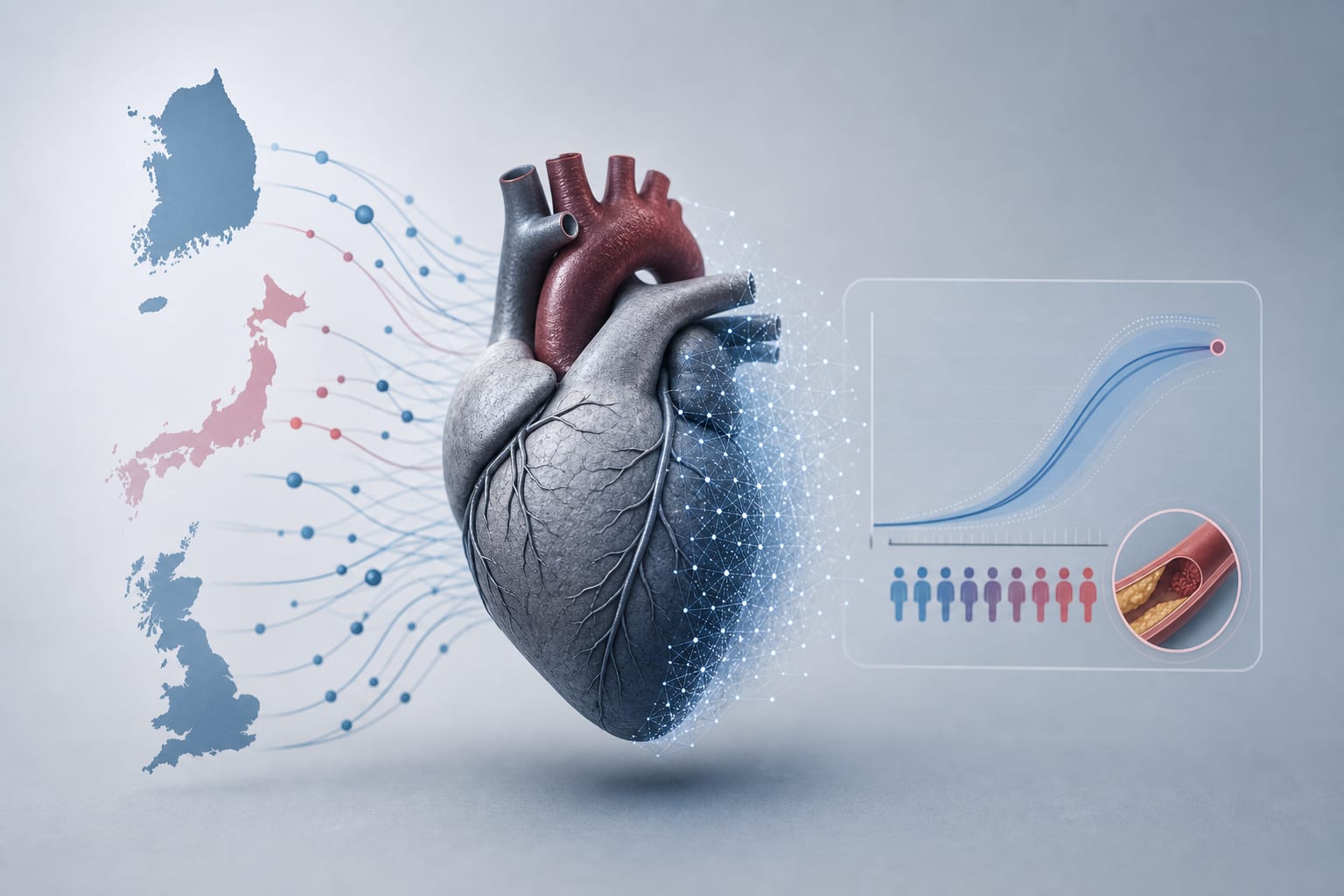
This study developed and validated a machine learning model to predict dyslipidemia within 5 years using health examination data from diverse cohorts in South Korea, Japan, and the UK. The model demonstrated strong predictive capabilities and was linked to subsequent atherothrombotic events, highlighting its clinical relevance.
Background
Dyslipidemia is a critical risk factor for cardiovascular disease, necessitating effective management strategies. Traditional methods for predicting dyslipidemia risk are limited, often focusing on single populations or specific lipid abnormalities. This study addresses these gaps by employing machine learning to enhance risk prediction across multiple cohorts.
Data Highlights
Cohort
Sample Size
Korean National Health Insurance Service
1,062,018
Japan Medical Data Center
21,517,570
UK Biobank
502,367
Key Findings
The machine learning model was developed using data from the Korean cohort and validated in Japan and the UK.
Model accuracy was enhanced through the use of explainable AI techniques, such as SHAP.
Dyslipidemia was defined using ICD-10 codes, ensuring standardized diagnostic criteria.
The model's dyslipidemia risk score was associated with increased risk of atherothrombotic events.
This multicohort approach supports the generalizability of the model across different healthcare systems.
Clinical Implications
The findings suggest that machine learning can significantly improve the prediction of dyslipidemia risk, enabling earlier interventions. Clinicians may consider integrating such predictive models into routine health screenings to better manage cardiovascular risk.
Conclusion
The development of a robust machine learning model for predicting dyslipidemia across diverse populations represents a significant advancement in cardiovascular risk assessment. Its association with atherothrombotic events underscores the importance of proactive management strategies.