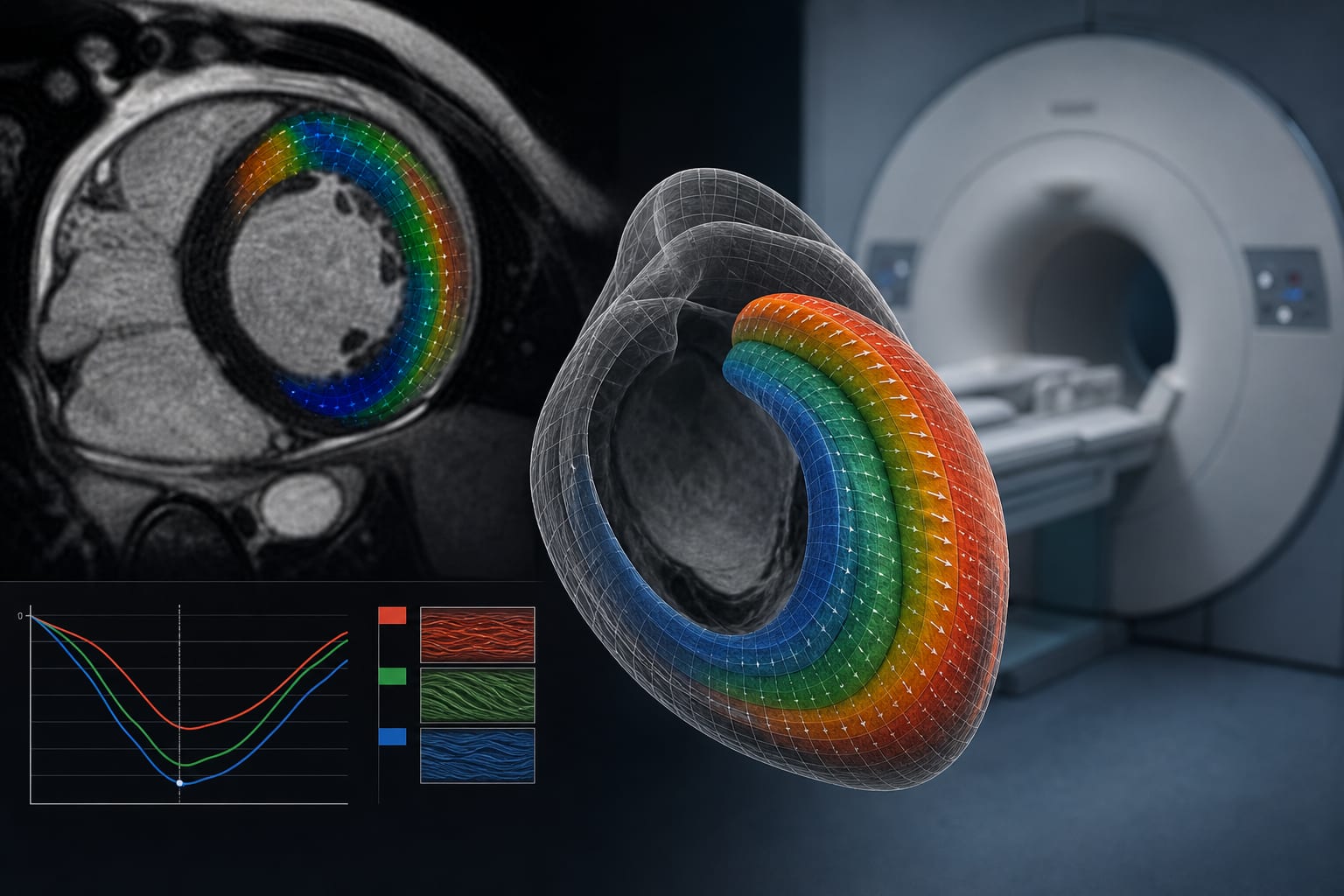
Clinical Report: Cardiac PET in 2026: From Quantification to Clinical Transformation
Overview
This report discusses advancements in cardiac PET imaging, emphasizing its diagnostic accuracy and the adoption of quantitative myocardial blood flow (MBF) and myocardial flow reserve (MFR) for evaluating coronary artery disease (CAD). The findings highlight the importance of updated guidelines and the role of novel tracers in enhancing clinical protocols.
Background
Cardiac PET imaging has emerged as a critical non-invasive tool for diagnosing coronary artery disease (CAD). With the increasing prevalence of CAD and its associated morbidity, accurate diagnostic methods are essential for effective patient management. Recent advancements in imaging technology and protocols have the potential to transform clinical practice and improve patient outcomes.
Data Highlights
No numerical data available in the provided source material.
Key Findings
- The American Society of Nuclear Cardiology recommends PET with MBF for all candidates of myocardial perfusion imaging.
- Updated Appropriate Use Criteria emphasize PET's superior diagnostic accuracy for symptomatic patients with intermediate-to-high pretest probability.
- Phase 3 results of the AURORA trial confirm the high diagnostic performance of the 18F‑flurpiridaz tracer compared to SPECT.
- Quantitative PET imaging has shown advantages in women and patients with higher BMI.
- The multisociety procedure standard published in 2025 outlines best practices for 18F‑flurpiridaz PET imaging.
Clinical Implications
Healthcare professionals should consider adopting cardiac PET with quantitative MBF and MFR in their diagnostic protocols for CAD. The integration of these advanced imaging techniques can lead to improved patient stratification and management, particularly in populations at higher risk for cardiovascular events.
Conclusion
The advancements in cardiac PET imaging, particularly with the introduction of quantitative measures, represent a significant step forward in the non-invasive assessment of coronary artery disease. Continued adherence to updated guidelines will be crucial for optimizing patient care.
Related Resources & Content
- Clinical indications for positron emission tomography myocardial perfusion imaging and myocardial blood flow quantification: An American Society of Nuclear Cardiology position statement - PubMed
- 18F Flurpiridaz PET MPI: New Horizons in Cardiac Imaging - American College of Cardiology
- A Novel Image Processing Method for Identifying Cardiotoxic Effects of Anthracyclines Through Myocardial Metabolic Activity Assessment in [18F]FDG PET/CT Scans
- Assessment of Interpretable Artificial Intelligence for Diagnosing Coronary Artery Disease Using PET Biomarkers Across Multiple Centers - npj Digital Medicine
- houston methodist hospital — 17th Annual Virani Lectureship: Cardiac PET in 2018
- European Radiology — Advancements in Dynamic Myocardial CT Perfusion Imaging Techniques
- 17th Annual Virani Lectureship: Cardiac PET in 2018
- Advancements in Dynamic Myocardial CT Perfusion Imaging Techniques - European Radiology
- Prognostic value of myocardial flow reserve by PET imaging in patients with suspected coronary artery disease: A systematic review and meta-analysis - PubMed
- Clinical indications for positron emission tomography myocardial perfusion imaging and myocardial blood flow quantification: An American Society of Nuclear Cardiology position statement - PubMed
- 18F Flurpiridaz PET MPI: New Horizons in Cardiac Imaging - American College of Cardiology
This content is an AI-generated, fully rewritten summary based on a published scholarly article. It does not reproduce the original text and is not a substitute for the original publication. Readers are encouraged to consult the source for full context, data, and methodology.