Clinical Report: Understanding the Role of Bacteriophages in Immune Recognition
Overview
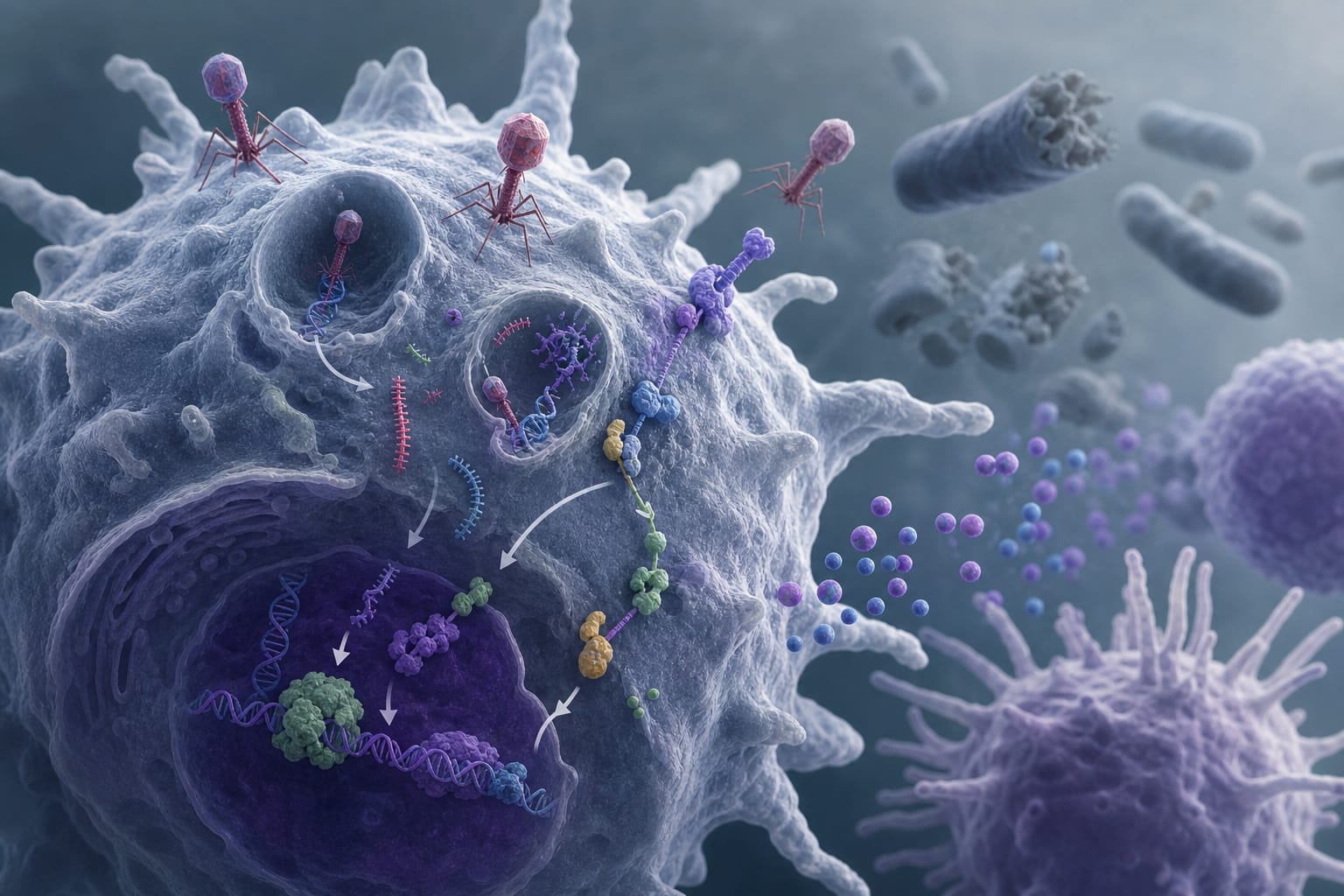
Bacteriophages interact with the host immune system, modulating innate immune responses and influencing infection outcomes. Their immunomodulatory effects can promote bacterial clearance and tissue repair but may also impair antibacterial immunity in certain contexts.
Background
The rise of multidrug-resistant bacterial infections has renewed interest in phage therapy, which utilizes bacteriophages to treat such infections. Understanding the complex interactions between phages and the host immune system is crucial for optimizing phage therapy's safety and efficacy. This knowledge can inform the development of tailored combination therapies based on the host's immune status.
Data Highlights
No numerical or trial data available in the source material.
Key Findings
['Bacteriophages are recognized by pattern recognition receptors, activating inflammatory signaling pathways.', 'Phage-induced immunomodulation can enhance bacterial clearance and limit excessive inflammation.', 'Phage therapy may impair antibacterial immunity or worsen inflammatory diseases in certain contexts.', 'A deeper understanding of phage-immune interactions is essential for optimizing phage selection and administration.', 'Phages can elicit both innate and adaptive immune responses in the host.']
Clinical Implications
Clinicians should consider the dual role of bacteriophages in modulating immune responses when employing phage therapy. Tailoring phage treatment to the individual patient's immune status and the specific context of infection may enhance therapeutic outcomes.
Conclusion
The immunomodulatory effects of bacteriophages present both opportunities and challenges in phage therapy. A comprehensive understanding of these interactions is vital for advancing phage-based treatments in clinical practice.