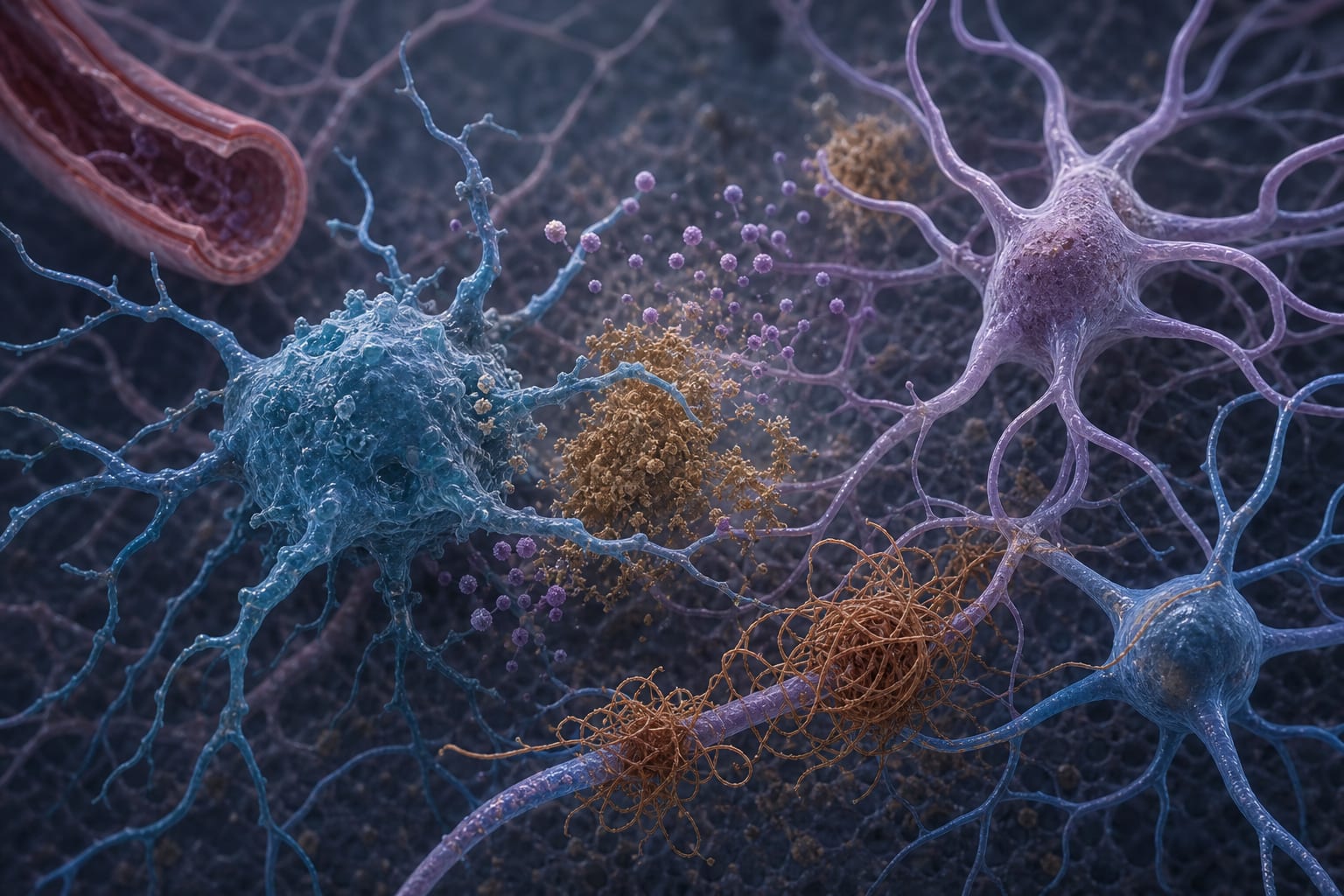
Plasma biomarker profiles in ageing: decoding neurodegeneration in vivo
-
By
-
Niklas Mattsson-Carlgren
-
August 7, 2025
-
0 min
Plasma Biomarker Profiles Reveal Distinct Neurodegenerative Patterns in Aging
Overview
A study of 405 older adults identified three plasma biomarker profiles correlating with distinct neuropathological patterns, including Alzheimer’s disease, vascular pathology, and mixed pathologies. These profiles provide insights into in vivo neurodegeneration and highlight the potential of plasma biomarkers for personalized diagnosis.
Background
Plasma biomarkers have become valuable tools for detecting neurodegenerative diseases such as Alzheimer’s disease (AD), offering diagnostic accuracy comparable to CSF analyses and PET scans. Despite advances, understanding of plasma biomarkers remains incomplete due to limited post-mortem pathological confirmation. Integrating plasma biomarker data with detailed neuropathology is essential to elucidate complex brain pathology patterns in aging populations.
Data Highlights
| Profile | Prevalence (%) | Biomarker Characteristics | Neuropathology Associations |
|---|---|---|---|
| Profile 1 | 56 | Low p-tau217, NFL, GFAP; High Aβ42/40 | Intermediate AD pathology in ~51%; common mixed pathologies |
| Profile 2 | 35 | Elevated p-tau217, GFAP | High AD pathology; Lewy bodies and CAA prevalent |
| Profile 3 | 10 | Elevated NFL, GFAP | High vascular pathology burden |
Key Findings
- Three distinct plasma biomarker profiles were identified in older adults, reflecting different neurodegenerative and vascular pathologies.
- Profile 1, the most common, showed relatively normal biomarker levels but still had frequent intermediate AD pathology and mixed brain changes.
- Profile 2 was characterized by elevated p-tau217 and GFAP, strongly associated with AD neuropathology and co-occurring Lewy bodies and cerebral amyloid angiopathy.
- Profile 3 showed increased NFL and GFAP levels, correlating with a high burden of vascular brain pathologies and was primarily seen in dementia patients.
- Plasma p-tau217 correlated with both amyloid and tau pathologies, while GFAP was linked to tau tangle density and astrocytic involvement in injury.
- Current plasma biomarkers do not effectively detect TDP-43 (LATE) or α-synuclein (Lewy body) pathologies, highlighting a gap for future biomarker development.
Clinical Implications
Plasma biomarker profiling can aid in the in vivo identification of distinct neurodegenerative and vascular pathologies, potentially improving diagnosis and patient stratification in clinical practice. However, limitations such as the lag between plasma sampling and death and the absence of biomarkers for certain pathologies should be considered when interpreting results. Continued development of blood-based biomarkers for α-synuclein and TDP-43 is needed to enhance diagnostic accuracy.
Conclusion
This study demonstrates that plasma biomarker patterns reflect underlying neuropathological heterogeneity in aging brains, supporting their utility in personalized medicine approaches for neurodegenerative diseases. Further research is required to refine biomarker profiles and address current gaps in detecting co-pathologies.
References
This content is an AI-generated, fully rewritten summary based on a published scholarly article. It does not reproduce the original text and is not a substitute for the original publication. Readers are encouraged to consult the source for full context, data, and methodology.