Clinical Report: Worldwide Rise and GABAA Receptor Modulation of Ethylbromazolam
Overview
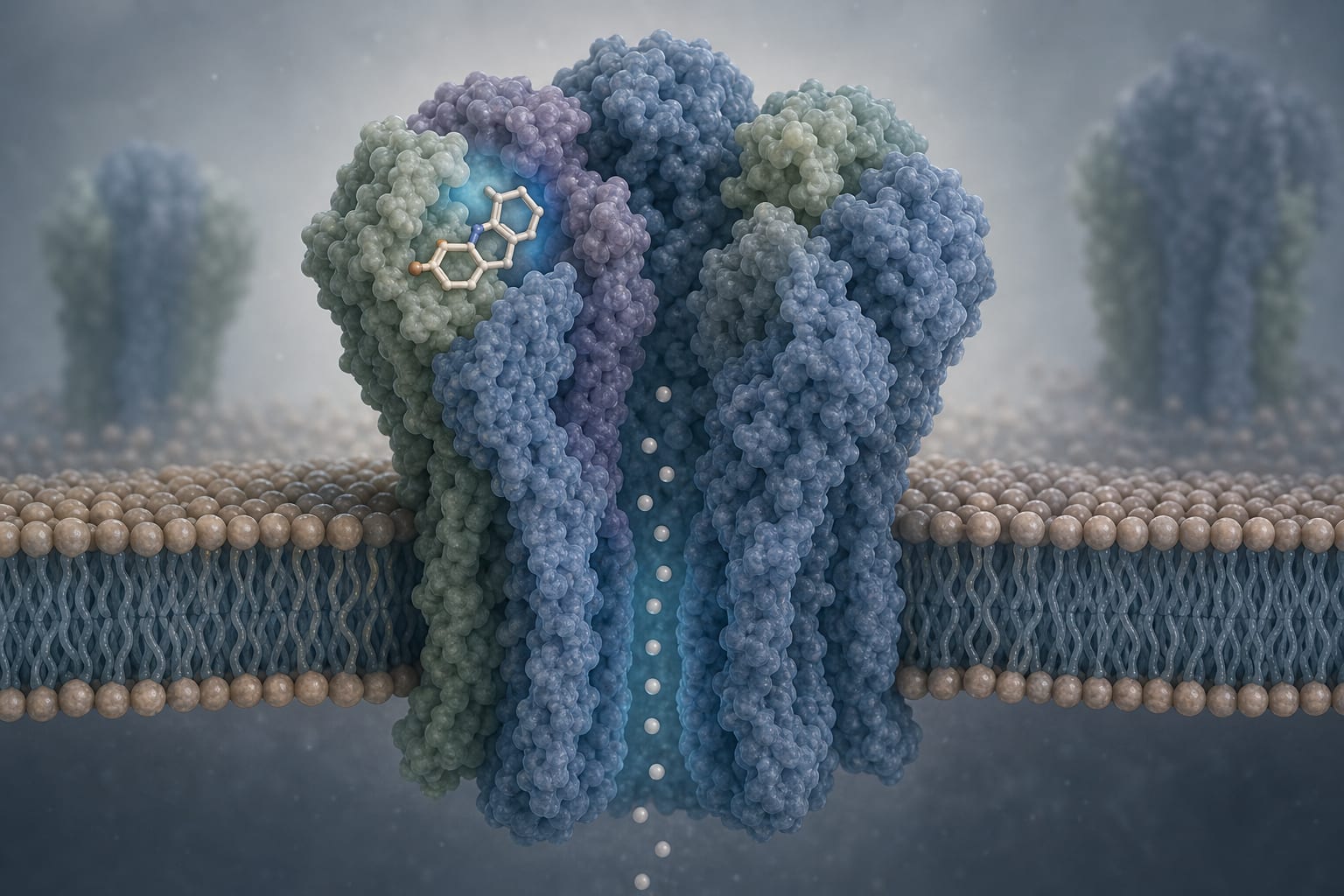
The emergence of ethylbromazolam, a novel designer benzodiazepine, has been reported in multiple countries. This compound acts as a positive allosteric modulator of the GABAA receptor, similar to traditional benzodiazepines, raising concerns about its potential for misuse and health risks.
Background
Benzodiazepines are widely prescribed for various mental health conditions, yet their long-term use poses significant risks, including dependence and addiction. The rise of designer benzodiazepines, such as ethylbromazolam, highlights the need for awareness among healthcare professionals regarding their pharmacological effects and potential for abuse. Understanding these substances is crucial for effective patient management and public health safety.
Data Highlights
No numerical data or trial data available in the source material.
Key Findings
Ethylbromazolam is a close analog of bromazolam, emerging as a prevalent designer benzodiazepine.
It has been detected in Canada, the UK, Australia, and Germany, indicating its global spread.
Ethylbromazolam acts as a positive allosteric modulator at the GABAA receptor, similar to traditional benzodiazepines.
The compound has been linked to increased instances of counterfeit medications and polysubstance use.
Regulatory bodies are considering classifying ethylbromazolam due to its non-medical use and associated harms.
Clinical Implications
Healthcare professionals should be vigilant about the potential for misuse of designer benzodiazepines like ethylbromazolam, especially in patients with a history of substance use. Awareness of the pharmacological properties and risks associated with these substances is essential for effective patient care and harm reduction strategies.
Conclusion
The rise of ethylbromazolam underscores the evolving landscape of psychoactive substances and the importance of ongoing surveillance and regulation. Clinicians must remain informed to mitigate risks associated with these emerging compounds.
by Caitlyn Norman, Dean Acreman, Meera Bissram, Blake Curtis, Sebastian Hamer, Folker Westphal, Michael Putz, Cristiana Stefan, Sarah R. Delaney, Rick Lines, Malcolm D. McLeod, Karen McDonald, Henrik Green