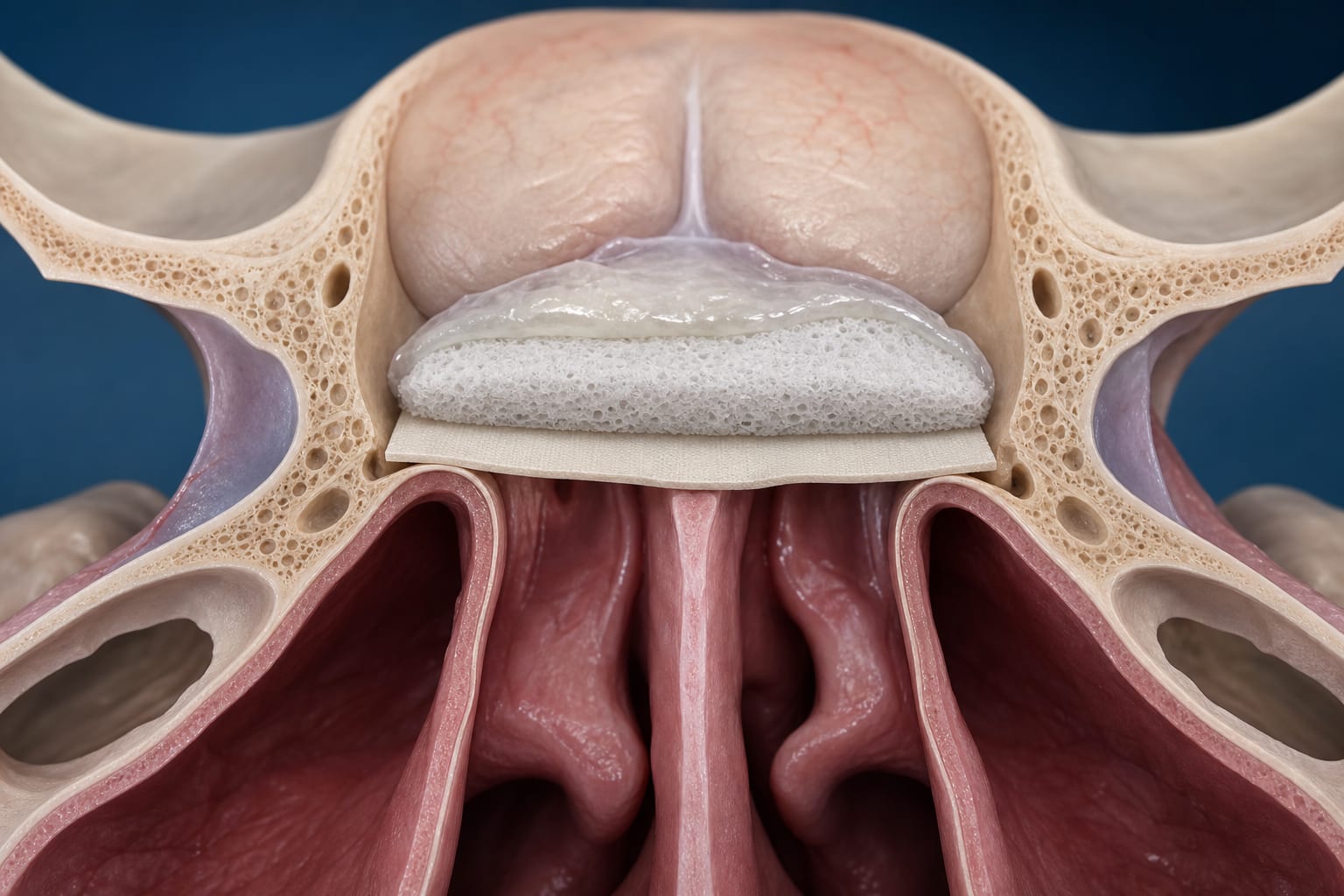
A triple-layer, autograft-free reconstruction strategy for skull base repair after standard endoscopic endonasal resection of pituitary adenomas - Report - MDSpire
Advertisement
A triple-layer, autograft-free reconstruction strategy for skull base repair after standard endoscopic endonasal resection of pituitary adenomas
Clinical Report: Triple-Layer Reconstruction Technique for Skull Base Repair
Overview
This study evaluates a novel triple-layer reconstruction technique for preventing cerebrospinal fluid (CSF) leakage after endoscopic endonasal resection of pituitary adenomas. The technique demonstrated a low postoperative CSF leak rate.
Background
Cerebrospinal fluid (CSF) leakage is a significant complication following endoscopic endonasal approaches (EEA) for pituitary adenomas, impacting patient outcomes. Traditional reconstruction methods often involve vascularized flaps, which can lead to donor site complications. A simplified approach could reduce these risks while maintaining effective closure of the skull base.
Data Highlights
Outcome
Results
Intraoperative CSF leakage
97 patients (45.54%)
Postoperative CSF rhinorrhea
3 patients (1.41%; 95% CI: 0.29%–4.25%)
Postoperative leak rate among intraoperative leaks
3.1% (3/97; 95% CI: 0.67%–9.08%)
Meningitis
4 patients (1.88%)
Postoperative hyposmia
2 patients (0.94%)
Key Findings
Intraoperative CSF leakage occurred in 45.54% of patients.
Postoperative CSF rhinorrhea developed in only 1.41% of patients.
No postoperative CSF rhinorrhea was observed among patients with Grade 3 intraoperative leaks.
Meningitis occurred in 1.88% of patients, with two cases also having CSF rhinorrhea.
Postoperative hyposmia was reported in 0.94% of patients, with recovery noted by 6 months.
Clinical Implications
The triple-layer reconstruction technique offers a low-risk alternative for preventing CSF leaks without the complications associated with autograft harvesting. This approach may be particularly beneficial in settings where minimizing donor site morbidity is a priority.
Conclusion
The findings indicate that the triple-layer reconstruction technique is associated with a low postoperative CSF leak rate following EEA for pituitary adenomas.