Clinical Report: Autoantibody-Related Pain in Long COVID: Insights from Various Studies
Overview
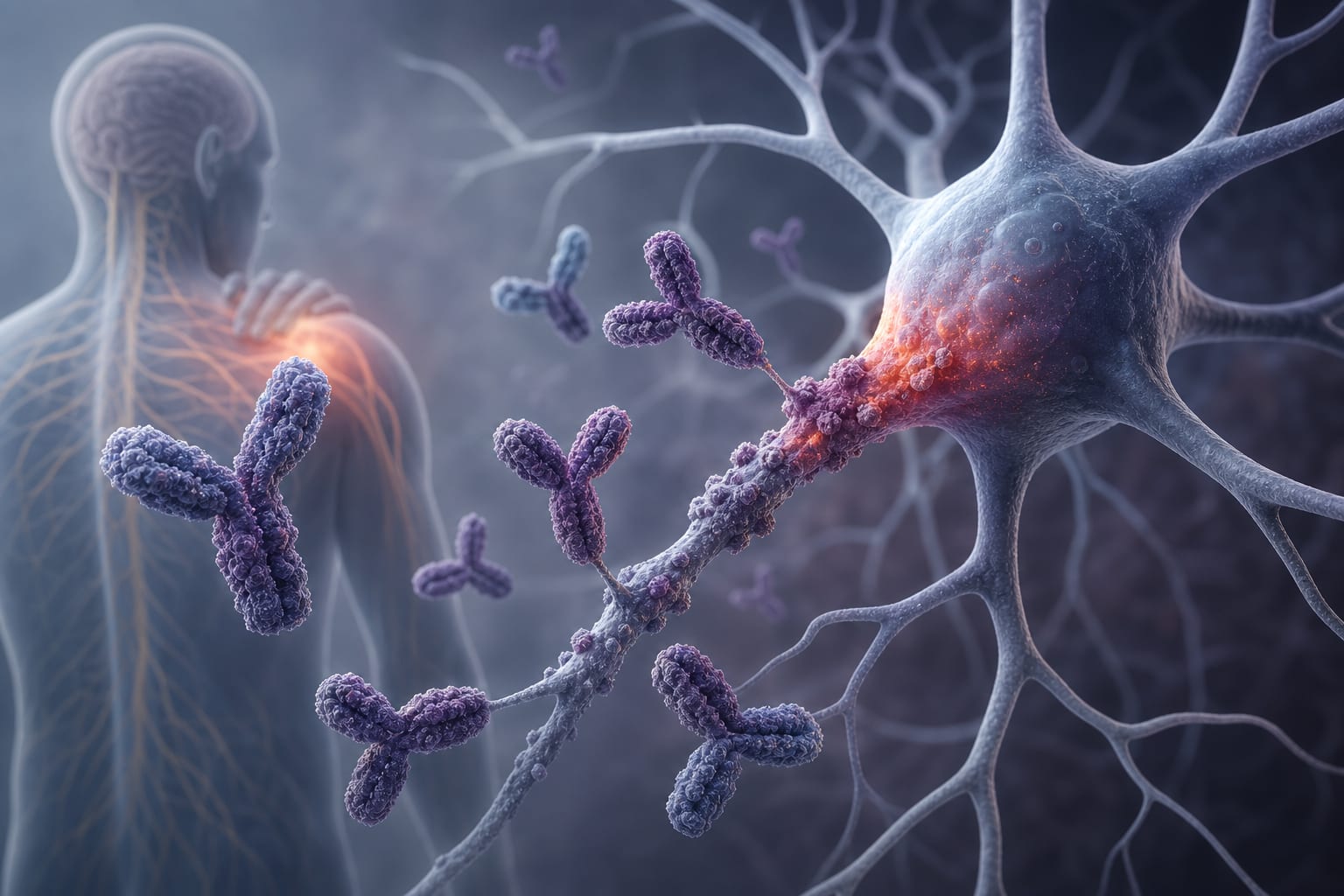
This report discusses emerging evidence linking autoantibodies to pain-related symptoms in long COVID. Multiple studies indicate that immunoglobulin G (IgG) from long COVID patients may induce mechanical allodynia and thermal hyperalgesia in experimental models.
Background
Long COVID is recognized as a complex condition with diverse symptoms, including chronic pain, affecting a significant proportion of individuals post-SARS-CoV-2 infection. Understanding the underlying mechanisms is crucial for managing patient care. Recent research suggests that autoimmune processes may play a role in the symptomatology of long COVID, particularly in relation to pain.
Data Highlights
No specific numerical data or trial data presented in the source material.
Key Findings
Long COVID encompasses a wide range of persistent symptoms, including chronic pain.
Women are disproportionately affected by long COVID, particularly in pain-related phenotypes.
Studies indicate that pathogenic autoantibodies may contribute to pain mechanisms in long COVID.
Passive transfer of IgG from long COVID patients into mice resulted in pain-related phenotypes.
Research findings have been replicated across multiple independent laboratories.
Clinical Implications
Healthcare professionals should consider the potential role of autoantibodies in patients presenting with chronic pain following COVID-19.
Conclusion
The findings suggest that autoimmune mechanisms may underlie some of the pain symptoms observed in long COVID.