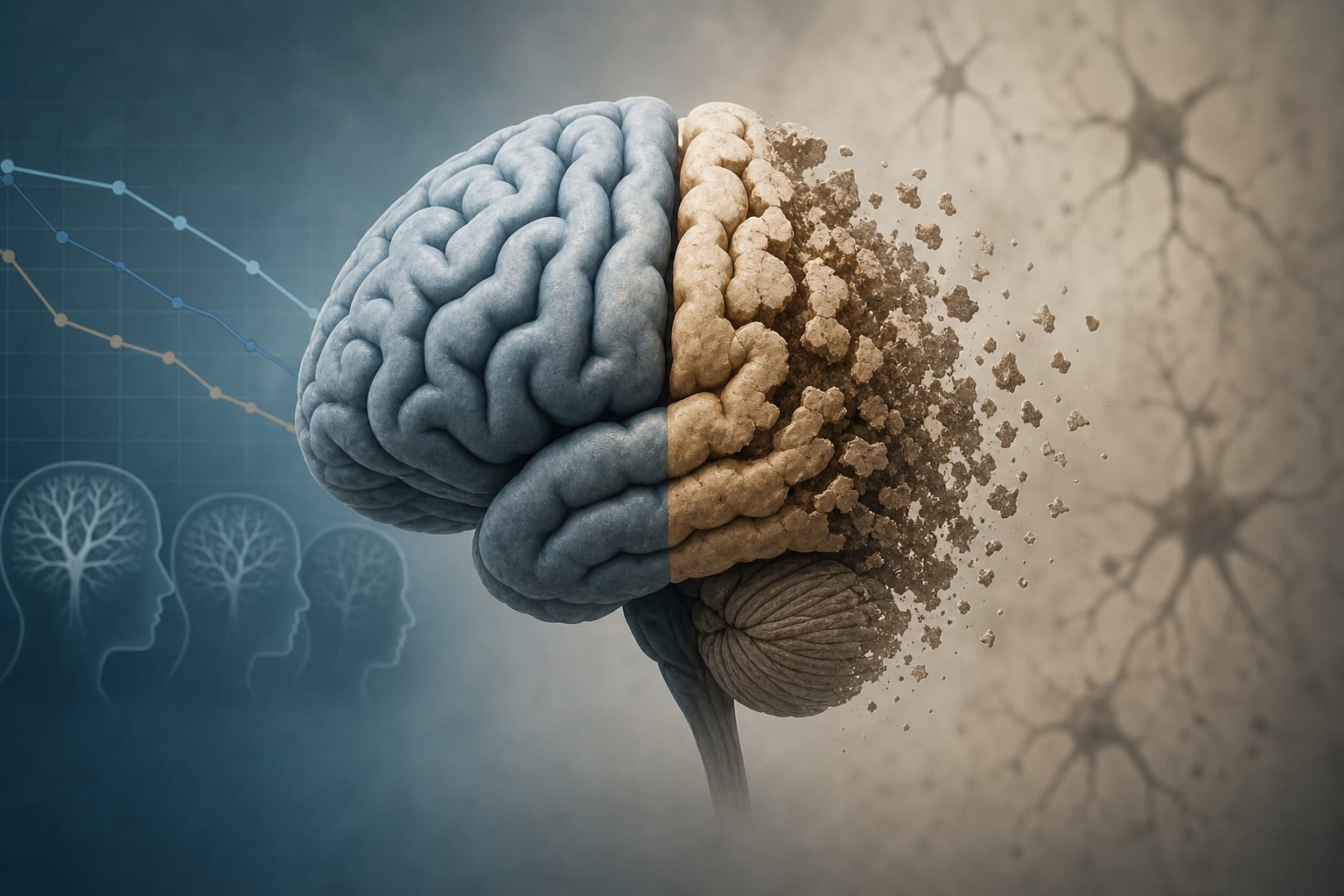
Clinical Report: Exploring the Connection Between Personality Characteristics and Alzheimer's Disease
Overview
This comprehensive review highlights the significant association between personality traits and Alzheimer's disease (AD), particularly emphasizing high neuroticism and low conscientiousness as risk factors. The findings suggest that personality traits can influence both the onset and progression of AD, offering potential avenues for early risk identification.
Background
Understanding the relationship between personality characteristics and Alzheimer's disease is crucial, as it may provide insights into individual vulnerability to cognitive decline. Recent research indicates that personality traits can serve as premorbid risk factors, influencing the clinical trajectory of AD. Identifying these traits could enhance prevention strategies and patient management.
Data Highlights
No numerical data or trial data presented in the article.
Key Findings
High neuroticism is consistently linked to an increased risk of Alzheimer's disease.
Low conscientiousness is associated with accelerated cognitive decline and greater risk of mild cognitive impairment.
Conscientiousness may offer a protective effect against cognitive decline through health-related behaviors.
Extraversion and openness have variable associations with AD, potentially providing protective roles through social engagement.
Longitudinal studies indicate that personality traits act as risk or protective factors rather than merely reflecting disease-related changes.
Clinical Implications
Healthcare professionals should consider personality traits when assessing patients for Alzheimer's disease risk. Early identification of individuals with high neuroticism or low conscientiousness may facilitate targeted interventions and preventive strategies.
Conclusion
The review underscores the importance of personality characteristics in understanding Alzheimer's disease risk and progression, suggesting that these traits could be integral to future risk assessment and management approaches.