Correction: Factors associated with recurrence of mitral regurgitation 14 days after rheumatic mitral valve repair - Report - MDSpire

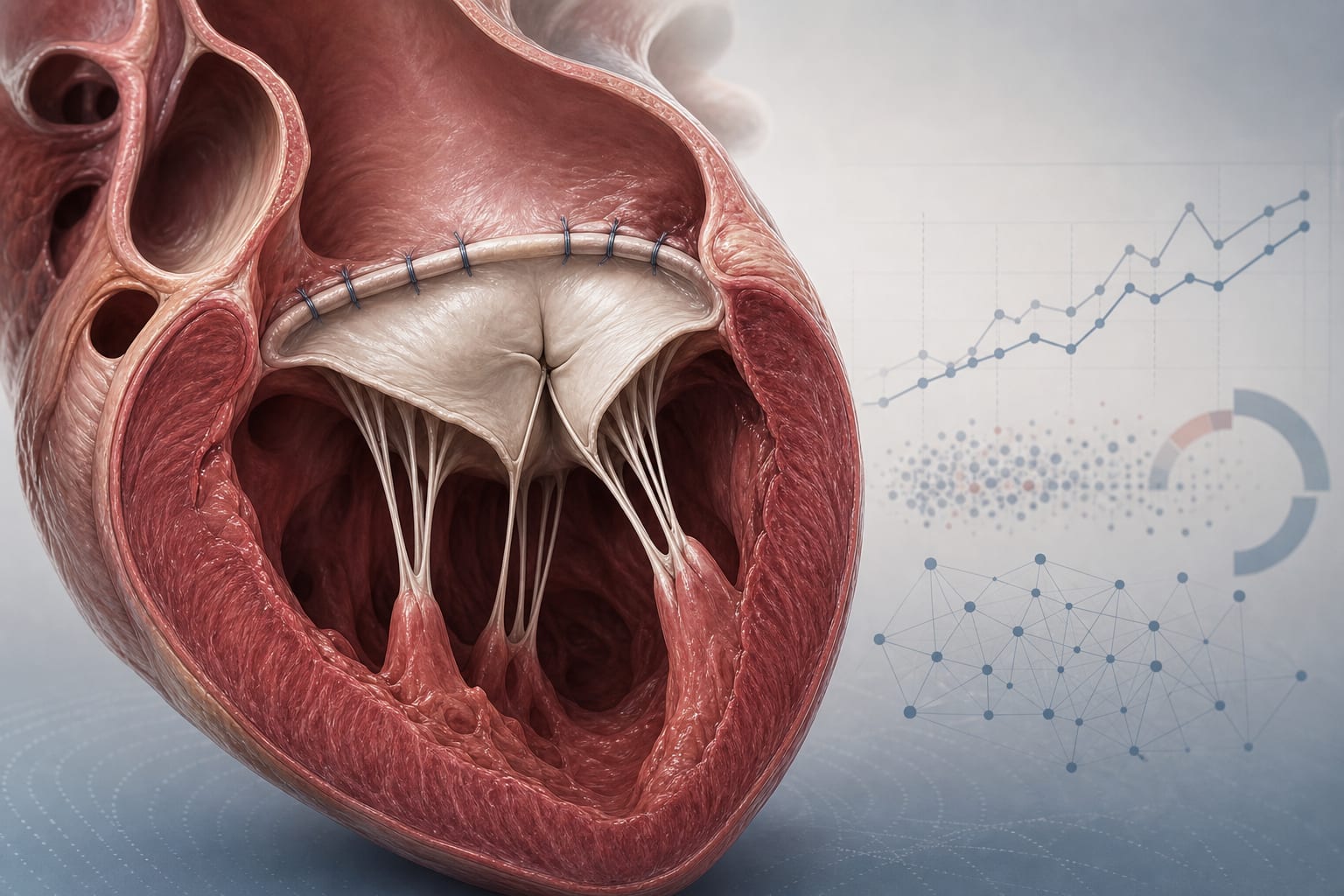
Correction: Factors associated with recurrence of mitral regurgitation 14 days after rheumatic mitral valve repair

  • By

  • RenDong Liang

  • Ding Zhang

  • QingYu Sun

  • BiJun Zhao

  • Xu Meng

  • June 16, 2026

  • 0 min

Share

Correction: Factors Influencing the Recurrence of Mitral Regurgitation

Overview

This correction addresses the use of generative AI in the preparation of the manuscript on mitral regurgitation recurrence post-surgery. The authors clarified that AI was utilized for translation and linguistic polishing, ensuring full responsibility for the content.

Background

Mitral regurgitation (MR) is a prevalent valvular heart disease that can lead to significant morbidity and mortality. Understanding the factors influencing early recurrence of MR after surgical repair is crucial for improving patient outcomes. Recent guidelines emphasize the importance of meticulous surgical techniques and postoperative monitoring to mitigate recurrence risks.

Data Highlights

No numerical data or trial results were presented in the correction article.

Key Findings

  • The authors initially stated that generative AI was not used, which was corrected to indicate its use for translation and editing.
  • Generative AI was specifically utilized for English translation and linguistic polishing of the manuscript.
  • The authors take full responsibility for the content of the publication after using the AI tool.
  • Early recurrence of MR post-repair is influenced by surgical technique and preoperative factors.
  • Guidelines emphasize the importance of early imaging surveillance to assess surgical outcomes.

Clinical Implications

Clinicians should be aware of the potential for early recurrence of MR following surgical repair and consider preoperative factors in their assessments. The use of AI in manuscript preparation highlights the evolving role of technology in clinical research, necessitating transparency in its application.

Conclusion

This correction underscores the importance of accurate reporting in clinical research and the role of technology in enhancing manuscript quality. Continued focus on surgical techniques and postoperative monitoring is essential for improving outcomes in MR patients.

Related Resources & Content

  1. Liang RD, Zhang D, Sun QY, Zhao BJ, Meng X, Front Cardiovasc Med, 2026 -- Factors associated with recurrence of mitral regurgitation 14 days after rheumatic mitral valve repair
  2. 2025 ESC/EACTS Guidelines for the management of valvular heart disease | European Heart Journal | Oxford Academic
  3. Clinical Research in Cardiology — Minimally Invasive Repair Techniques for Symmetric and Asymmetric Barlow's Disease of the Mitral Valve
  4. Clinical Research in Cardiology — Initial Impact of Percutaneous Mitral Valve Repair on Right Ventricular Function
  5. Clinical Research in Cardiology (Springer) — Edge-to-edge transcatheter repair of the mitral valve for severe mitral regurgitation in patients exhibiting HFpEF characteristics
  6. Clinical Research in Cardiology — Outcomes of Ongoing Mitral Regurgitation in Patients Undergoing Transcatheter Aortic Valve Replacement
  7. Minimally Invasive Repair Techniques for Symmetric and Asymmetric Barlow's Disease of the Mitral Valve
  8. Initial Impact of Percutaneous Mitral Valve Repair on Right Ventricular Function
  9. Edge-to-edge transcatheter repair of the mitral valve for severe mitral regurgitation in patients exhibiting HFpEF characteristics
  10. 2025 ESC/EACTS Guidelines for the management of valvular heart disease | European Heart Journal | Oxford Academic
  11. Frontiers | Factors associated with recurrence of mitral regurgitation 14 days after rheumatic mitral valve repair

Original Source(s)

Related Content