Utilization of Eastern Cooperative Oncology Group Classification in Developing Surgical Treatment Strategies for Epithelial Ovarian Cancer
Overview
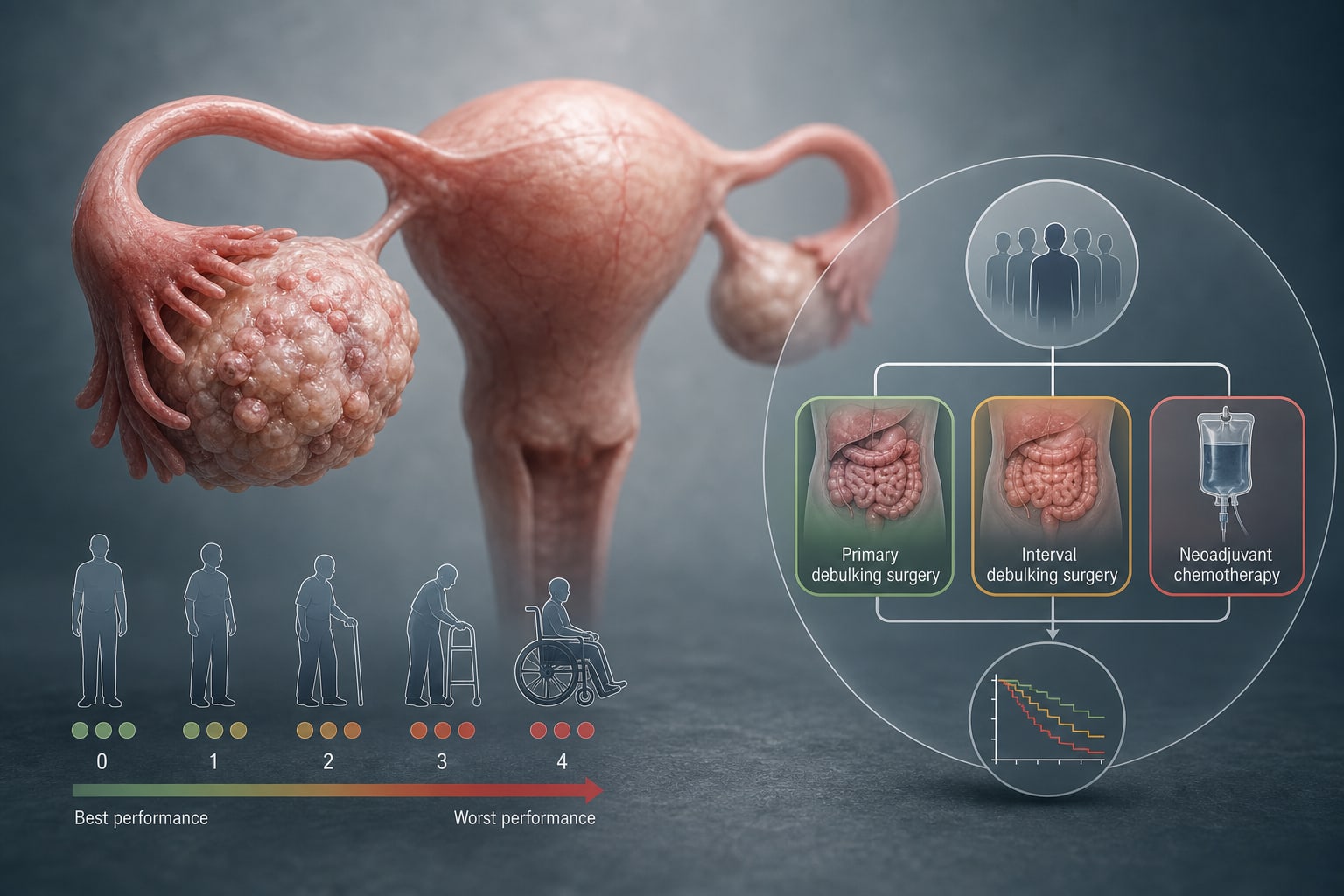
This study evaluates the association of ECOG classification with patient performance status and its role in surgical decision-making for epithelial ovarian cancer.
Background
Epithelial ovarian cancer (EOC) is the most lethal gynecological cancer, often diagnosed at advanced stages. Accurate assessment of patients' physical performance is crucial for determining their suitability for surgical interventions. The ECOG classification serves as a tool in this assessment.
Data Highlights
ECOG Group
Number of Patients
Survival Rate (p-value)
Hazard Ratio (HR)
0
129 (56.6%)
0.003
3.785
1
76 (33%)
0.005
10.231
2-4
23 (10.1%)
0.002
10.231
Key Findings
129 patients (56.6%) were classified as ECOG 0, 76 (33%) as ECOG 1, and 23 (10.1%) as ECOG 2-4.
Lower ECOG scores were associated with higher survival rates after surgery.
Age, self-reported walking distance, stair climbing capacity, ASA classification, albumin, prealbumin, and number of comorbidities were significantly associated with ECOG groups.
ECOG classification was not linked to postoperative complications or length of hospital stay.
Clinical Implications
The ECOG classification can aid clinicians in evaluating patients' physical status for surgical interventions for EOC.
Conclusion
ECOG classification is a useful tool for assessing physical performance status in patients with EOC.