Antibodies against interleukin-10 receptor reduce IL-6 and TNF-α levels and increase TGF‐β levels in patients with severe fever with thrombocytopenia syndrome virus and SARS-CoV-2 infection - Report - MDSpire

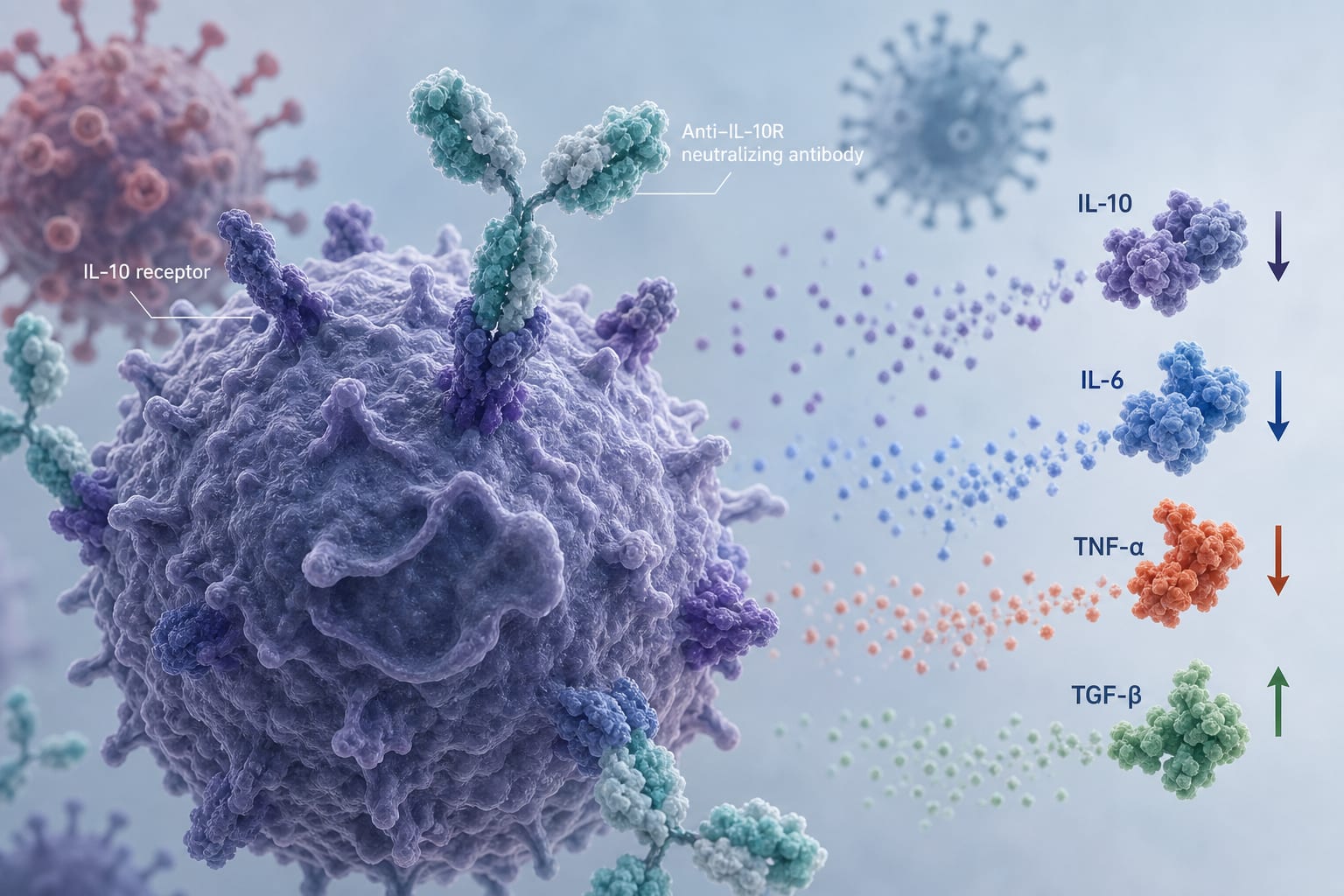
Antibodies against interleukin-10 receptor reduce IL-6 and TNF-α levels and increase TGF‐β levels in patients with severe fever with thrombocytopenia syndrome virus and SARS-CoV-2 infection

  • By

  • Su Yeon Kang

  • Jeong Rae Yoo

  • EunJin Bae

  • Joowan Kim

  • Yejin Park

  • Misun Kim

  • Miyeon Kim

  • Hyo-Jin Ro

  • Daehee Hwang

  • Jeong-Yeon Lee

  • Dongcharn Cho

  • Huy Chau Nguyen

  • Hoai Jaclyn Hallam

  • Sang Taek Heo

  • Nam-Hyuk Cho

  • Kyung-Mi Lee

  • Andrew G. Letizia

  • Keun Hwa Lee

  • June 25, 2026

  • 0 min

Share

Neutralizing Antibodies Targeting Interleukin-10 Receptor Modulate Cytokine Levels

Overview

This study investigates the role of IL-10 in severe fever with thrombocytopenia syndrome (SFTS) and SARS-CoV-2 infections, highlighting its contribution to hyperinflammation and cytokine storms.

Background

Severe fever with thrombocytopenia syndrome (SFTS) and SARS-CoV-2 infections are associated with severe hyperinflammation, often leading to fatal outcomes. Understanding the cytokine profiles and macrophage responses in these conditions is crucial for developing effective treatments. IL-10, a key cytokine in these processes, has been identified as a potential target for therapeutic intervention.

Data Highlights

CytokineChangep-value
IL-10Increased< 0.0001
IL-6Increased< 0.0001
TGF-βIncreased0.0104
TNF-αIncreased0.1056
CCL1Increased0.1533

Key Findings

  • Increased levels of IL-10 and IL-6 were observed in patients with fatal SFTS.
  • Blocking IL-10 signaling reduced the population of HLA-DR+CD86+ macrophages.
  • IL-10 receptor blockade increased TGF-β production in THP-1 cells.
  • High expression of Smad3 and P-Smad3 was noted in patients with fatal SFTS.
  • CD163+CD206+ macrophages may play a protective role against SFTSV and SARS-CoV-2 infection.

Clinical Implications

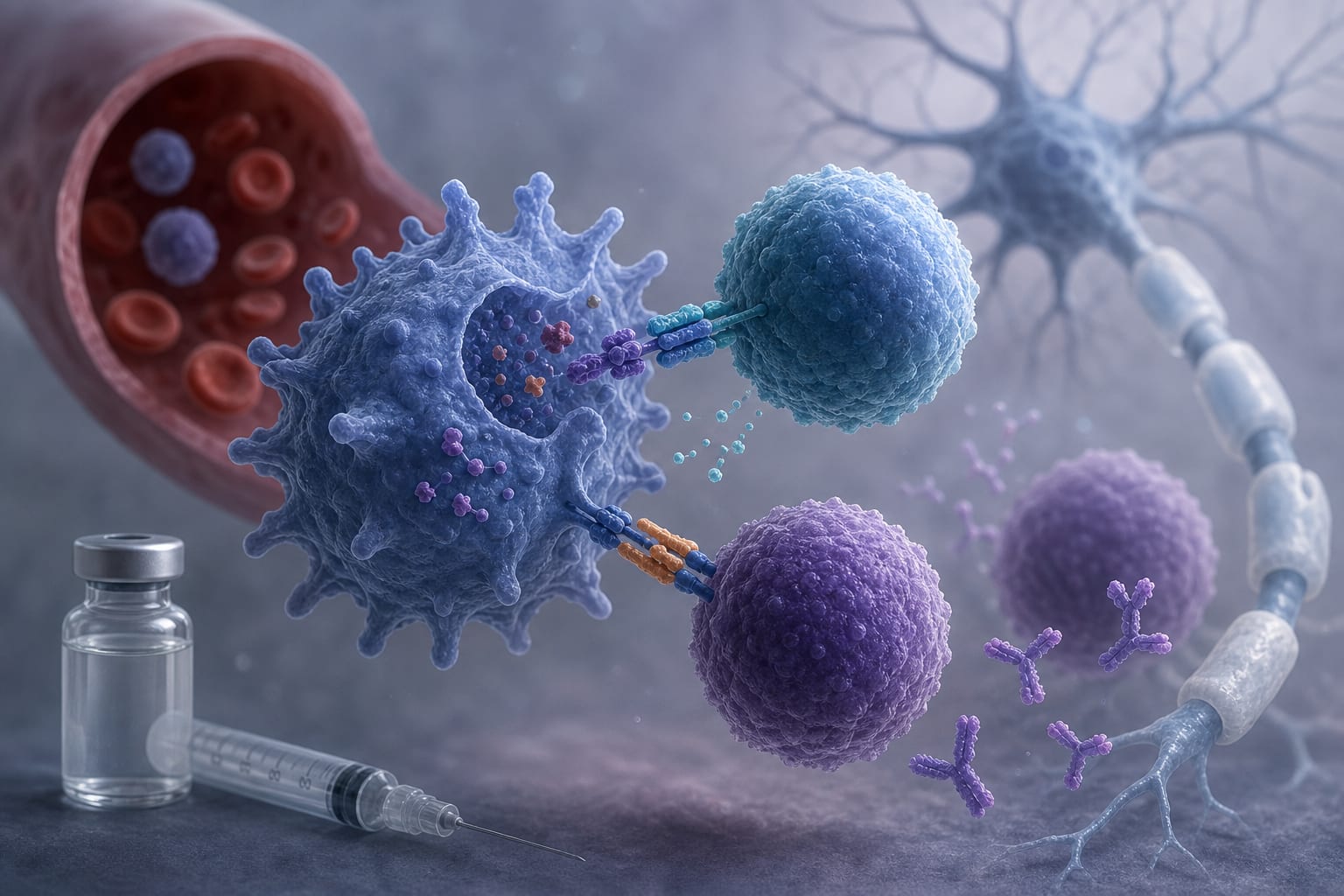
Understanding macrophage polarization could inform therapeutic strategies aimed at modulating immune responses in these diseases.

Conclusion

IL-10 plays a significant role in the cytokine storm associated with SFTS and SARS-CoV-2 infections.

Related Resources & Content

  1. Frontiers in Immunology, 2026 -- Fc-mediated antibody functions are associated with disease severity in COVID-19
  2. Intensive Care Medicine, 2021 -- Neutralizing Autoantibodies to Type I Interferons Linked to Multi-Organ Dysfunction in Patients with Severe COVID-19
  3. Open Forum Infectious Diseases -- Neutrophil Activation Induced by Immune Complexes in SARS-CoV-2 Infection
  4. 2025 Clinical Practice Guideline Update by the Infectious Diseases Society of America on the Treatment and Management of COVID-19: Baricitinib vs. Tocilizumab
  5. Targeting the lethal weakness of SFTSV: Latest advances in antiviral strategies and immune prevention - ScienceDirect
  6. Infection — The Role of SARS-CoV-2 Nucleocapsid Protein in Inducing Cytokine Storms from Lung Epithelial Cells in COVID-19 Patients, as Opposed to Spike Protein
  7. Interleukin-10 as a potential biomarker reflecting the multidimensional pathological network in patients with severe fever with thrombocytopenia syndrome
  8. 2025 Clinical Practice Guideline Update by the Infectious Diseases Society of America on the Treatment and Management of COVID-19: Baricitinib vs. Tocilizumab
  9. Targeting the lethal weakness of SFTSV: Latest advances in antiviral strategies and immune prevention - ScienceDirect

Original Source(s)

Related Content