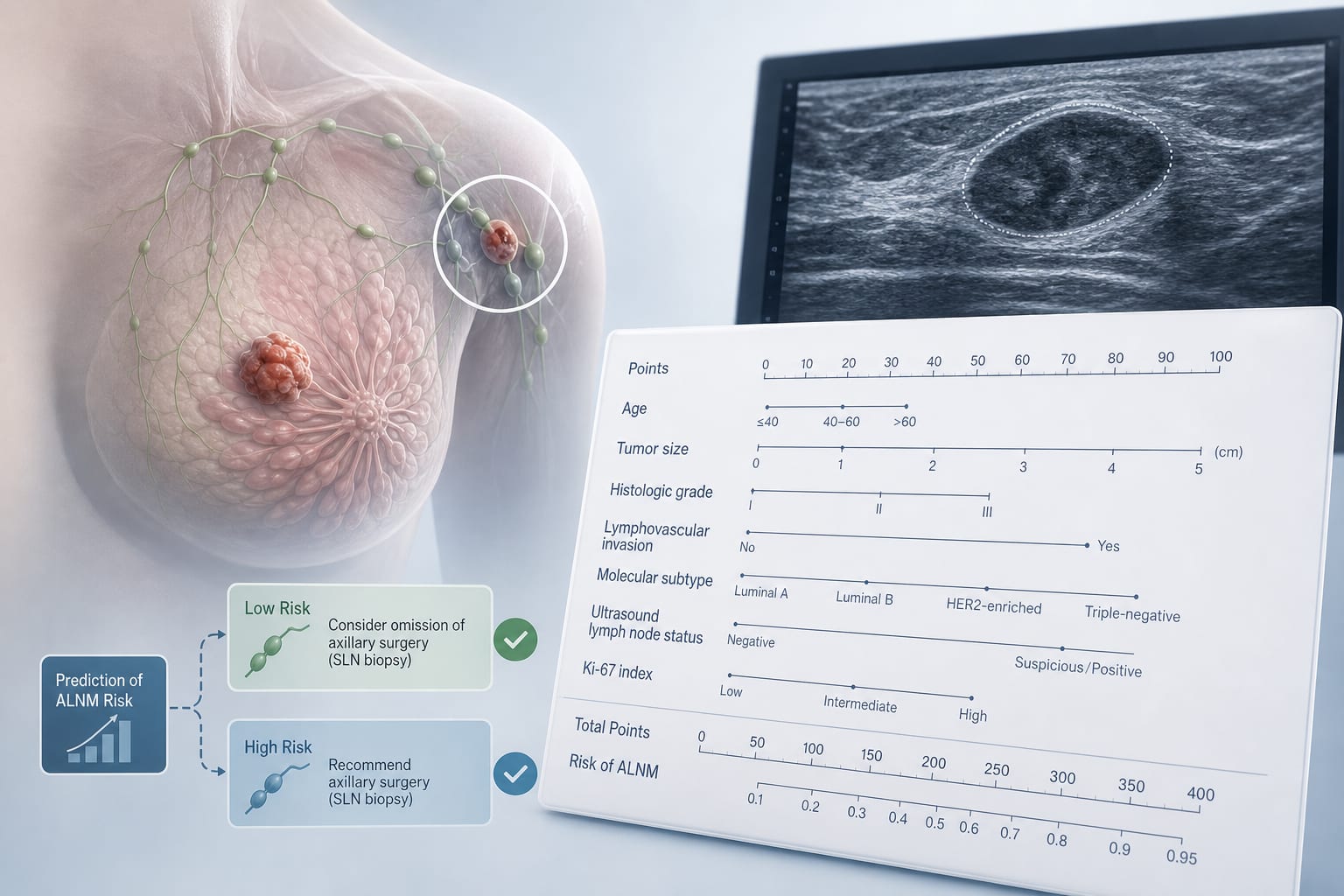
Trimodal Treatment Approaches for Inflammatory Breast Cancer
-
By
-
Audree B. Tadros
-
Risa Kiernan
-
April 9, 2026
-
0 min
Clinical Report: Trimodal Treatment Approaches for Inflammatory Breast Cancer
Overview
Inflammatory breast cancer (IBC) is an aggressive breast cancer subtype with poorer survival outcomes compared to non-IBC locally advanced breast cancers. Trimodality therapy (TMT), consisting of neoadjuvant chemotherapy, modified radical mastectomy, and postmastectomy radiation, remains the standard of care and is associated with improved survival, yet its use has declined in recent years.
Background
IBC is a rare but highly aggressive form of breast cancer characterized by rapid progression and distinct clinical features. Despite advances in breast cancer therapies, patients with IBC continue to experience inferior survival outcomes compared to those with similarly staged non-IBC disease. Standard treatment involves TMT, which has demonstrated survival benefits. However, recent trends show a decline in adherence to guideline-concordant TMT, raising concerns about treatment de-escalation and its impact on outcomes.
Data Highlights
| Parameter | IBC | Non-IBC Stage III |
|---|---|---|
| 5-year survival rate (no distant metastasis) | 55% to 70% | Higher (exact not specified) |
| 2-year breast cancer–specific survival | 84% | 91% |
| Use of TMT by 2020 | <25% | Not specified |
| Guideline-concordant care (National Cancer Database) | 25.1% | Not specified |
| Modified radical mastectomy performed | 51% | Not specified |
| Immediate breast reconstruction | 35.6% | Not specified |
Key Findings
- IBC patients have significantly worse overall and breast cancer–specific survival compared to stage III non-IBC patients across all biologic subtypes.
- TMT remains the standard of care and is associated with improved survival, but its use has declined to less than 25% among IBC patients by 2020.
- Despite most patients receiving neoadjuvant systemic therapy, only about half undergo appropriate surgical management with modified radical mastectomy.
- There is an increasing trend toward sentinel lymph node biopsy in IBC, despite lack of evidence supporting de-escalation of surgical management.
- Triple-negative IBC subtype is associated with the worst survival outcomes, mirroring trends seen in non-IBC breast cancers.
- Emerging clinical trials are exploring neoadjuvant radiotherapy to enable immediate breast reconstruction, potentially improving quality of life.
Clinical Implications
Clinicians should prioritize adherence to guideline-concordant TMT for IBC patients to optimize survival outcomes. De-escalation of locoregional treatment, such as substituting sentinel lymph node biopsy for axillary dissection or omitting modified radical mastectomy, should be avoided until supported by robust evidence. Emerging treatment sequencing strategies, including neoadjuvant radiotherapy, warrant further investigation to balance oncologic control with quality of life improvements.
Conclusion
IBC remains a distinct and aggressive breast cancer subtype requiring aggressive multimodal therapy. Maintaining guideline-concordant trimodality treatment is critical to improving survival, while ongoing research into novel approaches may enhance patient quality of life without compromising outcomes.
References
- Leone et al 2023 -- Survival Outcomes and Trends in Trimodality Therapy Use in IBC
- Sosa et al 2022 -- Trends in Sentinel Lymph Node Biopsy Use in IBC
- National Cancer Database Analysis 2021 -- Guideline-Concordant Care in IBC
- Clinical Trial 2023 -- Feasibility of Neoadjuvant Radiotherapy in IBC
This content is an AI-generated, fully rewritten summary based on a published scholarly article. It does not reproduce the original text and is not a substitute for the original publication. Readers are encouraged to consult the source for full context, data, and methodology.