Inverted U-Shaped Relationship Between Diverticular Width and Gastrointestinal Bleeding in Symptomatic Meckel's Diverticulum Children: A Retrospective Single-Center Study - Report - MDSpire

Inverted U-Shaped Relationship Between Diverticular Width and Gastrointestinal Bleeding in Symptomatic Meckel's Diverticulum Children: A Retrospective Single-Center Study

  • By

  • Gao, Xufeng

  • Cui, Qiangqiang

  • Xi, Hongwei

  • April 22, 2026

  • 0 min

Share

Clinical Report: Relationship Between Diverticulum Width and GI Bleeding in Pediatric Patients

Overview

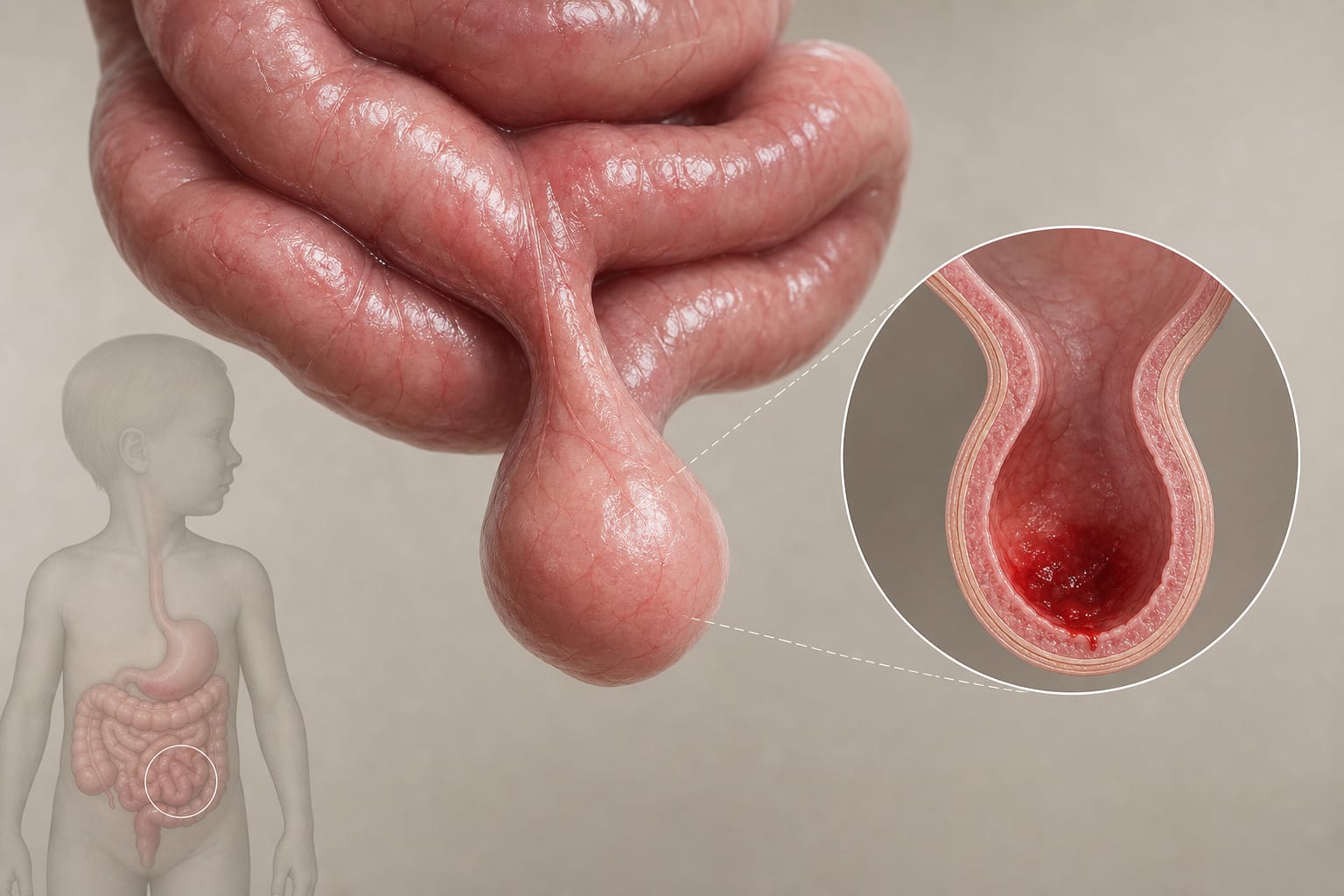
This study investigates the correlation between diverticulum width and gastrointestinal bleeding risk in pediatric patients with symptomatic Meckel's diverticulum. Findings indicate that diverticulum width is an independent predictor of bleeding risk, with peak risk occurring at approximately 1.25 cm.

Background

Meckel's diverticulum is the most common congenital gastrointestinal anomaly in children, often leading to gastrointestinal hemorrhage. Understanding the factors that influence bleeding risk is crucial for improving surgical decision-making and patient outcomes. This study addresses a gap in existing literature by focusing on diverticulum width as a potential risk factor for complications.

Data Highlights

Study PopulationSample SizeKey Finding
Pediatric patients with symptomatic Meckel's diverticulum310Diverticulum width is an independent predictor of gastrointestinal bleeding risk.
Peak risk of bleeding observed at diverticulum width of approximately 1.25 cm.

Key Findings

  • Diverticulum width is an independent predictor of gastrointestinal bleeding risk.
  • An inverted U-shaped relationship exists between diverticulum width and bleeding risk.
  • Peak risk for gastrointestinal bleeding occurs at a diverticulum width of approximately 1.25 cm.
  • Ectopic mucosa interacts with diverticulum width to influence bleeding risk.
  • Results may enhance risk stratification for surgical decision-making in symptomatic Meckel's diverticulum.

Clinical Implications

Clinicians should consider diverticulum width when assessing the risk of gastrointestinal bleeding in pediatric patients with symptomatic Meckel's diverticulum. This information can aid in surgical planning and risk stratification, potentially improving patient outcomes.

Conclusion

The study highlights the importance of diverticulum width as a significant factor in gastrointestinal bleeding risk among pediatric patients with Meckel's diverticulum. These findings may inform clinical practices and enhance surgical decision-making.

Related Resources & Content

  1. Frontiers in Pediatrics, 2026 -- Meckel's diverticulum complicated by a congenital intestinal adhesive band: a case report and literature review
  2. Elevated Blood Pressure and Associated Arteriosclerotic Conditions as Contributing Factors for Bleeding in Colonic Diverticula: A Case-Control Analysis
  3. Journal of Gastrointestinal Surgery, 2009 -- Ectopic Pancreatic Tissue in Inverted Meckel's Diverticulum Leading to Significant Gastrointestinal Hemorrhage
  4. Meckel Diverticulum - Gastroenterology - Merck Manual Professional Edition
  5. Frontiers | Inverted U-Shaped Relationship Between Diverticular Width and Gastrointestinal Bleeding in Symptomatic Meckel's Diverticulum Children: A Retrospective Single-Center Study
  6. A Comprehensive Review of Perforated Duodenal Diverticula: Insights Gained Over the Past Ten Years
  7. Meckel Diverticulum - Gastroenterology - Merck Manual Professional Edition
  8. Frontiers | Inverted U-Shaped Relationship Between Diverticular Width and Gastrointestinal Bleeding in Symptomatic Meckel's Diverticulum Children: A Retrospective Single-Center Study

Original Source(s)

Related Content