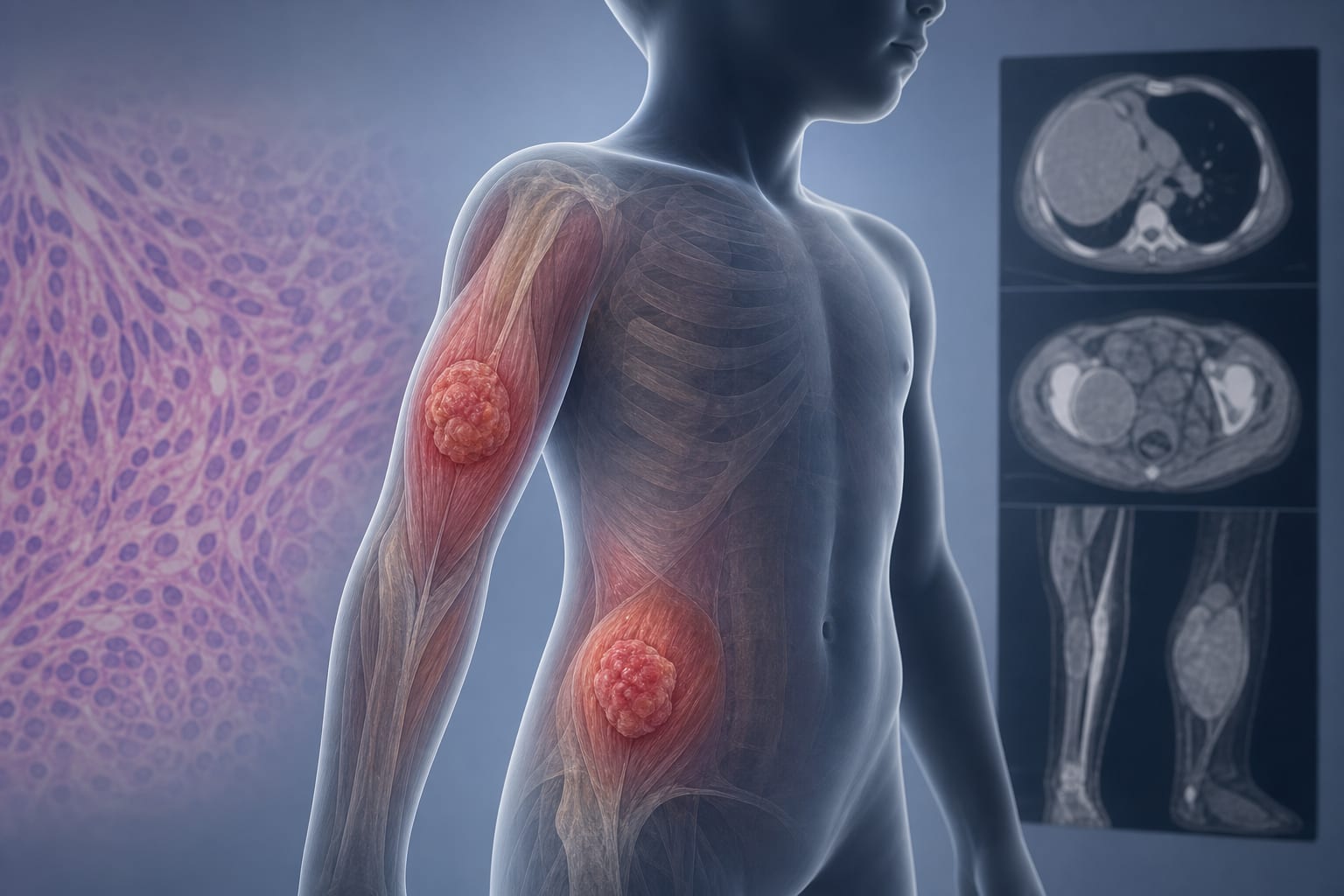
Clinical Characteristics and Risk Factors Linked to Relapse in Pediatric RMS
Overview
This study investigates the clinical characteristics and risk factors associated with relapse and progression in pediatric patients with rhabdomyosarcoma (RMS) of the trunk and extremities. Key findings indicate a 40% relapse/progression rate, with significant associations found for metastasis at diagnosis and macroscopic residual disease post-surgery.
Background
Rhabdomyosarcoma (RMS) is the most common soft-tissue sarcoma in children, representing a significant proportion of pediatric malignancies. RMS of the trunk and extremities is particularly concerning due to its association with higher rates of metastasis and relapse, leading to unfavorable outcomes.
Data Highlights
Outcome
Rate
95% CI
5-year event-free survival
60%
34.5%-85.5%
5-year overall survival
66.7%
42.1%-91.3%
Overall relapse/progression rate
40%
16.8%-68.7%
Key Findings
The median follow-up duration was 48 months.
Relapse/progression rates were significantly higher in patients with metastasis at diagnosis (85.7% vs 0%, P<0.001).
High-risk stratification was associated with a 75.0% relapse/progression rate (P=0.010).
Patients with macroscopic residual disease after surgery had a 100% relapse/progression rate (P<0.001).
Regional lymph node involvement showed a trend toward higher relapse/progression rates (66.7% vs 22.2%, P=0.123).
Clinical Implications
Clinicians should consider the identified risk factors when monitoring patients for relapse.
Conclusion
Pediatric trunk and extremity RMS presents a high risk of relapse and progression, with metastasis at diagnosis and residual disease post-surgery identified as critical prognostic factors.
Dr. Michael Hassett of Dana-Farber Cancer Institute shared new findings showing deployment of eSyM, an ePRO-based, EHR-integrated symptom management program, was associated with statistically significant and potentially meaningful improvements in overall survival. Strategies to improve adoption of ePRO-based symptom management may be warranted.