Study Reveals Single-Cell Neural Activity Linked to Human Speech Production
-
June 17, 2026
Clinical Report: Single-Cell Neural Activity Linked to Human Speech Production
Overview
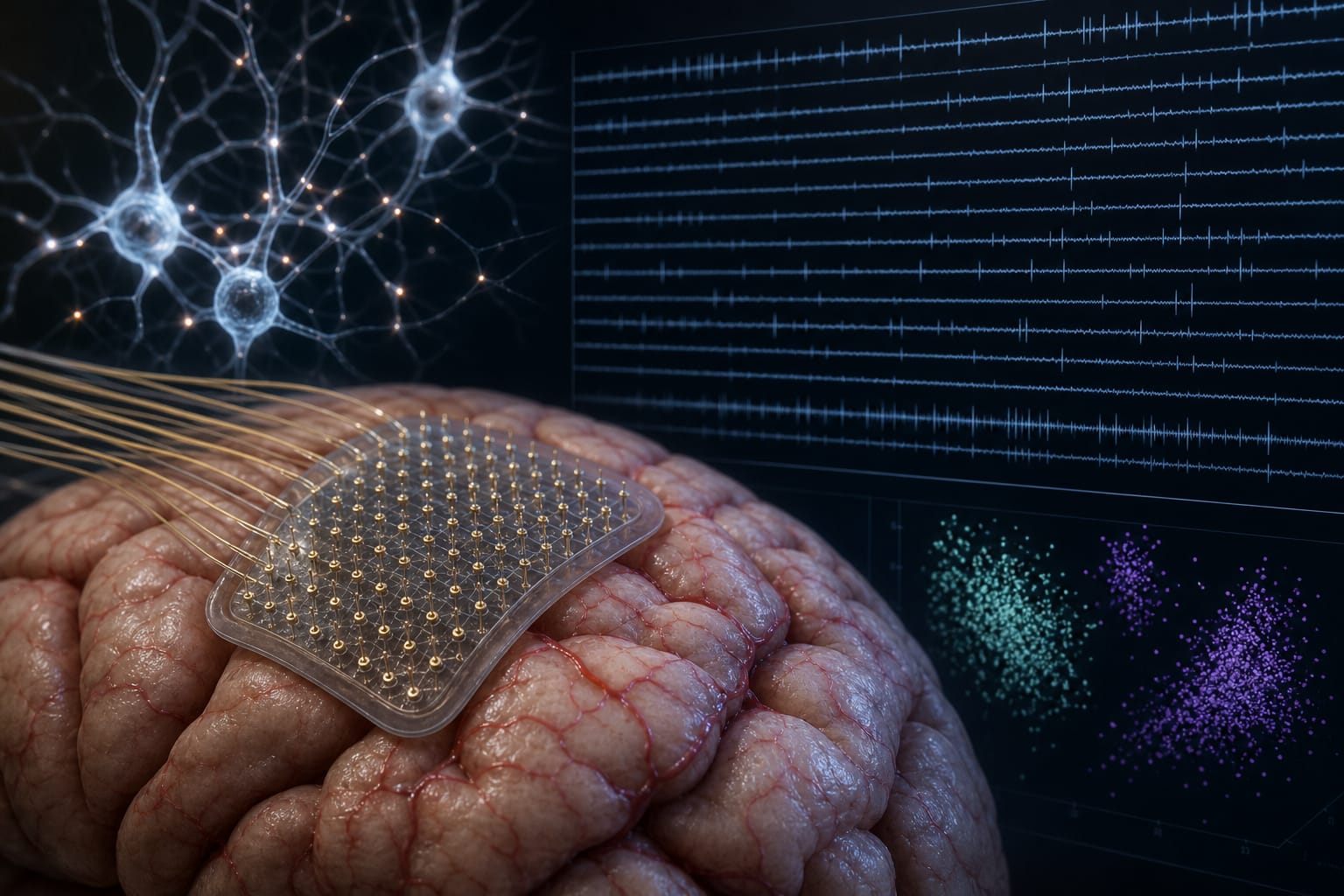
A study utilizing single-cell brain recordings has identified neuronal activity that predicts key features of spoken language. This research enhances understanding of how the brain encodes linguistic information, potentially paving the way for new technologies to assist individuals with communication disorders.
Background
Understanding the neural mechanisms underlying speech production is crucial for developing effective interventions for communication disorders. Recent advancements in brain recording technologies allow for detailed analysis of neuronal activity during natural conversations. This study provides insights into the cellular processes involved in language production, which may inform future therapeutic strategies.
Data Highlights
No numerical data or trial results were provided in the source material.
Key Findings
- Neuronal recordings from patients predicted properties of subsequent speech across various topics.
- Some neurons encoded basic information such as word meanings, while others managed complex tasks like sentence structuring.
- The study utilized microelectrode arrays implanted for epilepsy monitoring to gather data during natural conversations.
- Machine-learning models were employed to analyze the relationship between neuronal activity and speech features.
- Findings suggest that individual neurons play a significant role in encoding language during speech.
Clinical Implications
The insights gained from this research could lead to advancements in technologies that translate neural activity into speech, particularly for patients with communication disorders. Understanding the neuronal basis of speech production may also inform rehabilitation strategies for individuals with speech impairments.
Conclusion
This study marks a significant step in elucidating the neural underpinnings of speech production, with potential implications for developing innovative communication technologies.
Related Resources & Content
- National Institutes of Health (NIH), NIH Research Matters, 2026 -- Decoding inner speech from brain signals
- npj Digital Medicine — Developing a Speech-Driven Digital Biomarker for Cognitive Decline: Utilizing Speech as an Indicator for Cognitive Evaluation
- Selective transient aphasia induced by electrical stimulation of the left superior temporal gyrus in highly skilled bilingual individuals
- npj Digital Medicine — Modeling Variability in Multimodal Speech Analysis Throughout the Psychosis Spectrum
- Frontiers in Neurology — Brain cortex activity of patients with disorders of consciousness under familiar and unfamiliar voice of subject's own name: an fNIRS-based study
- European Stroke Organisation (ESO) guideline on aphasia rehabilitation
- Speech and Language Therapy Plus Electroacupuncture or Non-Invasive Brain Stimulation for Post-Stroke Aphasia: A Systematic Review and Network Meta-Analysis - Lanlan Zhang, Bingbing Lin, Yunshi Huang, Mengxue Wang, Jinglei Ni, Jian Song, Jia Huang, 2025
- 2026 Guideline for the Early Management of Patients With Acute Ischemic Stroke: A Guideline From the American Heart Association/American Stroke Association - PubMed
- Long-term independent use of an intracortical brain–computer interface for speech and cursor control | Nature Medicine
- Natural language processing models reveal neural dynamics of human conversation - PubMed
- Implanted Brain-Computer Interface (BCI) Devices for Patients with Paralysis or Amputation - Non-clinical Testing and Clinical Considerations | FDA
- Decoding inner speech from brain signals | National Institutes of Health (NIH)
Based on findings from:
Researchers discover single-cell brain activity that underlies human speech
National Institutes Of Health (Nih), 2026.
https://www.nih.gov/news-events/news-releases/researchers-discover-single-cell-brain-activity-underlies-human-speech
This content is an AI-generated, fully rewritten summary based on a published scholarly article. It does not reproduce the original text and is not a substitute for the original publication. Readers are encouraged to consult the source for full context, data, and methodology.