Revision rate and postoperative volume development of chronic subdural hematomas after burr hole craniotomy in combination with tranexamic acid vs. surgery alone – a single-center propensity score-matched analysis - Report - MDSpire
Conexiant’s news site is now MDSpire News. Learn more
Advertisement
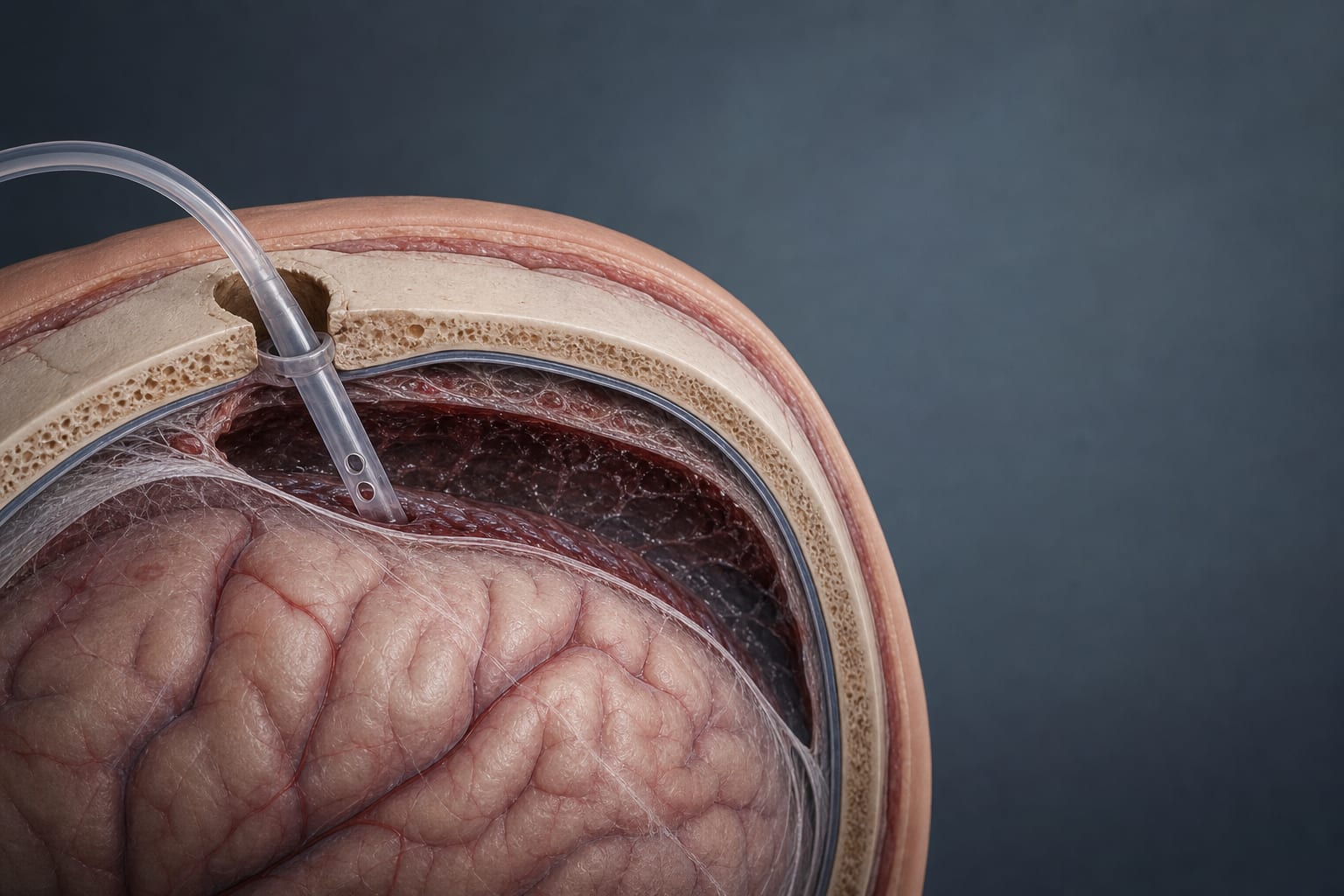
Postoperative Volume Changes and Revision Rates of Chronic Subdural Hematomas Following Burr Hole Craniotomy with Tranexamic Acid Compared to Surgery Alone: A Propensity Score-Matched Study from a Single Center
Postoperative Volume Changes and Revision Rates of Chronic Subdural Hematomas
Overview
This study evaluates the efficacy of tranexamic acid (TXA) in reducing postoperative recurrence rates and hematoma volume following burr-hole craniotomy for chronic subdural hematomas (cSDH).
Background
Chronic subdural hematoma (cSDH) is a prevalent condition, particularly in the aging population, with significant incidence rates. The complexity of its pathophysiology and the high recurrence rates following surgical intervention highlight the need for effective treatment strategies. Tranexamic acid (TXA) has emerged as a potential adjunctive therapy aimed at reducing recurrence through its antifibrinolytic properties, although its effectiveness remains a subject of ongoing research.
Data Highlights
No specific numerical data or trial results were provided in the source material.
Key Findings
cSDH is a common traumatic intracranial hemorrhage, particularly in older adults.
Recurrence rates after surgical intervention for cSDH range from 2.3% to 38.7% based on existing literature.
TXA is thought to inhibit hyperfibrinolysis, potentially preventing re-expansion of cSDH, but its use remains debated.
Adjunctive treatments for cSDH are increasingly being explored due to high recurrence rates.
Clinical Implications
Understanding the potential benefits and risks associated with TXA is important for neurosurgeons managing cSDH.
Conclusion
Further research is needed to clarify the efficacy and safety of TXA in the management of cSDH.
In this procedural case review, vascular surgeon Dr. Samuel Steerman and neurosurgeon Dr. Shannon Clark collaborate to perform an anterior lumbar interbody fusion (ALIF).
The nearly 15,000-square-foot facility will integrate multidisciplinary care, including neurology, neurosurgery, brain imaging, and physical medicine and rehabilitation.