Clinical Report: Hormonal Shifts in Pregnancy and Their Impact on Bone Metabolism
Overview
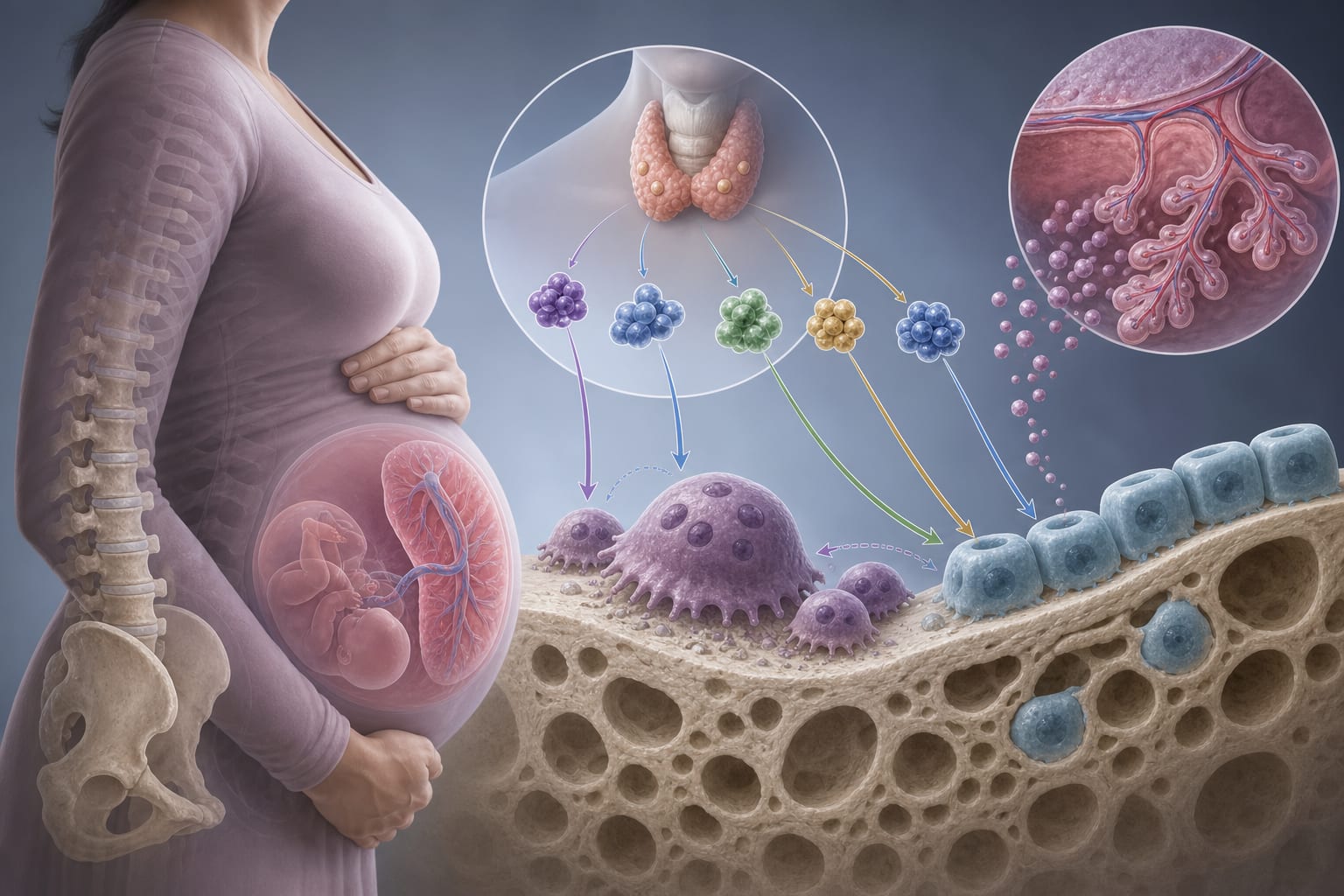
This report examines the hormonal changes during pregnancy and their significant effects on maternal bone metabolism, particularly the risk of Pregnancy and Lactation-Associated Osteoporosis (PLO). It highlights the role of various hormones, including parathyroid hormone (PTH) and parathyroid hormone-related peptide (PTHrP), in bone remodeling.
Background
Pregnancy induces profound physiological changes, including alterations in the maternal endocrine system that are crucial for fetal development. These hormonal shifts can lead to increased bone fragility and conditions such as PLO, which, although rare, poses serious health risks for affected women. Understanding these changes is essential for managing maternal health during and after pregnancy.
Data Highlights
No numerical data or trial data presented in the article.
Key Findings
PLO is diagnosed in premenopausal women during late pregnancy or early lactation, with reported rates of 4.5 to 4.6 per 10,000 pregnancies.
PTH decreases during the first trimester but may rise by the end of pregnancy, influencing osteoblast and osteoclast activity.
PTHrP levels increase progressively during pregnancy, peaking in the third trimester, and play a significant role in calcium homeostasis.
Calcitonin concentrations rise during pregnancy, contributing to bone metabolism regulation.
Most women do not have predisposing risk factors for PLO, although genetic predispositions may exist.
Bone mineral density typically recovers post-weaning, but some women may experience vertebral fractures during lactation.
Clinical Implications
Healthcare providers should be aware of the potential for PLO in pregnant and lactating women, especially those with no prior risk factors. Monitoring bone health and calcium levels during pregnancy can help mitigate risks associated with hormonal changes.
Conclusion
The hormonal shifts during pregnancy significantly impact maternal bone metabolism, highlighting the need for increased awareness and management strategies for conditions like PLO. Further research is essential to fully understand the interactions between various hormones and bone health.