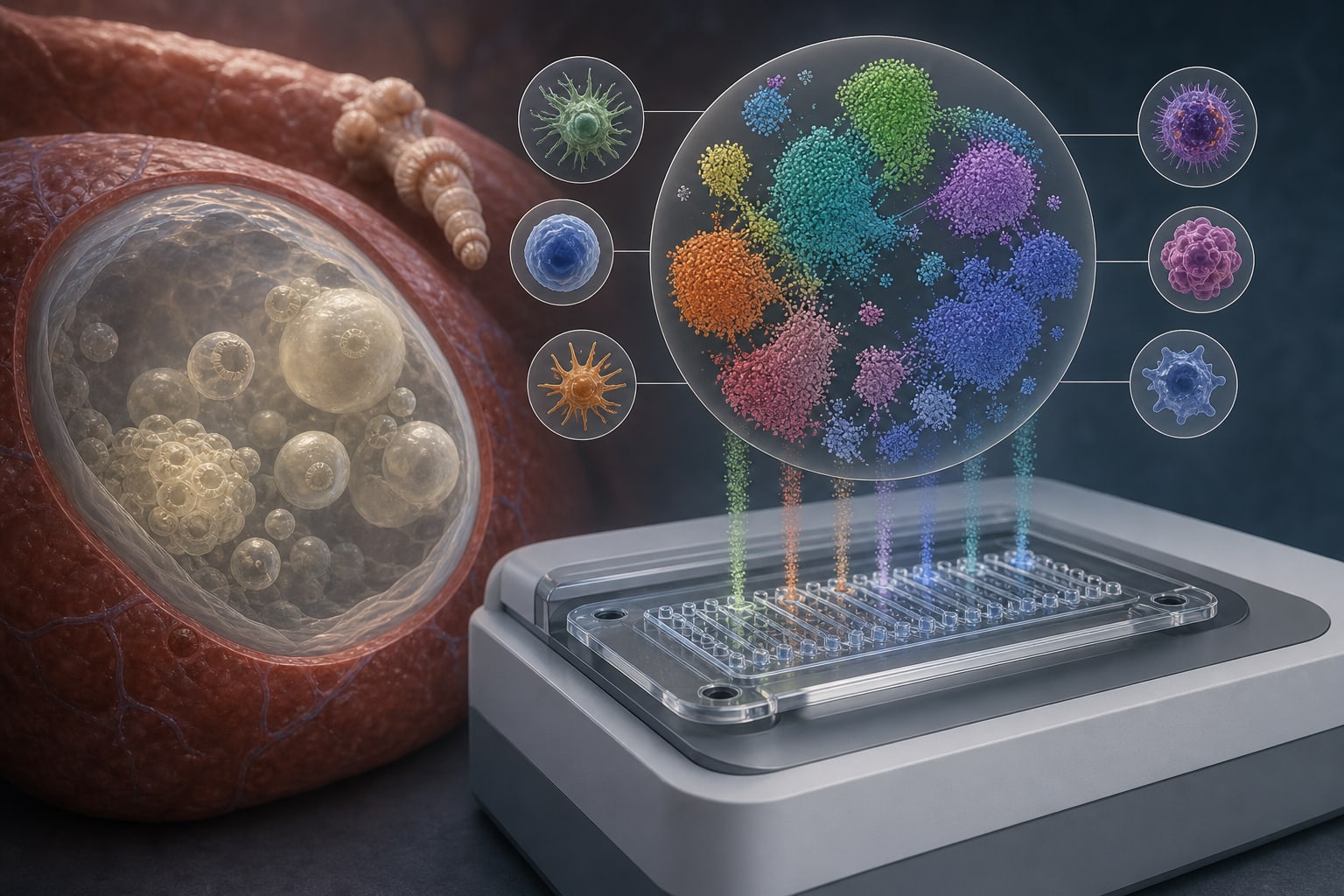
Clinical Report: Recent Developments in Single-Cell Transcriptomic Analysis for Hepatic Echinococcosis
Background
Hepatic echinococcosis, caused by Echinococcus tapeworms, poses a serious health threat in endemic regions, primarily affecting the liver. Current treatment options are limited, necessitating research to improve understanding and management of the disease. Recent advancements in high-throughput sequencing technologies, particularly single-cell transcriptomics, offer avenues for investigating the disease's complexities.
Data Highlights
No numerical or trial data provided in the source material.
Key Findings
Single-cell RNA sequencing has shown advantages in understanding biological heterogeneity in hepatic echinococcosis.
The application of ScRNA-seq provides insights into the immune microenvironment and cellular interactions in echinococcal lesions.
Heterogeneity of infiltrating immune cells around lesions is crucial for understanding the disease's immunopathogenesis.
Research indicates a need for new therapeutic targets based on molecular immunology findings.
Clinical Implications
The findings from recent studies using single-cell transcriptomics can enhance understanding of the immune mechanisms involved in hepatic echinococcosis.
Conclusion
The integration of single-cell transcriptomic analysis in hepatic echinococcosis research represents an advancement in understanding this complex disease.