Radiotherapy-synergized in situ hydrogel vaccine with engineered Lactococcus lactis FOLactis potentiates anti-tumor immunity in pancreatic cancer - Report - MDSpire
Advertisement
Radiotherapy-synergized in situ hydrogel vaccine with engineered Lactococcus lactis FOLactis potentiates anti-tumor immunity in pancreatic cancer
Clinical Report: In Situ Hydrogel Vaccine Enhanced by Radiotherapy and Engineered Lactococcus lactis FOLactis Boosts Anti-Tumor Immune Response in Pancreatic Cancer
Overview
The study presents an in situ hydrogel vaccine, Gel-FOLactis, which, when combined with radiotherapy, enhances the anti-tumor immune response in pancreatic cancer.
Background
Pancreatic ductal adenocarcinoma (PDAC) is characterized by a highly immunosuppressive tumor microenvironment, contributing to a low survival rate. Current immunotherapy strategies have limited efficacy due to insufficient antigen presentation and the transient nature of immune responses following radiotherapy.
Data Highlights
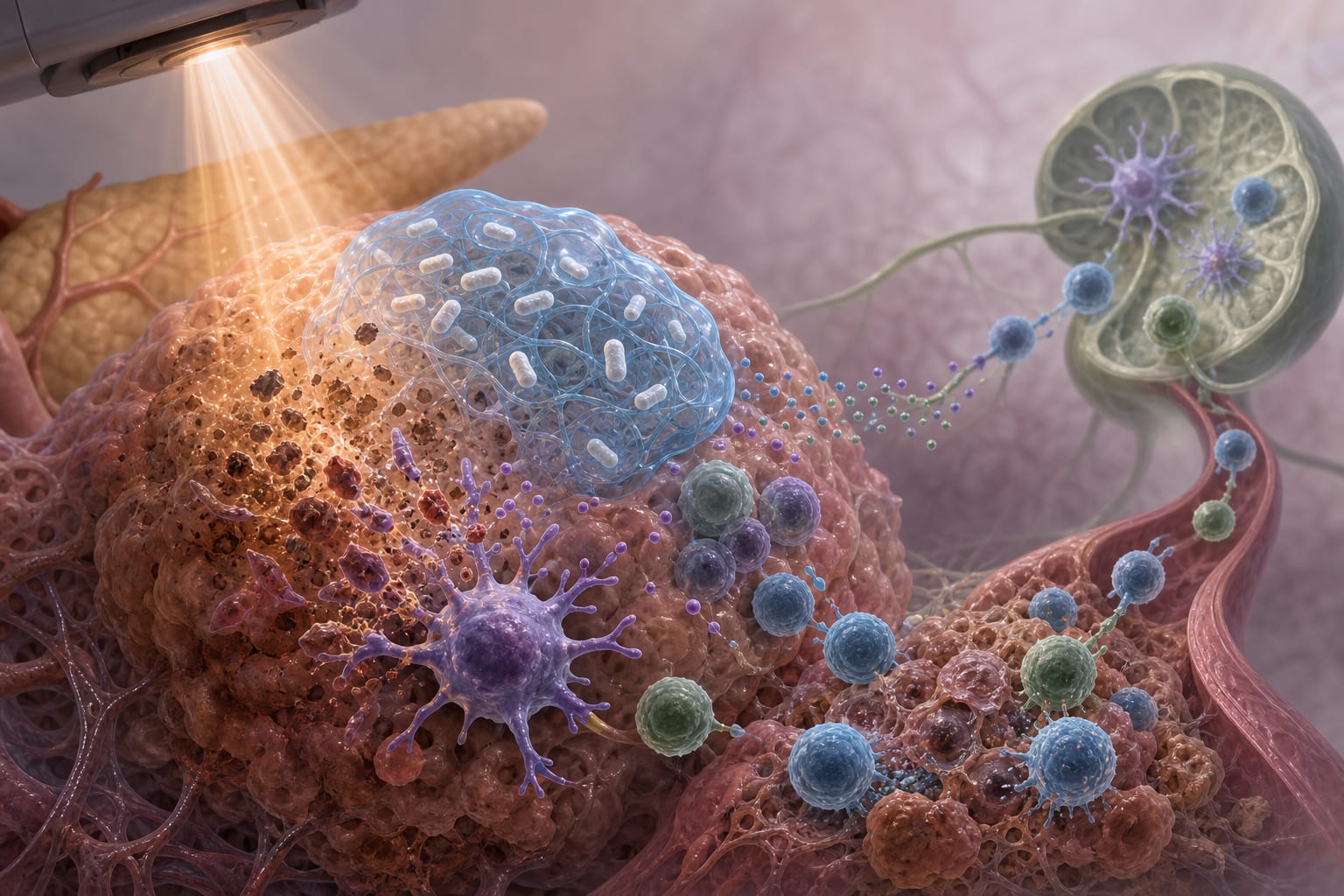
The study demonstrated that the sustained release of Flt3L and OX40L from the Gel-FOLactis vaccine significantly improved dendritic cell recruitment and T cell activation.
Key Findings
The in situ hydrogel vaccine Gel-FOLactis utilizes a thermosensitive P407 hydrogel for sustained delivery of immune-stimulating cytokines.
Flt3L enhances the recruitment and expansion of conventional type 1 dendritic cells, improving their antigen presentation capability.
OX40L promotes the activation of tumor-infiltrating effector T cells.
The combination of Gel-FOLactis and radiotherapy transforms the PDAC tumor microenvironment.
Clinical Implications
The findings indicate that combining in situ hydrogel vaccines with radiotherapy may enhance immunotherapy in pancreatic cancer.
Conclusion
The study highlights the potential of RH-FOLactis as a treatment strategy that enhances anti-tumor immune responses in pancreatic cancer.
Harold Burstein, MD, PhD, and Ana C. Garrido-Castro, MD discuss results from the Pumitamig + DB-1305/BNT325 trial, which were presented at the 2026 ESMO Breast Cancer Congress.