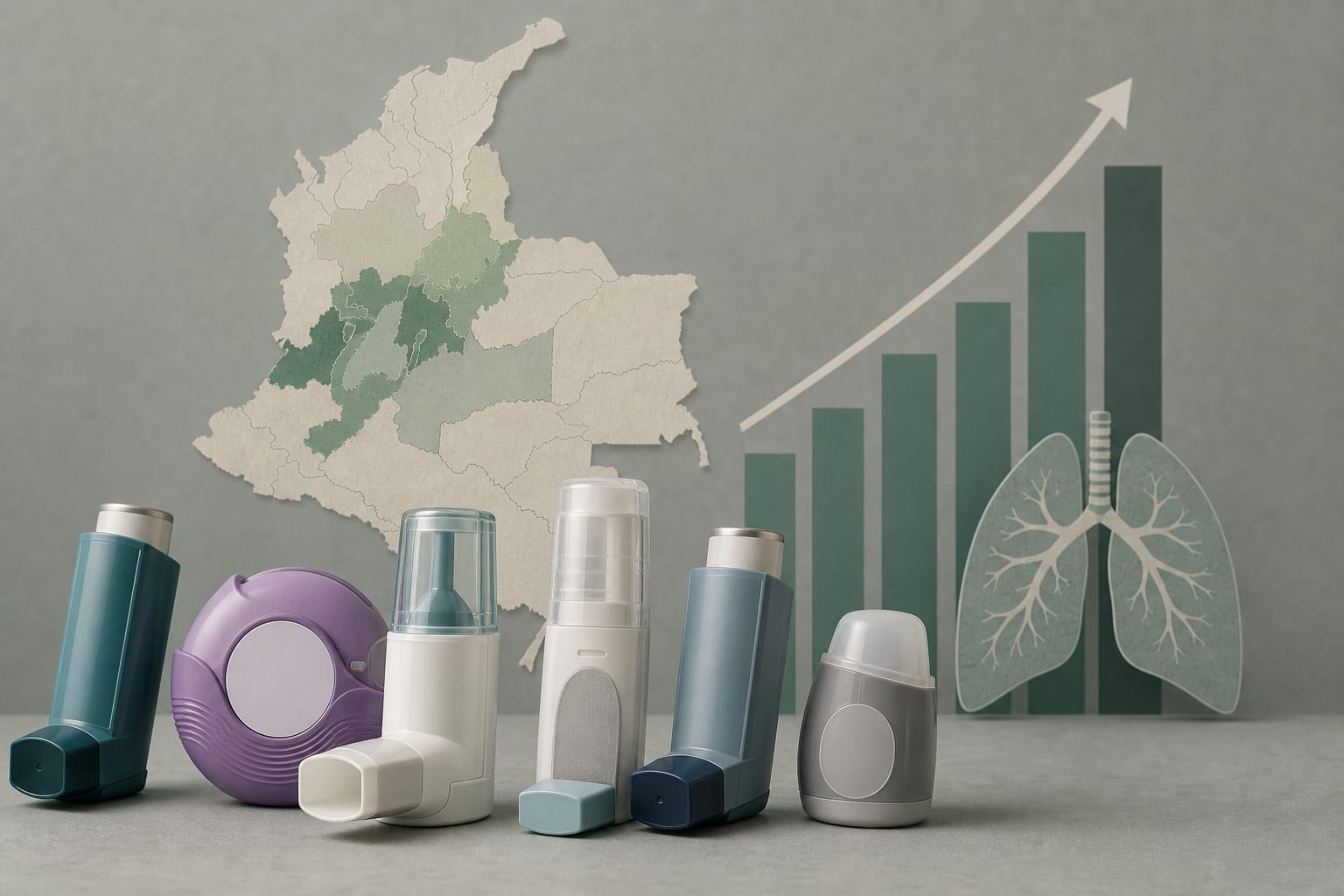
Excessive Rescue Inhaler Use Associated With Higher Cardiovascular Disease Risk
-
By
-
Debbie Bunch
-
November 3, 2026
Clinical Report: Excessive Rescue Inhaler Use and Cardiovascular Risk
Overview
A nationwide Belgian cohort study of patients with asthma or COPD found that greater use of short-acting muscarinic antagonists (SAMA) and fixed-dose short-acting beta-agonist plus SAMA (SABA+SAMA) canisters was associated with higher risks of several cardiovascular outcomes and all-cause mortality. Use of at least three SABA canisters annually was associated with modestly higher heart failure and mortality risks, whereas use of one to two SABA canisters was not associated with increased risks in the reported analysis.
Background
Frequent rescue-inhaler use is described in the source as a clinical signal that patients may lack appropriate controller inhalers or may not be using prescribed controller therapy correctly. The Belgian study examined short-acting bronchodilator exposure and cardiovascular outcomes in patients with asthma and COPD. The source reports that approximately 17% of patients with asthma and 30% of patients with COPD used at least three short-acting bronchodilator (SABD) canisters during the baseline year. The supplied 2026 GINA context identifies high SABA use as a risk factor and states that SABA-only treatment is not recommended.
Data Highlights
| Population/exposure | Reported association versus no use |
|---|---|
| Asthma and COPD; SAMA or SABA+SAMA, 1–2 or ≥3 canisters in baseline year | Heart failure risk 1.2–1.4-fold higher; arrhythmia risk 1.1–1.4-fold higher; all-cause mortality risk 1.1–1.7-fold higher |
| Asthma; SABA+SAMA, 1–2 or ≥3 canisters annually | Myocardial infarction risk 1.2–1.4-fold higher; ischemic stroke risk 1.2–1.3-fold higher |
| COPD; ≥3 SABA+SAMA canisters annually | Myocardial infarction risk 1.4-fold higher |
| Asthma and COPD; ≥3 SABA canisters annually | Heart failure and mortality risks 1.1-fold higher |
| Asthma and COPD; 1–2 SABA canisters annually | No increased risks reported |
| Belgian cohort | 226,314 patients with asthma and 57,446 with COPD; ≥3 SABD canisters at baseline were used by approximately 17% and 30%, respectively |
Key Findings
- The Belgian cohort included 226,314 patients with asthma and 57,446 with COPD.
- Approximately 17% of patients with asthma and 30% of patients with COPD used at least three SABD canisters during baseline.
- SAMA and SABA+SAMA exposure was associated with higher heart failure, arrhythmia, and all-cause mortality risks in both disease groups.
- Among patients with asthma, SABA+SAMA use was also associated with higher myocardial infarction and ischemic stroke risks; among patients with COPD, at least three SABA+SAMA canisters annually was associated with a 1.4-fold higher myocardial infarction risk.
- At least three SABA canisters annually was associated with 1.1-fold higher heart failure and mortality risks in asthma and COPD; one to two SABA canisters annually was not associated with increased risks in the reported analysis.
- The supplied GINA 2026 context identifies use of at least three 200-dose SABA canisters per year as a risk factor and states that SABA-only treatment is not recommended; the supplied ATS context reports recommendations for ICS-containing reliever therapy.
Clinical Implications
The study authors state that SABD use should be monitored in patients with asthma or COPD, including those without identified cardiovascular disease. The supplied GINA and ATS context describes ICS-containing treatment approaches and advises against SABA-only treatment; these guidance statements are distinct from the observational associations reported in the Belgian cohort.
Conclusion
In this Belgian cohort, greater use of SAMA and SABA+SAMA canisters was associated with elevated cardiovascular and mortality risks, while high SABA use was associated with modestly higher heart failure and mortality risks. The findings are observational associations as presented in the supplied source material.
Related Resources & Content
- GINA, Global Initiative for Asthma, 2026 — GINA Strategy Report 2026
- Thorax, 2026 — Association between overuse of short-acting β2-agonists and the risk of major adverse cardiovascular events among patients with asthma
- MDSpire News — Bronchodilator Response Linked to Future Lung Risks
- MDSpire News — Key Risk Factors for Young Adults with COPD Identified
- MDSpire News — SVT in Children with Asthma: Higher Mortality Risk
- mdspire news — Wildfire pollution may pose cardiopulmonary risk
- GINA Strategy Report 2026
- Association between overuse of short-acting β2-agonists and the risk of major adverse cardiovascular events among patients with asthma
Based on findings from:
Overuse of Rescue Inhalers Linked to Increased Risk for Cardiovascular Diseases
Debbie Bunch. American Association For Respiratory Care, 2026.
https://rccentral.aarc.org/overuse-of-rescue-inhalers-linked-to-increased-risk-for-cardiovascular-diseases/
This content is an AI-generated, fully rewritten summary based on a published scholarly article. It does not reproduce the original text and is not a substitute for the original publication. Readers are encouraged to consult the source for full context, data, and methodology.