Case Report: Percutaneous closure of patent ductus arteriosus with the KONAR-MF™ device: initial experience and results at 6 months in a tertiary center - Report - MDSpire
Conexiant’s news site is now MDSpire News. Learn more
Advertisement
Initial Experience and Outcomes of Percutaneous Patent Ductus Arteriosus Closure Using the KONAR-MF™ Device: A Six-Month Follow-Up from a Tertiary Care Center
Clinical Report: Initial Experience and Outcomes of KONAR-MF™ Device for PDA
Overview
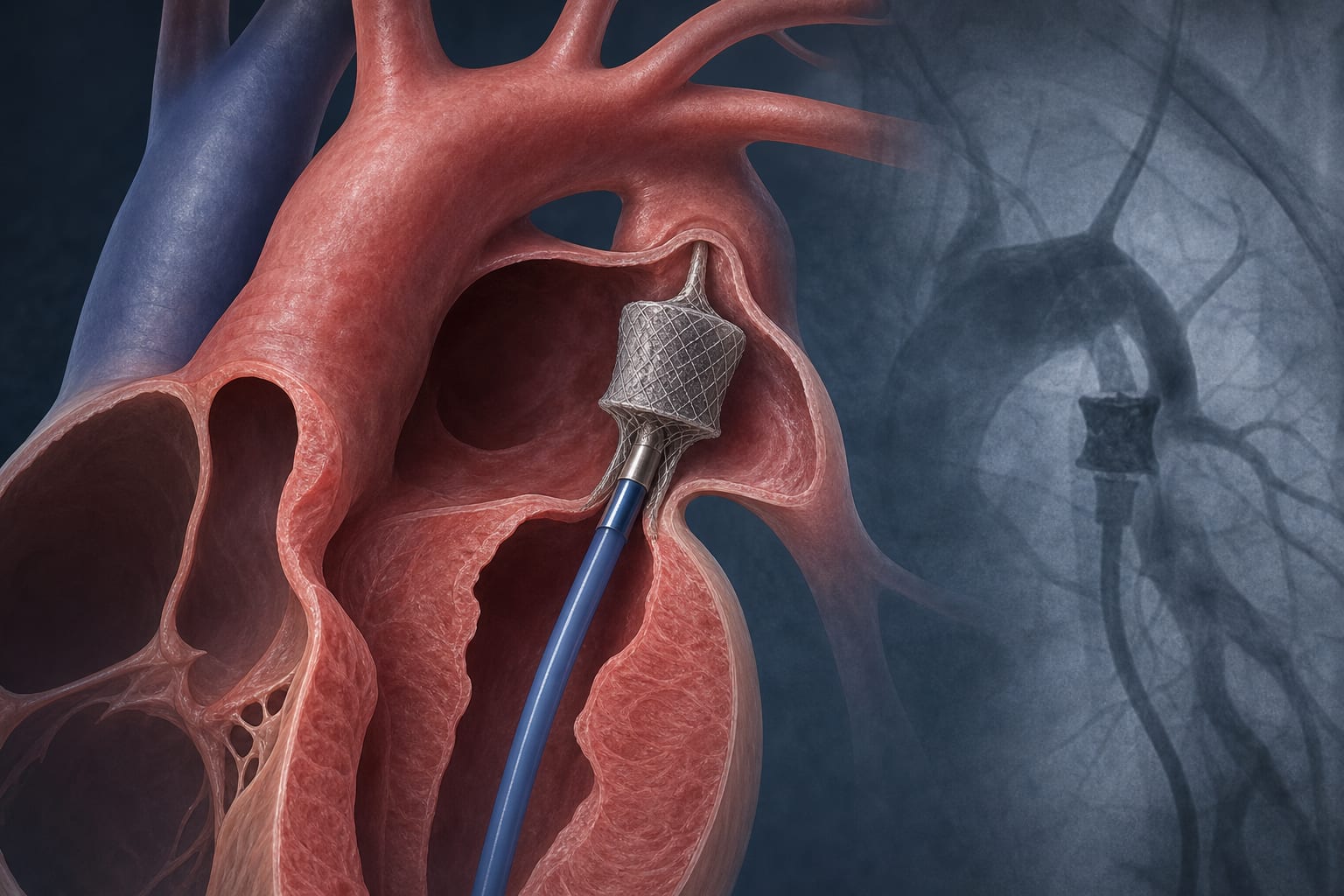
This report evaluates the initial outcomes of the KONAR-MF™ device for percutaneous closure of patent ductus arteriosus (PDA) in a cohort of 17 patients, highlighting its potential as a viable option for complex anatomies and underweight patients. Six-month follow-up data indicate successful closure with manageable complications.
Background
Patent ductus arteriosus (PDA) is a common congenital heart defect that can lead to significant morbidity, including congestive heart failure and pulmonary hypertension. Percutaneous closure is the preferred treatment modality, particularly with the advent of newer devices like the KONAR-MF™, which can accommodate a wider range of ductal morphologies. Understanding the safety and efficacy of such devices is crucial for optimizing patient outcomes in pediatric cardiology.
Data Highlights
Parameter
Median Value
Age
1 year
Weight
11 kg
Ductal Diameter
5 mm
Ductal Length
8 mm
Pulmonary Artery Pressure
25 mmHg
Fluoroscopy Time
9.7 min
Radiation Dose
46 mGy/cm²
Residual Shunt at 6 months
0%
Key Findings
The KONAR-MF™ device was used in 17 patients with a median age of 1 year and weight of 11 kg.
58.8% of patients presented with functional class III symptoms.
23.5% of patients were admitted due to severe pneumonia.
47.1% of PDAs were classified as type C according to the Krichenko classification.
23.5% of patients had a residual shunt immediately post-procedure, which resolved by 6 months.
The antegrade approach was utilized in 64.7% of procedures.
Clinical Implications
The findings suggest that the KONAR-MF™ device may be a safe and effective option for PDA closure, particularly in patients with complex anatomical considerations or those weighing less than 6 kg. Clinicians should consider this device as a viable alternative in selected cases where traditional devices may not be suitable.
Conclusion
The initial experience with the KONAR-MF™ device indicates promising outcomes for percutaneous PDA closure, warranting further investigation in larger cohorts to establish long-term safety and efficacy.
by Alex Ismael Catalán Cabrera, Mónica Karem Medina Durand, Karen del Rosario Condori Alvino, Cesar Augusto Puma Laura, Norma Maribel Portilla Marroquin
A literature review published in Future Cardiology suggests that providers should look beyond chronological age to various modifiable physiologic factors when planning a superior cavopulmonary connection (SCPC) procedure.
Survey results reveal the long-term socio-economic and psychological impacts of single ventricle congenital heart disease (SVHD) on families. See how cardiologists Deepti Bhat, MD, and Naim Duran, MD, contributors to this research, are using findings to transform Fontan Clinic care at Phoenix Children’s.