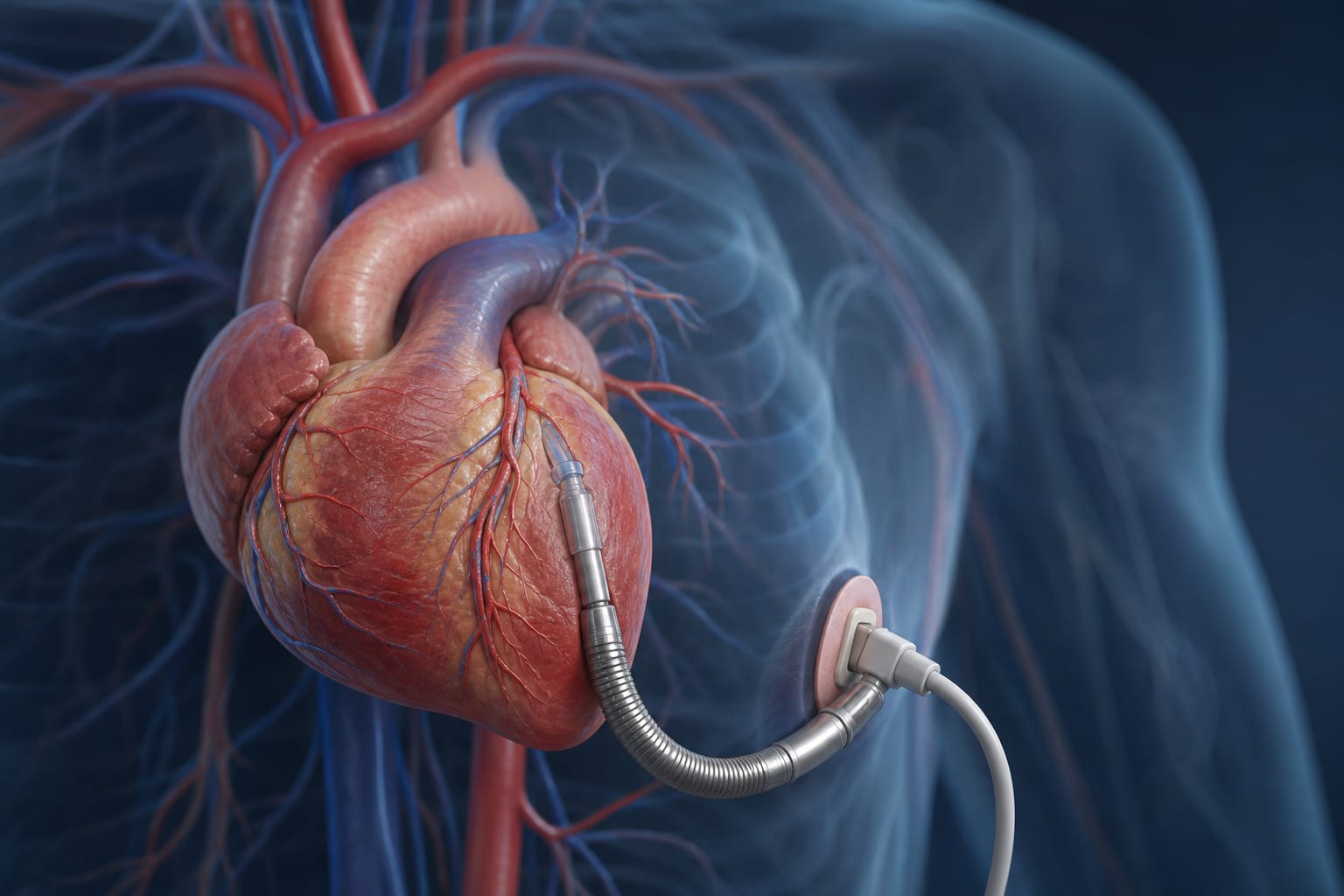
Navigating the cardiovascular seas after allogeneic stem cell transplantation: charting a course for prevention
-
By
-
Raul Cordoba
-
Queralt Salas
-
January 28, 2026
-
0 min
Managing Cardiovascular Risks After Allogeneic Stem Cell Transplantation
Overview
Allogeneic haematopoietic stem cell transplantation (alloHSCT) recipients face a high burden of cardiovascular complications, with 30% experiencing cardiotoxicity within 4 years post-transplant. Recent studies highlight distinct risk factors for early and late cardiovascular events and demonstrate the potential utility of established risk prediction models to guide preventive strategies.
Background
AlloHSCT is a critical treatment for haematologic malignancies but increases susceptibility to cardiovascular disease, which adversely affects long-term survival and quality of life. Cardiovascular complications represent a leading cause of late morbidity and mortality in alloHSCT survivors. Understanding the multifactorial risk profile and improving risk stratification are essential for developing effective prevention and management strategies in this population.
Data Highlights
| Parameter | Findings |
|---|---|
| Study Population | 1027 alloHSCT recipients (2011-2020) |
| Cardiotoxicity Incidence | 30% during median 4-year follow-up |
| Early Cardiotoxicity Risk Factors (≤100 days) | Age, hypertension, pre-existing heart failure, CTRCD, high-dose cyclophosphamide |
| Late Cardiotoxicity Risk Factors (>100 days) | Age, hypertension, venous thromboembolism, atrial fibrillation/flutter, pre-existing heart failure, CTRCD, liposomal anthracyclines, high-risk HCT-CI score |
| Risk Prediction Model Performance | PREVENT ASCVD model: reasonable discrimination and calibration for ASCVD risk; PREVENT-HF model: poor performance for heart failure prediction |
Key Findings
- 30% of alloHSCT recipients experienced cardiotoxicity within a median follow-up of 4 years.
- Early cardiovascular events are associated with age, hypertension, pre-existing heart failure, cancer therapy-related cardiac dysfunction (CTRCD), and high-dose cyclophosphamide.
- Late cardiovascular events correlate with additional factors including venous thromboembolism, atrial fibrillation/flutter, prior liposomal anthracycline exposure, and a high-risk haematopoietic cell transplantation-comorbidity index (HCT-CI) score.
- The PREVENT ASCVD risk prediction model shows promise for guiding cardiovascular risk management in alloHSCT survivors.
- Current heart failure risk prediction models perform poorly, highlighting the need for alloHSCT-specific tools.
- Post-transplant cyclophosphamide is implicated in early cardiac events, reinforcing the importance of conditioning regimen considerations.
Clinical Implications
Clinicians should recognize the high cardiovascular risk in alloHSCT survivors and incorporate comprehensive risk assessment including traditional and transplant-specific factors. Utilizing validated risk prediction models like PREVENT ASCVD may help tailor preventive interventions such as statin therapy. There is a critical need for development of alloHSCT-specific heart failure risk models and structured education programs to empower patients and providers in primary prevention.
Conclusion
Cardiovascular complications after alloHSCT are common and multifactorial, necessitating improved risk stratification and targeted prevention strategies. Recent studies provide valuable insights but underscore the need for further research to optimize cardiovascular care in this vulnerable population.
References
- Sibilia et al. 2023 -- Predicting cardiovascular events in allogeneic haematopoietic stem cell transplant recipients
- Itzhaki et al. 2023 -- Evaluation of cardiovascular risk prediction models in alloHSCT recipients
- Pinto et al. -- Cardiac toxicity after haploidentical haematopoietic cell transplantation
- Salas et al. -- Cardiac events after allogeneic haematopoietic cell transplantation with post-transplant cyclophosphamide
- Fulcher et al. -- Primary preventive care for HSCT survivors
- Greenfield et al. -- Metabolic syndrome and cardiovascular disease after HCT
This content is an AI-generated, fully rewritten summary based on a published scholarly article. It does not reproduce the original text and is not a substitute for the original publication. Readers are encouraged to consult the source for full context, data, and methodology.