Single-cell investigations uncover interactions between TREM1-expressing myeloid cells and cancer-associated fibroblasts during colorectal cancer development - Report - MDSpire

Single-cell investigations uncover interactions between TREM1-expressing myeloid cells and cancer-associated fibroblasts during colorectal cancer development

  • By

  • Shang-Yin Wu

  • Po-Chuan Chen

  • Ren-Hao Chan

  • Chung-Hsing Chen

  • Yi-Hsuan Huang

  • Yi-Jing Huang

  • Bing-Syuan Chung

  • Che-Hung Shen

  • Hsin-Yu Kuo

  • Jui-Wen Kang

  • Chung-Ta Lee

  • Hui-Ju Tsai

  • Yu-Chen Fang

  • Peng-Chan Lin

  • Yu-Min Yeh

  • Shang-Hung Chen

  • April 27, 2026

  • 0 min

Share

Clinical Report: Single-cell investigations uncover interactions between TREM1-expressing myeloid cells and cancer-associated fibroblasts during colorectal cancer development

Overview

This study identifies TREM1-positive myeloid cells and ACTA2-positive cancer-associated fibroblasts (CAFs) as key players in the tumor microenvironment of colorectal cancer (CRC). The research highlights the role of SPP1 signaling in mediating the interactions between these cell types, contributing to immune evasion and tumor progression.

Background

Colorectal cancer (CRC) is a leading cause of cancer-related mortality globally, with most cases being microsatellite-stable (MSS) CRC. The tumor microenvironment (TME) plays a crucial role in tumor progression and treatment resistance, particularly through the actions of tumor-associated myeloid cells (TAMCs) and cancer-associated fibroblasts (CAFs). Understanding the interactions between these components is essential for developing effective therapies.

Data Highlights

No numerical data or trial results were provided in the source material.

Key Findings

  • TREM1-positive myeloid cells are enriched in tumor tissues and associated with late-stage differentiated TAMCs.
  • ACTA2-positive CAFs exhibit TGF-β-driven activation programs linked to CRC progression.
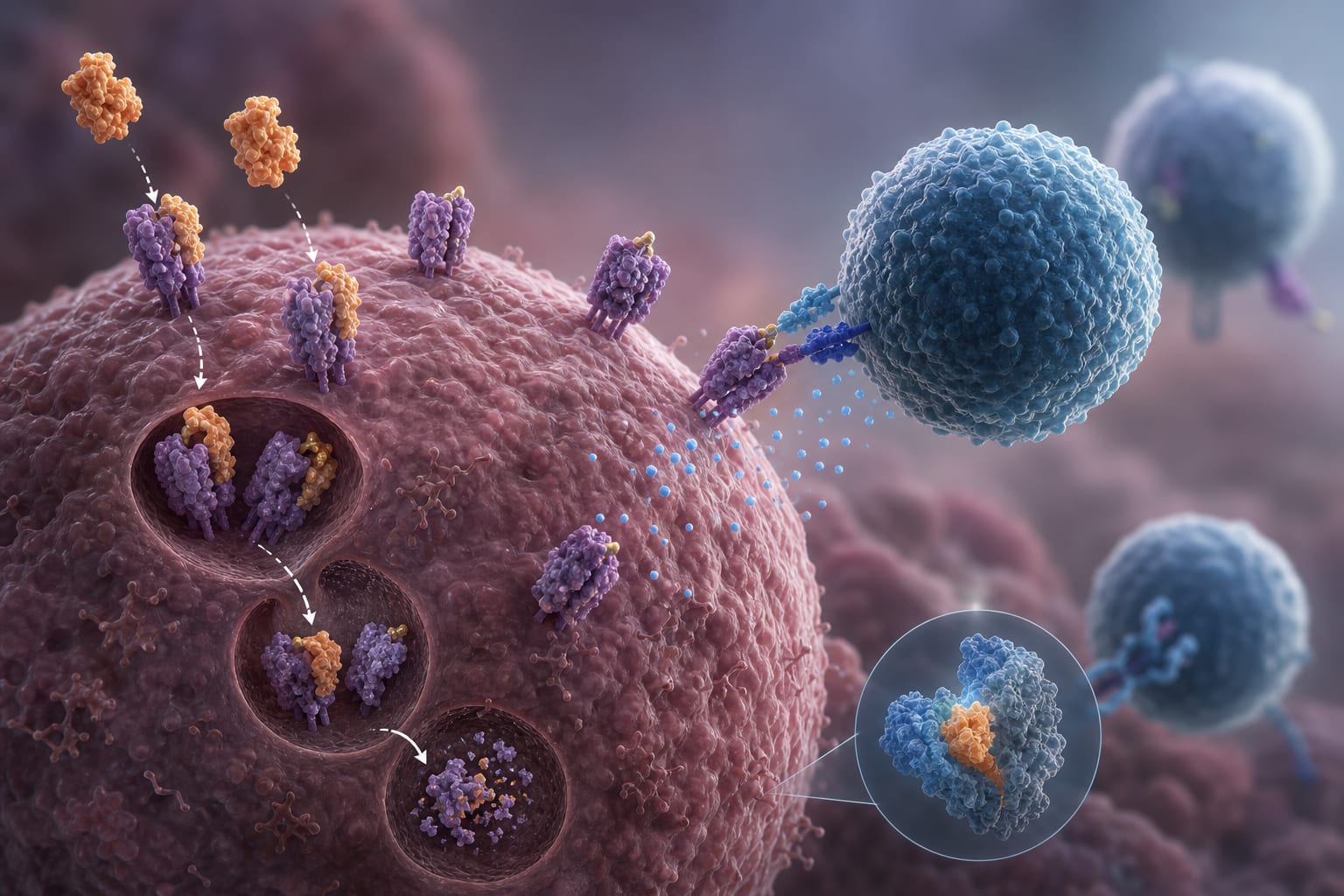
  • SPP1 signaling from TREM1-positive myeloid cells to ACTA2-positive CAFs represents a significant axis of stromal-immune crosstalk.
  • CAFs contribute to an immunosuppressive tumor microenvironment by recruiting monocytes and promoting their differentiation into M2-like TAMs.
  • Single-cell RNA sequencing (scRNA-seq) has enabled detailed characterization of cellular interactions within the TME.

Clinical Implications

The findings suggest that targeting the interactions between TREM1-positive myeloid cells and CAFs may enhance therapeutic strategies in MSS CRC. Understanding these mechanisms could lead to improved immune responses and better outcomes for patients resistant to current therapies.

Conclusion

This study underscores the importance of myeloid cell and fibroblast interactions in CRC progression and highlights potential therapeutic targets to overcome immune evasion in MSS CRC.

References

  1. Single-cell analysis reveals crosstalk between TREM1-positive myeloid cells and cancer-associated fibroblasts in colorectal cancer progression, Journal of Gastroenterology, 2026 -- Single-cell investigations uncover interactions between TREM1-expressing myeloid cells and cancer-associated fibroblasts during colorectal cancer development
  2. TFF3 Inhibition Enhances CD8+ T Cell Infiltration and Function by Reducing PD-L1 Expression in Colorectal Cancer
  3. Journal of Crohn's and Colitis — T-cell branched glycosylation as a mediator of colitis-associated colorectal cancer progression: a potential new risk biomarker in inflammatory bowel disease
  4. The ASCO Post — IL-17A Promotes and GM-CSF Suppresses Circulating Tumor Cells and Metastasis in Colorectal Cancer
  5. The New Gastroenterologist — Insights into Colorectal Cancer Prognosis Through Computational Pathology Analysis
  6. TFF3 Inhibition Enhances CD8+ T Cell Infiltration and Function by Reducing PD-L1 Expression in Colorectal Cancer
  7. T-cell branched glycosylation as a mediator of colitis-associated colorectal cancer progression: a potential new risk biomarker in inflammatory bowel disease
  8. IL-17A Promotes and GM-CSF Suppresses Circulating Tumor Cells and Metastasis in Colorectal Cancer
  9. Insights into Colorectal Cancer Prognosis Through Computational Pathology Analysis
  10. Mismatch Repair and Microsatellite Instability... : Journal of Clinical Oncology
  11. Regorafenib plus sintilimab as a salvage treatment for microsatellite stable metastatic colorectal cancer: a single-arm, open-label, phase II clinical trial
  12. Single-cell analysis reveals crosstalk between TREM1-positive myeloid cells and cancer-associated fibroblasts in colorectal cancer progression | Journal of Gastroenterology | Springer Nature Link

Original Source(s)

Related Content