Engineering a juxtamembrane-targeting CAR T-cell against mesothelin: a novel binder resilient to shed antigen for enhanced efficacy against ovarian and pancreatic cancer - Report - MDSpire
Advertisement
Engineering a juxtamembrane-targeting CAR T-cell against mesothelin: a novel binder resilient to shed antigen for enhanced efficacy against ovarian and pancreatic cancer
Clinical Report: Development of a CAR T-cell Targeting Juxtamembrane Regions of Mesothelin
Background
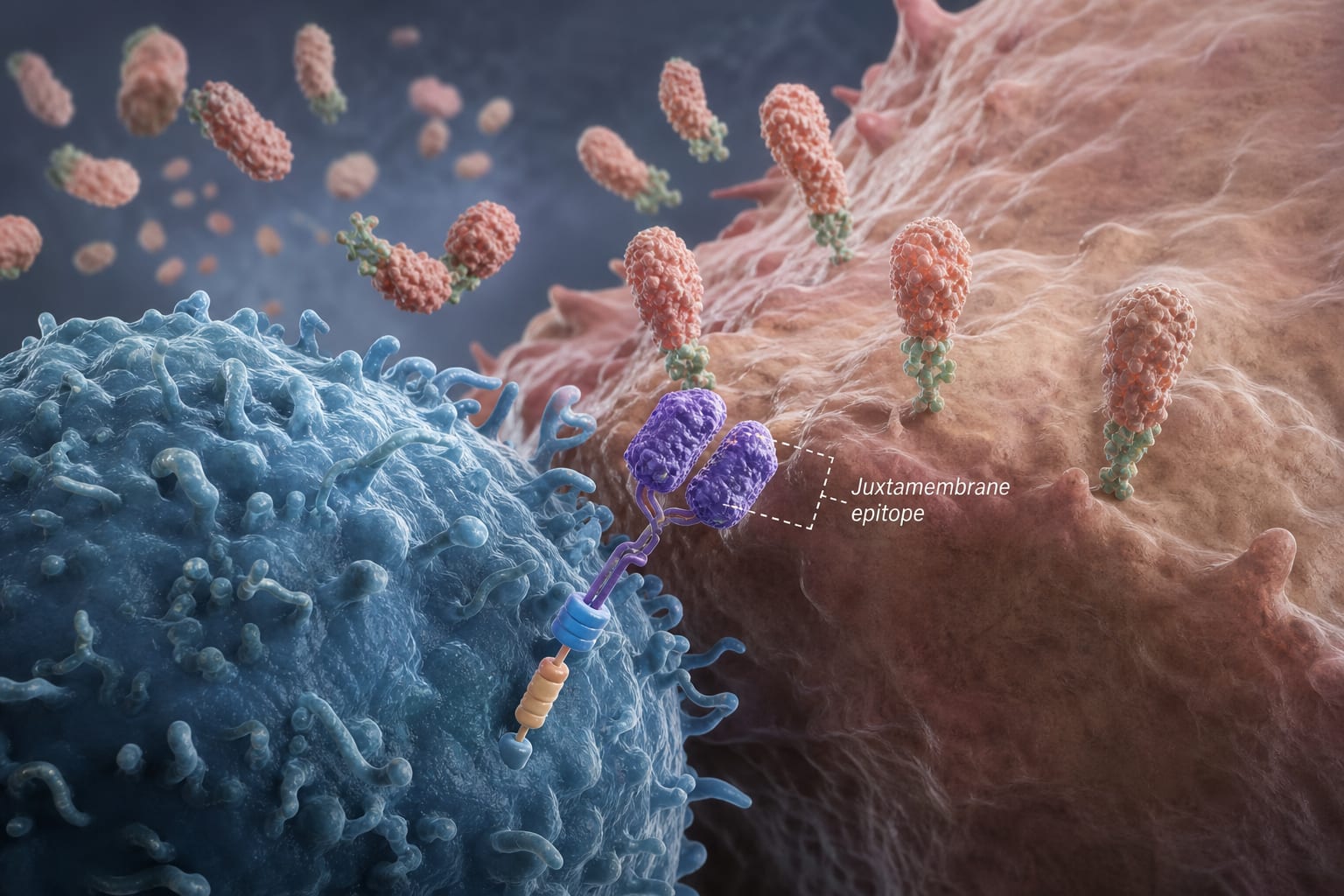
Mesothelin is overexpressed in various solid tumors, including ovarian and pancreatic cancers, making it a target for CAR T-cell therapy. The efficacy of existing therapies is limited by the shedding of mesothelin, which reduces the availability of the target on tumor cells and creates decoys in the tumor microenvironment.
Data Highlights
No numerical data or trial data provided in the source material.
Key Findings
Mesothelin shedding reduces the efficacy of CAR T-cell therapies targeting distal epitopes.
CAR 422 T cells target the juxtamembrane region of mesothelin, unaffected by shedding.
CAR 422 demonstrated comparable cytotoxicity to previously studied anti-mesothelin CAR T cells.
These T cells were effective against tumor cells resistant to conventional anti-mesothelin CAR T cells.
Reduced on-target/off-tumor toxicity was observed in a human mesothelin knock-in mouse model.
Clinical Implications
The development of CAR 422 T cells may provide a treatment option for patients with mesothelin-expressing tumors.
Conclusion
CAR 422 represents a potential advancement in CAR T-cell therapy targeting mesothelin.
by John Scholler, Ai Song, Mansi Deshmukh, Decheng Song, Khatuna Gabunia, Mei Ji, Shimin Liu, Ting-Jia Fan, Gayathri Gulendran, Carl H. June, Don L. Siegel