Editorial: The MASLD Spectrum: A Rising Epidemic with Cardiometabolic and Extra-Hepatic Implications
-
By
-
Akash Batta
-
Arka De
-
Omesh Goyal
-
Aalam Sohal
-
June 17, 2026
Clinical Report: The MASLD Spectrum: A Rising Epidemic with Cardiometabolic and Extra-Hepatic Implications
Overview
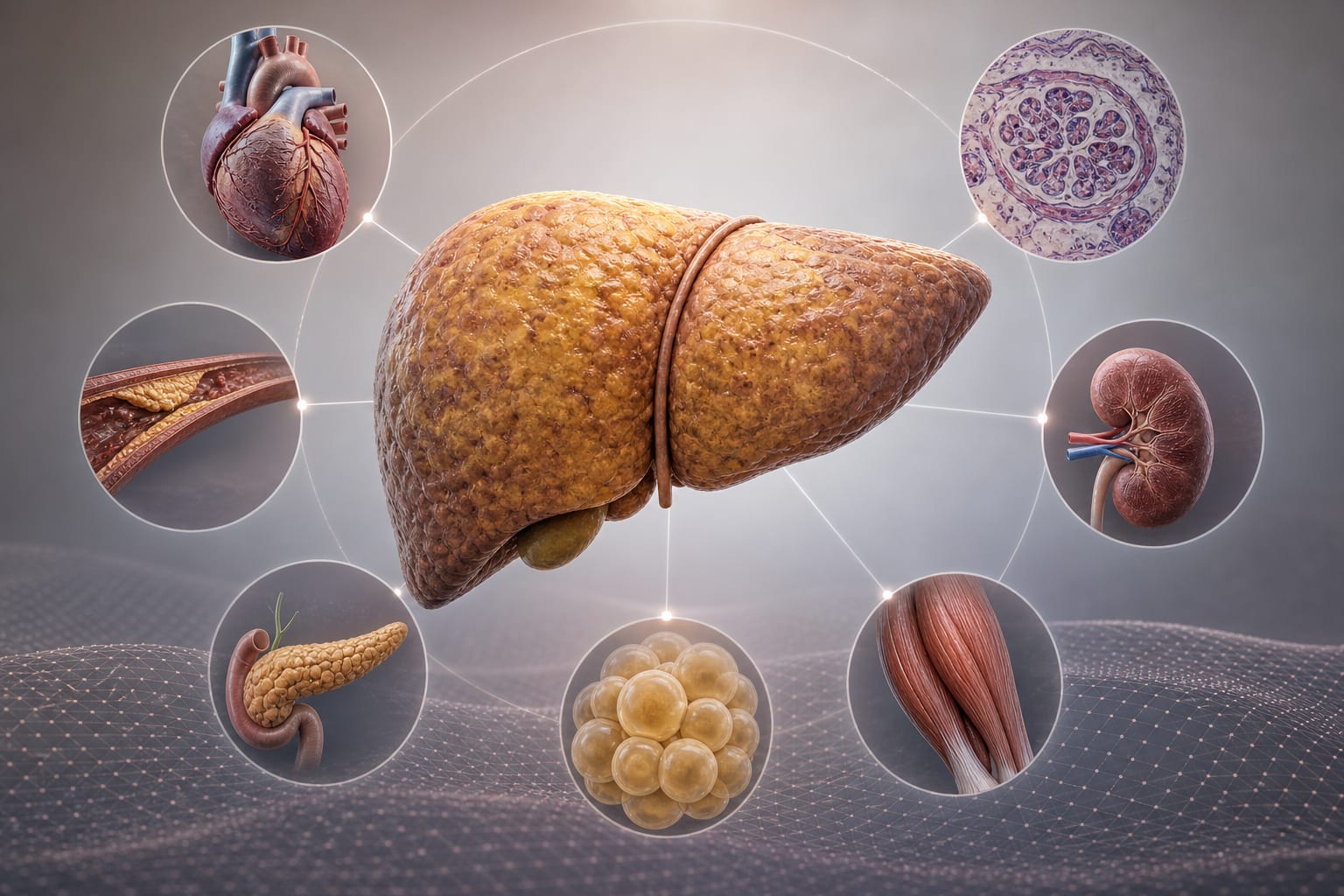
The MASLD spectrum represents a significant shift in understanding liver disease as a multisystem condition with implications for cardiometabolic health. This editorial highlights the rising prevalence of MASLD and its associations with various systemic health issues, emphasizing the need for integrated management strategies.
Background
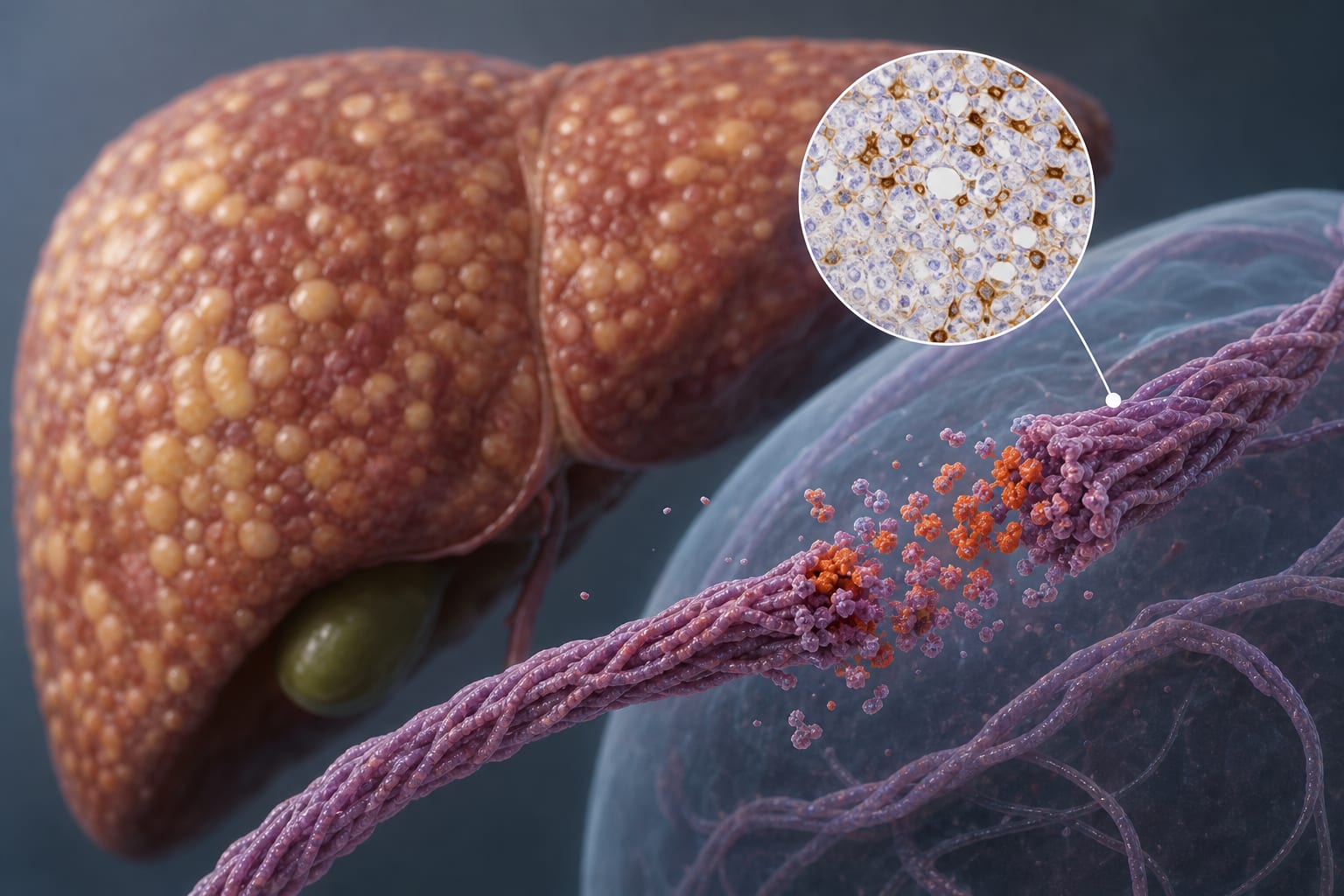
Metabolic dysfunction-associated steatotic liver disease (MASLD) is increasingly recognized as a critical public health concern, affecting over one-third of the general adult population and two-thirds of individuals with type 2 diabetes. The condition's systemic nature links it to cardiovascular disease, chronic kidney disease, and other metabolic disorders, necessitating a comprehensive approach to diagnosis and management.
Data Highlights
No specific numerical data presented in the editorial.
Key Findings
- MASLD is linked to increased cardiovascular risk, particularly in patients with type 2 diabetes.
- The CALLY index serves as a promising non-invasive biomarker for MASLD risk stratification.
- Sarcopenia is identified as an independent risk factor for MASLD and advanced liver fibrosis.
- Visceral fat area is more strongly associated with MASLD than traditional BMI measurements.
- There is a positive correlation between MASLD severity and the incidence of kidney stones.
- MASLD may be associated with altered bone mineral density in certain populations.
Clinical Implications
Healthcare professionals should prioritize early screening for MASLD, particularly in high-risk populations such as those with type 2 diabetes. Utilizing biomarkers like the CALLY index can enhance risk stratification and inform management strategies for this complex condition.
Conclusion
The rising prevalence of MASLD underscores the need for a multidisciplinary approach to its management, addressing not only hepatic health but also its broader cardiometabolic implications.
Related Resources & Content
- B.S. Kim et al., European Journal of Preventive Cardiology, 2023 -- MASLD in the cardiovascular–kidney–metabolic health framework: what does it add to the table?
- Journal of Gastroenterology, 2026 -- Evidence-based clinical practice guidelines for metabolic dysfunction-associated steatotic liver disease (MASLD) 2026
- The Journal of Clinical Endocrinology & Metabolism -- Raising Awareness and Improving Diagnosis of Steatotic Liver Disease Among Adolescents
- Frontiers in Medicine -- The role of mitochondrial dynamics in metabolic dysfunction–associated steatotic liver disease
- AASLD, 2025 -- AASLD Announces Update to Metabolic Dysfunction‐Associated Steatotic Liver Disease (MASLD) Practice Guidance
- Current Cardiology Reports -- Cardiovascular Risk Reduction in Metabolic Dysfunction-Associated Steatotic Liver Disease and Metabolic Dysfunction-Associated Steatohepatitis
- AASLD Announces Update to Metabolic Dysfunction‐Associated Steatotic Liver Disease (MASLD) Practice Guidance | AASLD
- Drug Trials Snapshots: REZDIFFRA | FDA
- Cardiovascular Risk Reduction in Metabolic Dysfunction-Associated Steatotic Liver Disease and Metabolic Dysfunction-Associated Steatohepatitis | Current Cardiology Reports | Springer Nature Link
Based on findings from:
Editorial: The MASLD spectrum: an emerging epidemic of cardiometabolic and extra-hepatic dimensions
Akash Batta, Arka De, Omesh Goyal, Aalam Sohal. Frontiers In Epidemiology, 2026.
https://www.frontiersin.org/journals/epidemiology/articles/10.3389/fepid.2026.1893613/full
This content is an AI-generated, fully rewritten summary based on a published scholarly article. It does not reproduce the original text and is not a substitute for the original publication. Readers are encouraged to consult the source for full context, data, and methodology.