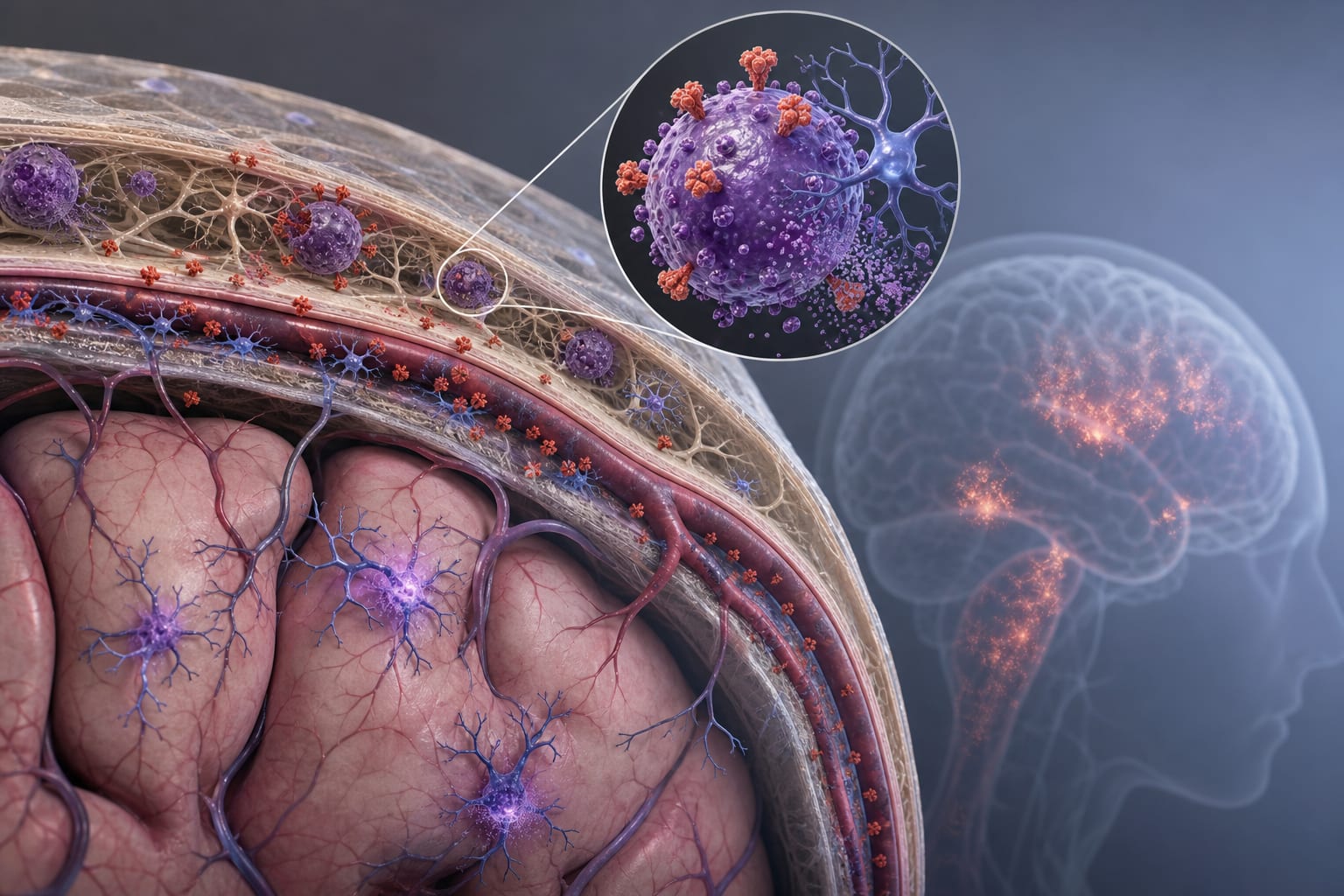
Impact of Pathogens on Neurological Health: Insights into SARS-CoV-2 Spike Protein and Neuro COVID
-
By
-
Theoharis C. Theoharides
-
Paraskevi Papadopoulou
-
July 13, 2026
Clinical Report: Impact of Pathogens on Neurological Health: Insights into SARS-CoV-2 Spike Protein and Neuro COVID
Background
Long-COVID syndrome presents significant challenges, with a substantial proportion of patients experiencing persistent cognitive and neuropsychiatric symptoms after SARS-CoV-2 infection. Understanding the mechanisms behind these manifestations is crucial for developing effective management strategies. The involvement of the Spike protein in neuroinflammation raises important questions about its long-term effects on neurological health.
Data Highlights
| Neurological Manifestation | Approximate Prevalence | Proposed Mechanism |
|---|---|---|
| Headache | Varies | Neuroinflammation |
| Anosmia | Varies | Direct neurotropism |
| Encephalopathy | Varies | Microglial activation |
| Peripheral neuropathy | Varies | Blood Brain Barrier disruption |
| Cerebrovascular events | Varies | Hypoxia |
Key Findings
- Up to 50% of patients with SARS-CoV-2 infection develop Long-COVID symptoms.
- Long-COVID is characterized by neurological disorders such as headache, anosmia, and cognitive impairment.
- The Spike protein may stimulate mast cells and microglia, contributing to neuroinflammation.
- Neurological manifestations appear to vary across SARS-CoV-2 variants, with Omicron showing relatively more prominent symptoms.
- Over 90% of hospitalized COVID-19 patients with neurological symptoms had worse outcomes 6 months post-infection.
Clinical Implications
Healthcare professionals should be aware of the potential for Long-COVID to manifest as a range of neurological and psychiatric symptoms.
Conclusion
Ongoing research into the mechanisms of Long-COVID and the role of SARS-CoV-2 in neurological health is necessary.
Related Resources & Content
- Acta Neuropathologica, 2020 -- Factors Associated with Critical Illness-Related Encephalopathy in Postmortem Neuropathology of COVID-19
- Infection, 2020 -- Comparative Analysis of SARS-CoV and SARS-CoV-2: Insights into Spike Protein Receptor Binding and Host Cell Invasion Mediated by Serine Proteases
- Acta Neuropathologica, 2020 -- Emerging Neuropathological Features in COVID-19: Insights into Microvascular Damage and Hypoxic Injury
- Long COVID Clinical Guidance | Long COVID | CDC
- Clinical Overview of Long COVID | Long COVID | CDC
- Frontiers in Medicine — Correction: Neurological manifestations of SARS-CoV-2 infection: protocol for a sub-analysis of the COVID-19 critical care consortium observational study
- Synopsis of 2024 VA Long COVID Clinical Guidance for U.S. Veterans: Part 1, Nervous System-Related Symptoms
- Summary of Clinical Trial Results: RECOVER-NEURO
- Long COVID Clinical Guidance | Long COVID | CDC
- Clinical Overview of Long COVID | Long COVID | CDC
- Cognitive Rehabilitation and Functional Outcomes in Long COVID–Related Cognitive Impairment: A Randomized Clinical Trial - PMC
- Long-term neurological and cognitive impact of COVID-19: a systematic review and meta-analysis in over 4 million patients - PMC
- COVID-19-associated neurological and psychological manifestations | Nature Reviews Disease Primers
- SARS-CoV-2 spike protein: structure, viral entry and variants | Nature Reviews Microbiology
Based on findings from:
Pathogen effects on the brain: the case of SARS-CoV-2 spike protein and neuro COVID
Theoharis C. Theoharides, Paraskevi Papadopoulou. Frontiers In Neurology, 2026.
https://www.frontiersin.org/journals/neurology/articles/10.3389/fneur.2026.1853951/full
This content is an AI-generated, fully rewritten summary based on a published scholarly article. It does not reproduce the original text and is not a substitute for the original publication. Readers are encouraged to consult the source for full context, data, and methodology.