30-Day Outcomes of Simultaneous Sleeve Gastrectomy and Kidney Transplantation: An Analysis from the Metabolic and Bariatric Surgery Accreditation and Quality Improvement Program (MBSAQIP) Database - Report - MDSpire

30-Day Outcomes of Simultaneous Sleeve Gastrectomy and Kidney Transplantation: An Analysis from the Metabolic and Bariatric Surgery Accreditation and Quality Improvement Program (MBSAQIP) Database

  • By

  • Doua Elamin

  • Valentin Mocanu

  • Mélissa V. Wills

  • Andrew Strong

  • Salvador Navarrete

  • Ricard Corcelles

  • Matthew Kroh

  • Jerry Dang

  • June 27, 2026

  • 0 min

Share

Clinical Report: Outcomes at 30 Days Post Simultaneous Sleeve Gastrectomy and Kidney Transplant

Overview

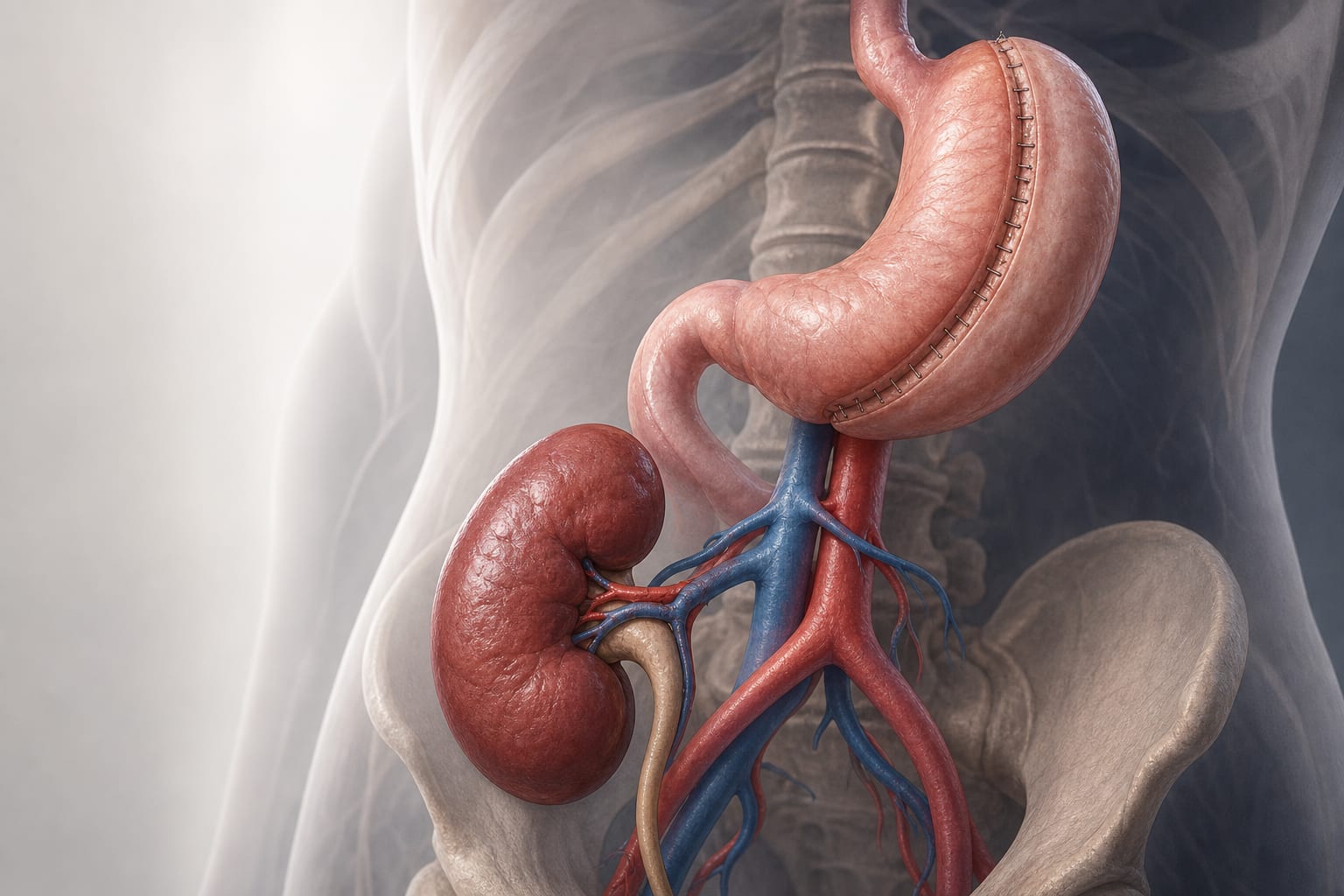
This study analyzes 30-day perioperative outcomes of patients undergoing simultaneous sleeve gastrectomy and kidney transplantation (SG + KT) using the MBSAQIP database.

Background

Obesity is a significant public health issue that complicates kidney transplantation eligibility and outcomes, particularly in patients with end-stage renal disease. The KDIGO guidelines recognize obesity as a relative contraindication for kidney transplantation.

Data Highlights

No numerical data provided in the source material.

Key Findings

  • Obesity is a relative contraindication for kidney transplantation as per KDIGO guidelines.
  • Patients undergoing SG + KT experienced weight loss compared to those receiving kidney transplantation alone.
  • Graft and patient survival rates were similar between SG + KT and kidney transplantation alone.
  • Robust multi-institutional data on perioperative outcomes for SG + KT are currently limited.

Clinical Implications

The findings suggest that simultaneous SG + KT may be a viable option for managing obesity in kidney transplant candidates, potentially improving their eligibility and outcomes. Further research is needed to validate these findings across broader populations.

Conclusion

Simultaneous sleeve gastrectomy and kidney transplantation presents a promising approach to address obesity in transplant candidates, with favorable early outcomes. Continued evaluation of this strategy is essential for optimizing patient care.

Related Resources & Content

  1. KDIGO, KDIGO, 2020 -- Clinical Practice Guideline on the Evaluation and Management of Candidates for Kidney Transplantation
  2. Surgical Endoscopy, 2024 -- Comparative Analysis of Robotic vs. Laparoscopic Approaches in Revisional Gastric Bypass: An 8-Year Study of Over 40,000 Cases from MBSAQIP Reveals Reduced Morbidity
  3. Surgical Endoscopy, 2023 -- Mid-term Results of Single Anastomosis Sleeve Ileal Bypass for Managing Severe Obesity
  4. Obesity Surgery, 2020 -- Comparative Safety of Single-Stage Revision Laparoscopic Sleeve Gastrectomy versus Laparoscopic Roux-en-Y Gastric Bypass Following Failed Gastric Banding
  5. Obesity Surgery — Comparative Analysis of Roux-En-Y Gastric Bypass and Sleeve Gastrectomy: Evaluating Surgical Risks Against Weight Loss Advantages
  6. https://kdigo.org/wp-content/uploads/2026/04/KDIGO-2020-Transplant-Candidate-Guideline.pdf
  7. https://public-pages-files-2025.frontierspartnerships.org/journals/transplant-international/articles/10.3389/ti.2024.12690/pdf
  8. Kidney transplantation after bariatric surgery-Outcomes from a 30-year experience - PubMed

Original Source(s)

Related Content